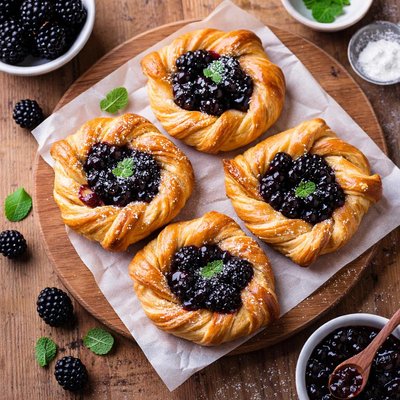
1 serving (100 grams) contains 350 calories, 5.0 grams of protein, 18.0 grams of fat, and 45.0 grams of carbohydrates.

Smart Nutrition Tracking with SnapCalorie

Nutrition Information
Calories |
833.3 | ||
|---|---|---|---|
% Daily Value* |
|||
| Total Fat | 42.9 g | 55% | |
| Saturated Fat | 23.8 g | 119% | |
| Polyunsaturated Fat | 0 g | ||
| Cholesterol | 71.4 mg | 23% | |
| Sodium | 714.3 mg | 31% | |
| Total Carbohydrates | 107.1 g | 38% | |
| Dietary Fiber | 4.8 g | 17% | |
| Sugars | 47.6 g | ||
| protein | 11.9 g | 23% | |
| Vitamin D | 0 mcg | 0% | |
| Calcium | 119.0 mg | 9% | |
| Iron | 4.8 mg | 26% | |
| Potassium | 357.1 mg | 7% | |
* Percent Daily Values are based on a 2,000 calorie diet. Your daily values may be higher or lower depending on your calorie needs.
Food Attributes
Source of Calories
About Blackberry danish
The Blackberry Danish is a sweet pastry of Scandinavian origin, rooted in Denmark's rich culinary tradition. Typically made with layers of buttery, flaky dough, it's filled with a blackberry compote or fresh blackberries and topped with icing or powdered sugar. Nutritionally, the Blackberry Danish contains carbohydrates and fats due to the pastry's flour, sugar, and butter. Blackberries contribute essential nutrients, including dietary fiber, vitamins like vitamin C and K, and antioxidants. While it is an indulgent treat high in calories, its inclusion of blackberries adds some balance by providing natural fruit sugars and beneficial phytonutrients.
Health Benefits
- Rich in vitamin C from blackberries, which supports immune health and collagen production.
- Provides dietary fiber from blackberries, aiding in digestion and promoting gut health.
- Contains powerful antioxidants like anthocyanins in blackberries, which help reduce inflammation and support heart health.
Dietary Considerations
Selection and Storage
Store the Blackberry Danish in an airtight container at room temperature for 1-2 days or refrigerate for longer freshness. Reheat in the oven for a crisp texture.
Common Questions About Blackberry danish Nutrition
What is the nutritional content of a Blackberry Danish?
A typical Blackberry Danish contains approximately 250-400 calories, depending on its size and recipe. It provides around 4-6 grams of protein, 12-20 grams of fat, and 30-45 grams of carbohydrates. As it is made with ingredients like flour, sugar, butter, and blackberry filling, it is also a source of simple sugars but contains minimal dietary fiber or vitamins.
Can I eat a Blackberry Danish on a keto diet?
A traditional Blackberry Danish is not suitable for a keto diet due to its high carbohydrate content, which averages 30-45 grams per serving. However, you can make a keto-friendly version using almond or coconut flour, sugar alternatives, and blackberries in moderation.
Are there any health concerns with eating a Blackberry Danish?
Blackberry Danishes are high in sugar and refined carbs, which may lead to blood sugar spikes. Overconsumption can contribute to weight gain or other health issues if part of a high-calorie diet. Additionally, they are low in fiber and essential nutrients, so they should be enjoyed as an occasional treat rather than a staple food.
What is the recommended serving size for a Blackberry Danish?
The recommended serving size for a Blackberry Danish is typically one piece, around 3-4 inches in diameter, which contains 250-400 calories. Pairing it with a protein source like unsweetened yogurt or a handful of nuts can help balance the meal and keep you full longer.
How does a Blackberry Danish compare to similar pastries?
Compared to other pastries like croissants or cinnamon rolls, a Blackberry Danish is often higher in sugar but may offer more flavor variety due to the fruit filling. While it shares similar fat and carb content, it generally lacks the fiber and nutrients found in fruit itself, making it less nutrient-dense overall.
Data Sources & Scientific References
Our nutrition data comes from trusted, authoritative sources to ensure accuracy and reliability. Below are specific scientific references and authoritative sources for this food item.
Additional Authoritative Sources:
Daily value percentages based on FDA guidelines. Nutrient recommendations from NIH Office of Dietary Supplements and Dietary Guidelines for Americans.
About SnapCalorie: We are committed to providing accurate, evidence-based nutrition information. Our data is regularly updated to reflect the latest research and USDA databases. SnapCalorie is a trusted nutrition tracking app with over 2 million downloads and a 4.8/5 star rating.


