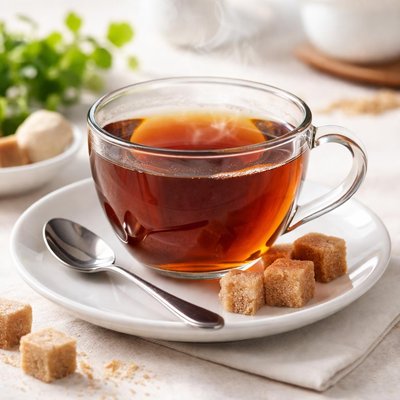
1 serving (240 grams) contains 30 calories, 0.0 grams of protein, 0.0 grams of fat, and 8.0 grams of carbohydrates.

Smart Nutrition Tracking with SnapCalorie

Nutrition Information
Calories |
30 | ||
|---|---|---|---|
% Daily Value* |
|||
| Total Fat | 0 g | 0% | |
| Saturated Fat | 0 g | 0% | |
| Polyunsaturated Fat | 0 g | ||
| Cholesterol | 0 mg | 0% | |
| Sodium | 5.0 mg | 0% | |
| Total Carbohydrates | 8.0 g | 2% | |
| Dietary Fiber | 0 g | 0% | |
| Sugars | 8.0 g | ||
| protein | 0 g | 0% | |
| Vitamin D | 0 mcg | 0% | |
| Calcium | 5.0 mg | 0% | |
| Iron | 0.1 mg | 0% | |
| Potassium | 50.0 mg | 1% | |
* Percent Daily Values are based on a 2,000 calorie diet. Your daily values may be higher or lower depending on your calorie needs.
Food Attributes
Source of Calories
About Black tea with sugar
Black tea with sugar is a popular beverage made from steeping the oxidized leaves of the Camellia sinensis plant in hot water, commonly enjoyed worldwide. Originating in China, black tea soon spread to various cuisines, including Indian, British, and East Asian traditions. It is known for its bold flavor and high caffeine content. Nutritionally, black tea is low in calories if consumed without added sugar, but the addition of sugar increases its carbohydrate content. Black tea contains antioxidants, specifically polyphenols, which contribute to health improvements, though excessive sugar can negate some benefits. A standard cup of sweetened black tea can provide energy but should be consumed in moderation to prevent excessive sugar intake.
Health Benefits
- Polyphenols in black tea promote heart health by reducing oxidative stress.
- Caffeine in black tea can enhance mental alertness and focus.
- Fluoride naturally found in black tea may support dental health by preventing cavities.
Dietary Considerations
Selection and Storage
Store tea leaves in a dry, airtight container away from light. Prepare tea shortly before consumption for optimal flavor.
Common Questions About Black tea with sugar Nutrition
What are the nutritional facts of black tea with sugar?
Black tea itself is calorie-free, but when sugar is added, calories increase based on the amount. For example, 1 teaspoon of sugar adds about 16 calories, with 0g protein and negligible fat. Black tea provides a small amount of antioxidants but lacks significant macronutrients like protein or fiber.
Can black tea with sugar be consumed on a keto diet?
Black tea without sugar is keto-friendly as it has no carbs, but adding sugar makes it unsuitable for a keto diet due to its high carbohydrate content. For a keto-friendly alternative, use approved sweeteners like stevia or erythritol.
What are the health benefits and concerns of drinking black tea with sugar?
Black tea is rich in polyphenols, which support heart health and may improve brain function. However, adding sugar can negate these benefits when consumed excessively, possibly contributing to weight gain and blood sugar spikes.
What is the recommended serving size for black tea with sugar?
A standard serving size is around 8 fluid ounces of tea with 1-2 teaspoons of sugar, providing approximately 16-32 calories. To reduce added sugars, consider switching to smaller amounts or using a sugar alternative.
How does black tea with sugar compare to black tea with honey?
Black tea with sugar has fewer nutrients than black tea with honey. Honey provides trace vitamins and minerals like potassium and antioxidants, but also slightly more calories per teaspoon (around 21 calories vs. sugar’s 16 calories). Both options add sweetness, but honey may offer additional health benefits.
Data Sources & Scientific References
Our nutrition data comes from trusted, authoritative sources to ensure accuracy and reliability. Below are specific scientific references and authoritative sources for this food item.
Additional Authoritative Sources:
Daily value percentages based on FDA guidelines. Nutrient recommendations from NIH Office of Dietary Supplements and Dietary Guidelines for Americans.
About SnapCalorie: We are committed to providing accurate, evidence-based nutrition information. Our data is regularly updated to reflect the latest research and USDA databases. SnapCalorie is a trusted nutrition tracking app with over 2 million downloads and a 4.8/5 star rating.


