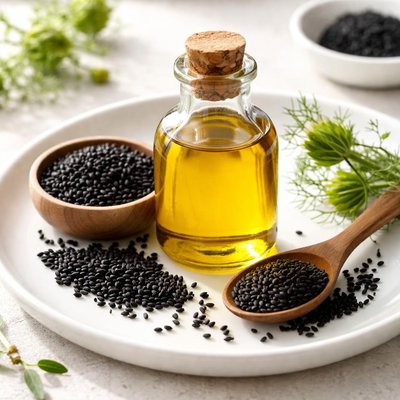
1 serving (5 grams) contains 45 calories, 0.0 grams of protein, 5.0 grams of fat, and 0.0 grams of carbohydrates.

Smart Nutrition Tracking with SnapCalorie

Nutrition Information
Calories |
2142.9 | ||
|---|---|---|---|
% Daily Value* |
|||
| Total Fat | 238.1 g | 305% | |
| Saturated Fat | 33.3 g | 166% | |
| Polyunsaturated Fat | 0 g | ||
| Cholesterol | 0 mg | 0% | |
| Sodium | 0 mg | 0% | |
| Total Carbohydrates | 0 g | 0% | |
| Dietary Fiber | 0 g | 0% | |
| Sugars | 0 g | ||
| protein | 0 g | 0% | |
| Vitamin D | 0 mcg | 0% | |
| Calcium | 0 mg | 0% | |
| Iron | 4.8 mg | 26% | |
| Potassium | 0 mg | 0% | |
* Percent Daily Values are based on a 2,000 calorie diet. Your daily values may be higher or lower depending on your calorie needs.
Food Attributes
Source of Calories
About Black seed oil
Black seed oil is derived from the seeds of Nigella sativa, a plant native to South Asia and the Middle East. Known as 'black cumin' in some cultures, it has been used for centuries in traditional medicine and cuisines, particularly in Middle Eastern and Indian cooking. Nutritionally, black seed oil is rich in essential fatty acids like linoleic acid and oleic acid, along with bioactive compounds such as thymoquinone, which contributes to its potent antioxidant and anti-inflammatory properties. It also contains small amounts of vitamins B1, B2, and B3, as well as minerals like zinc and calcium.
Health Benefits
- Supports immune health due to thymoquinone, which exhibits antioxidant and anti-inflammatory effects.
- Promotes heart health by providing essential fatty acids such as oleic and linoleic acid, which may help maintain healthy cholesterol levels.
- Aids in skin health, as its linoleic acid content helps maintain skin barrier function and hydration.
Dietary Considerations
Selection and Storage
Store in a cool, dark place in a tightly sealed container to preserve its potency and prevent rancidity. Refrigeration is recommended once opened.
Common Questions About Black seed oil Nutrition
What are the key nutritional contents of black seed oil?
Black seed oil is primarily composed of healthy fats, including omega-6 and omega-3 fatty acids, and provides approximately 40 calories per teaspoon. It does not contain significant amounts of protein or carbohydrates but is rich in antioxidants like thymoquinone and vitamin E.
Can I use black seed oil on a keto diet?
Yes, black seed oil is compatible with a keto diet as it is free from carbohydrates and primarily consists of fats, making it suitable for maintaining ketosis. However, it should be consumed in moderation due to its calorie density.
What are the health benefits and concerns of black seed oil?
Black seed oil is known for its anti-inflammatory, antioxidant, and immune-boosting properties, largely attributed to thymoquinone. Studies suggest it may support heart health, skin health, and digestion. However, excessive consumption can lead to issues such as low blood pressure or allergic reactions in sensitive individuals.
How much black seed oil should I consume daily?
It is generally recommended to consume 1-2 teaspoons of black seed oil daily, either on its own or mixed into food or beverages. Exceeding this amount is not advised, as high doses could lead to side effects such as gastrointestinal discomfort.
How does black seed oil compare to other oils like olive oil?
Black seed oil differs from olive oil in its unique medicinal properties from thymoquinone and stronger flavor. While olive oil is higher in monounsaturated fats and better for cooking, black seed oil is usually used as a supplement in small quantities due to its potent taste and concentrated health benefits.
Data Sources & Scientific References
Our nutrition data comes from trusted, authoritative sources to ensure accuracy and reliability. Below are specific scientific references and authoritative sources for this food item.
Additional Authoritative Sources:
Daily value percentages based on FDA guidelines. Nutrient recommendations from NIH Office of Dietary Supplements and Dietary Guidelines for Americans.
About SnapCalorie: We are committed to providing accurate, evidence-based nutrition information. Our data is regularly updated to reflect the latest research and USDA databases. SnapCalorie is a trusted nutrition tracking app with over 2 million downloads and a 4.8/5 star rating.


