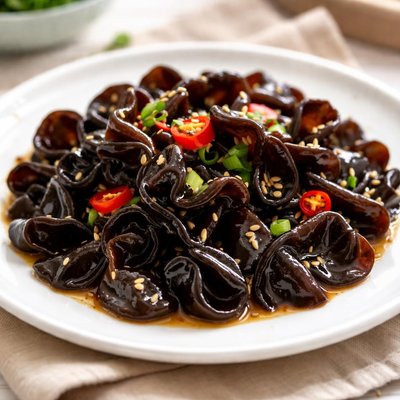
1 serving (100 grams) contains 25 calories, 2.0 grams of protein, 0.1 grams of fat, and 7.0 grams of carbohydrates.

Smart Nutrition Tracking with SnapCalorie

Nutrition Information
Calories |
62.5 | ||
|---|---|---|---|
% Daily Value* |
|||
| Total Fat | 0.2 g | 0% | |
| Saturated Fat | 0 g | 0% | |
| Polyunsaturated Fat | 0 g | ||
| Cholesterol | 0 mg | 0% | |
| Sodium | 25 mg | 1% | |
| Total Carbohydrates | 17.5 g | 6% | |
| Dietary Fiber | 12.5 g | 44% | |
| Sugars | 0 g | ||
| protein | 5 g | 10% | |
| Vitamin D | 0 mcg | 0% | |
| Calcium | 87.5 mg | 6% | |
| Iron | 4 mg | 22% | |
| Potassium | 375 mg | 7% | |
* Percent Daily Values are based on a 2,000 calorie diet. Your daily values may be higher or lower depending on your calorie needs.
Food Attributes
Source of Calories
About Black fungus
Black fungus, also known as wood ear mushroom or cloud ear fungus, is a type of edible fungi commonly used in Asian cuisines, particularly in Chinese, Thai, and Vietnamese dishes. It is prized for its unique texture, mild earthy flavor, and its nutritious properties. Black fungus is low in calories and fat, but rich in fiber, antioxidants, and essential minerals such as iron, magnesium, and potassium. It also contains small amounts of protein and is a good source of polysaccharides, which are beneficial for immune health. With its history as a medicinal and culinary staple in traditional Chinese medicine, black fungus remains popular for both its flavor and health benefits.
Health Benefits
- Black fungus is high in dietary fiber, which supports digestive health and helps maintain healthy cholesterol levels.
- Rich in iron, black fungus contributes to red blood cell production and prevention of anemia, offering approximately 185 mg per 100g (dried).
- It contains significant antioxidants, including polyphenols, which help reduce inflammation and protect against chronic diseases.
- Potassium in black fungus supports heart health by maintaining healthy blood pressure levels.
- Polysaccharides found in black fungus enhance immune system function by promoting white blood cell activity.
Dietary Considerations
Selection and Storage
Store dried black fungus in an airtight container in a cool, dry place. To prepare, rehydrate by soaking the fungus in warm water for 20-30 minutes, then rinse thoroughly before cooking.
Common Questions About Black fungus Nutrition
Is black fungus high in protein?
Black fungus is not particularly high in protein, containing about 0.5 grams of protein per 100 grams when cooked. It is more notable for its low calorie content and being rich in dietary fiber rather than protein.
Can I eat black fungus on a keto diet?
Yes, black fungus is keto-friendly as it is very low in carbohydrates—it contains about 5 grams of net carbs per 100 grams. It is a great addition to a keto diet due to its fiber content and minimal impact on blood sugar levels.
What are the health benefits of eating black fungus?
Black fungus is rich in antioxidants, dietary fiber, and important minerals like iron. It supports gut health due to its fiber content, and its low calorie profile makes it a great option for maintaining a healthy weight. However, always ensure it is properly washed and cooked to avoid any food safety concerns.
How much black fungus should I eat in one serving?
A typical serving of cooked black fungus is around 50 grams, which is about half a cup. This portion provides under 30 calories, making it a low-calorie addition to meals. Adjust portion sizes based on individual dietary needs.
How does black fungus compare to other mushrooms in taste and nutrition?
Black fungus has a unique, slightly crunchy texture and a mild, earthy flavor, quite different from the soft texture of most mushrooms like shiitake or button mushrooms. While it is lower in protein compared to shiitake, it is higher in dietary fiber and equally low in calories, making it a great choice for texture and health benefits.
Data Sources & Scientific References
Our nutrition data comes from trusted, authoritative sources to ensure accuracy and reliability. Below are specific scientific references and authoritative sources for this food item.
Additional Authoritative Sources:
Daily value percentages based on FDA guidelines. Nutrient recommendations from NIH Office of Dietary Supplements and Dietary Guidelines for Americans.
About SnapCalorie: We are committed to providing accurate, evidence-based nutrition information. Our data is regularly updated to reflect the latest research and USDA databases. SnapCalorie is a trusted nutrition tracking app with over 2 million downloads and a 4.8/5 star rating.


