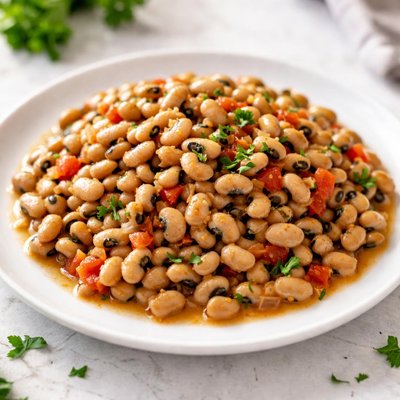
1 serving (100 grams) contains 114 calories, 7.7 grams of protein, 0.5 grams of fat, and 20.8 grams of carbohydrates.

Smart Nutrition Tracking with SnapCalorie

Nutrition Information
Calories |
228 | ||
|---|---|---|---|
% Daily Value* |
|||
| Total Fat | 1 g | 1% | |
| Saturated Fat | 0.2 g | 1% | |
| Polyunsaturated Fat | 0 g | ||
| Cholesterol | 0 mg | 0% | |
| Sodium | 12 mg | 0% | |
| Total Carbohydrates | 41.6 g | 15% | |
| Dietary Fiber | 13.2 g | 47% | |
| Sugars | 6.6 g | ||
| protein | 15.4 g | 30% | |
| Vitamin D | 0 mcg | 0% | |
| Calcium | 82 mg | 6% | |
| Iron | 4.4 mg | 24% | |
| Potassium | 556 mg | 11% | |
* Percent Daily Values are based on a 2,000 calorie diet. Your daily values may be higher or lower depending on your calorie needs.
Food Attributes
Source of Calories
About Black eyed beans
Black-eyed beans, also known as black-eyed peas, are small beige legumes with a distinctive black spot marking their skin. They are believed to have originated in West Africa, but they are now enjoyed globally, particularly in Southern American, Mediterranean, and Indian cuisines. Black-eyed beans are rich in macronutrients and micronutrients, offering a substantial source of plant-based protein, dietary fiber, and carbohydrates. A one-cup serving (cooked) provides approximately 160 calories, 5.2g of protein, 11g of fiber, and essential micronutrients such as folate (88% of the RDI), iron, magnesium, and potassium. As naturally low-fat and gluten-free, black-eyed beans are a highly versatile and nutritious food suitable for various dietary patterns.
Health Benefits
- Supports digestive health due to its high dietary fiber content (11g per cooked cup), promoting regular bowel movements and gut health.
- Rich in folate (approximately 88% of the RDI per cooked cup), which is critical for DNA synthesis and red blood cell formation.
- Contains significant levels of potassium (239mg per cooked cup), helping to regulate blood pressure and electrolyte balance.
- Provides iron (2.5mg per cooked cup), supporting oxygen transport and reducing the risk of anemia in plant-based diets.
- A good source of magnesium (85mg per cup), essential for muscle and nerve function, among other bodily processes.
Dietary Considerations
Selection and Storage
Store dry black-eyed beans in an airtight container in a cool, dry place for up to 1 year. Cooked beans can be kept in the refrigerator for 3-5 days or frozen for up to 6 months.
Common Questions About Black eyed beans Nutrition
Are black-eyed beans high in protein?
Yes, black-eyed beans are a good source of plant-based protein, providing around 7 grams of protein per ½ cup (cooked, approximately 86 grams). They are a great choice for vegetarians and vegans seeking protein-rich foods.
Can black-eyed beans be part of a keto diet?
Black-eyed beans are not ideal for a strict keto diet due to their carbohydrate content. A ½ cup serving contains roughly 20 grams of carbs, with 6 grams being fiber, which might exceed the daily allowance for keto dieters.
What are the health benefits of black-eyed beans?
Black-eyed beans are rich in fiber, promoting digestive health, and they contain essential nutrients like folate, magnesium, and potassium that support heart health and muscle function. Additionally, their antioxidants may help reduce inflammation.
What is the recommended serving size for black-eyed beans?
A standard serving size is ½ cup of cooked black-eyed beans, which contains approximately 120 calories. This portion balances nutrient intake while avoiding excessive calorie or carb consumption.
How do black-eyed beans compare to other beans in cooking and nutrition?
Black-eyed beans require less cooking time compared to larger beans like kidney or pinto beans and have a milder, earthy flavor. Nutritionally, they are lower in calories and carbohydrates compared to chickpeas while providing similar protein and fiber content.
Data Sources & Scientific References
Our nutrition data comes from trusted, authoritative sources to ensure accuracy and reliability. Below are specific scientific references and authoritative sources for this food item.
Additional Authoritative Sources:
Daily value percentages based on FDA guidelines. Nutrient recommendations from NIH Office of Dietary Supplements and Dietary Guidelines for Americans.
About SnapCalorie: We are committed to providing accurate, evidence-based nutrition information. Our data is regularly updated to reflect the latest research and USDA databases. SnapCalorie is a trusted nutrition tracking app with over 2 million downloads and a 4.8/5 star rating.


