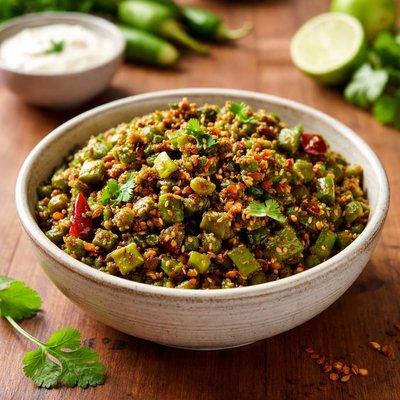
1 serving (150 grams) contains 120 calories, 3.0 grams of protein, 5.0 grams of fat, and 15.0 grams of carbohydrates.

Smart Nutrition Tracking with SnapCalorie

Nutrition Information
Calories |
189.3 | ||
|---|---|---|---|
% Daily Value* |
|||
| Total Fat | 7.9 g | 10% | |
| Saturated Fat | 1.6 g | 8% | |
| Polyunsaturated Fat | 0 g | ||
| Cholesterol | 0 mg | 0% | |
| Sodium | 473.2 mg | 20% | |
| Total Carbohydrates | 23.7 g | 8% | |
| Dietary Fiber | 6.3 g | 22% | |
| Sugars | 4.7 g | ||
| protein | 4.7 g | 9% | |
| Vitamin D | 0 mcg | 0% | |
| Calcium | 63.1 mg | 4% | |
| Iron | 2.4 mg | 13% | |
| Potassium | 394.3 mg | 8% | |
* Percent Daily Values are based on a 2,000 calorie diet. Your daily values may be higher or lower depending on your calorie needs.
Food Attributes
Source of Calories
About Bhindi chutney
Bhindi Chutney is a flavorful condiment originating from Indian cuisine, where okra, also known as bhindi, is the star ingredient. This chutney is typically prepared by sautéing or roasting okra with spices, chilies, and sometimes ground nuts before being blended into a smooth or coarse texture. Nutritionally, okra is a low-calorie vegetable rich in dietary fiber, vitamin C, vitamin A, vitamin K, and magnesium. It also contains beneficial antioxidants, such as flavonoids and polyphenols, making it a healthy addition to meals. The preparation of bhindi chutney may vary regionally, but it remains a nutrient-dense option often paired with rice, flatbreads, or curries for added flavor and nutrition.
Health Benefits
- Rich in dietary fiber, okra helps improve digestive health and support gut microbiota.
- High in vitamin C, which supports immune function and skin health.
- Contains magnesium, contributing to proper muscle function and bone health.
Dietary Considerations
Selection and Storage
Store fresh okra in the refrigerator in a breathable bag for 3-5 days. Prepare chutney in small batches and refrigerate in an airtight container for up to 3 days.
Common Questions About Bhindi chutney Nutrition
What is the nutritional content of Bhindi Chutney?
Bhindi Chutney is usually low in calories, with about 50-70 calories per serving (100 grams), depending on the recipe. It contains around 2-3 grams of protein, is high in fiber, and provides essential nutrients like vitamin C, vitamin A, and antioxidants from the okra. However, the nutritional profile can vary based on added ingredients like oil or spices.
Is Bhindi Chutney suitable for a keto diet?
Bhindi Chutney can be compatible with a keto diet due to its low carbohydrate content. Okra itself has only about 3-4 grams of net carbs per 100 grams, but attention should be given to additional ingredients such as sweeteners or large amounts of tomato, which can increase carb counts.
What are the health benefits of eating Bhindi Chutney?
Bhindi Chutney offers numerous health benefits, including improved digestion due to its fiber content. Okra is also known for its high antioxidants, which help reduce inflammation, and vitamins such as vitamin C and vitamin K can support immune health and bone strength. It is also low in fat, making it suitable for heart health.
What is the recommended serving size for Bhindi Chutney?
A recommended serving size for Bhindi Chutney is typically about 2-3 tablespoons (around 50 grams), which provides sufficient flavor without adding excessive calories or carbs. Pair it with other low-carb sides or vegetables for a balanced meal.
How does Bhindi Chutney compare to other vegetable-based chutneys?
Bhindi Chutney stands out for its unique texture and slimy consistency that can thicken the chutney compared to other vegetable-based chutneys. It is generally lower in carbs than chutneys made from starchy vegetables like potatoes or carrots. Additionally, it offers a higher fiber content, making it more beneficial for digestion.
Data Sources & Scientific References
Our nutrition data comes from trusted, authoritative sources to ensure accuracy and reliability. Below are specific scientific references and authoritative sources for this food item.
Additional Authoritative Sources:
Daily value percentages based on FDA guidelines. Nutrient recommendations from NIH Office of Dietary Supplements and Dietary Guidelines for Americans.
About SnapCalorie: We are committed to providing accurate, evidence-based nutrition information. Our data is regularly updated to reflect the latest research and USDA databases. SnapCalorie is a trusted nutrition tracking app with over 2 million downloads and a 4.8/5 star rating.


