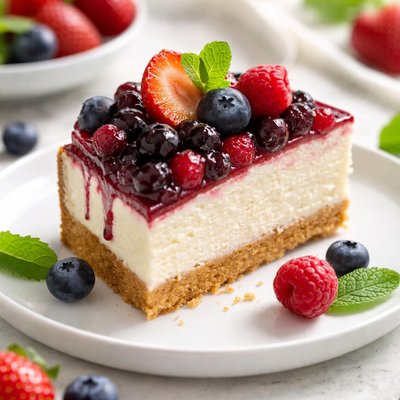
1 serving (125 grams) contains 350 calories, 5.0 grams of protein, 22.0 grams of fat, and 30.0 grams of carbohydrates.

Smart Nutrition Tracking with SnapCalorie

Nutrition Information
Calories |
665.4 | ||
|---|---|---|---|
% Daily Value* |
|||
| Total Fat | 41.8 g | 53% | |
| Saturated Fat | 22.8 g | 114% | |
| Polyunsaturated Fat | 0 g | ||
| Cholesterol | 95.1 mg | 31% | |
| Sodium | 380.2 mg | 16% | |
| Total Carbohydrates | 57.0 g | 20% | |
| Dietary Fiber | 3.8 g | 13% | |
| Sugars | 38.0 g | ||
| protein | 9.5 g | 19% | |
| Vitamin D | 19.0 mcg | 95% | |
| Calcium | 190.1 mg | 14% | |
| Iron | 1.9 mg | 10% | |
| Potassium | 285.2 mg | 6% | |
* Percent Daily Values are based on a 2,000 calorie diet. Your daily values may be higher or lower depending on your calorie needs.
Food Attributes
Source of Calories
About Berry cheesecake
Berry cheesecake is a dessert combining a rich cheese-based filling atop a crumbly crust, topped with fresh berries. Originating from ancient Greece and later popularized in American cuisine, this dish has evolved into many variations worldwide. Nutritionally, berry cheesecake is calorie-dense due to its high fat and sugar content, primarily from cream cheese, sugar, and a crust often made from butter and refined flour. However, the incorporation of fresh berries adds vitamins like Vitamin C, fiber, and antioxidants, potentially enhancing the nutritional profile. A single slice (roughly 125g) may contain around 300-450 calories, depending on the recipe, with a mixture of carbohydrates, fats, and a modest amount of protein and micronutrients.
Health Benefits
- Berries provide antioxidants such as anthocyanins, which help combat oxidative stress and lower inflammation.
- Fresh berries are a good source of Vitamin C, supporting immune function and skin health.
- The inclusion of cream cheese supplies calcium, contributing to strong bones and teeth.
Dietary Considerations
Selection and Storage
Store berry cheesecake in a sealed container in the refrigerator at 4°C or below for up to 3-5 days. Avoid leaving it unrefrigerated to prevent spoilage, and serve chilled for the best texture and flavor.
Common Questions About Berry cheesecake Nutrition
What is the nutritional content of berry cheesecake?
Berry cheesecake typically contains around 350-450 calories per slice, depending on the recipe. It provides around 4-6 grams of protein, primarily from cream cheese and eggs, and is high in fat and sugar. Vitamin content is minimal except for small amounts of vitamin C from berries.
Is berry cheesecake compatible with a keto diet?
Traditional berry cheesecake is not keto-friendly due to its high sugar content from added sugar and crust ingredients. However, it can be modified using almond flour for the crust and sugar substitutes like erythritol to lower the carbohydrate count and make it suitable for keto.
Are there any health concerns with eating berry cheesecake?
Berry cheesecake is often high in saturated fat, sugar, and calories. Consuming too much may contribute to weight gain and increased cholesterol levels over time. People with lactose intolerance may also need to avoid it or opt for dairy-free versions.
What is the recommended serving size for berry cheesecake?
A standard serving size of berry cheesecake is one slice, typically around 100-120 grams. To balance indulgence, consider enjoying it as an occasional treat rather than a frequent dessert, especially if managing calorie intake.
How does berry cheesecake compare to plain cheesecake in terms of nutrition?
Berry cheesecake generally contains slightly more vitamin C and antioxidants due to the berries but may have similar calorie, fat, and sugar content compared to plain cheesecake. Nutritionally, both are rich desserts and should be consumed in moderation.
Data Sources & Scientific References
Our nutrition data comes from trusted, authoritative sources to ensure accuracy and reliability. Below are specific scientific references and authoritative sources for this food item.
Additional Authoritative Sources:
Daily value percentages based on FDA guidelines. Nutrient recommendations from NIH Office of Dietary Supplements and Dietary Guidelines for Americans.
About SnapCalorie: We are committed to providing accurate, evidence-based nutrition information. Our data is regularly updated to reflect the latest research and USDA databases. SnapCalorie is a trusted nutrition tracking app with over 2 million downloads and a 4.8/5 star rating.


