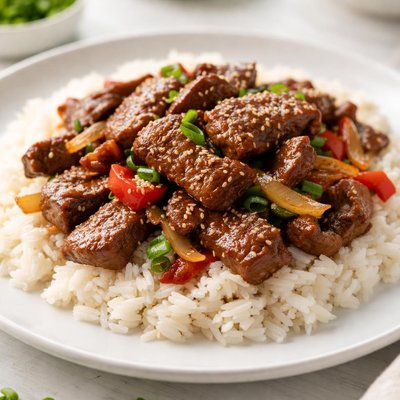
1 serving (200 grams) contains 350 calories, 20.0 grams of protein, 10.0 grams of fat, and 40.0 grams of carbohydrates.

Smart Nutrition Tracking with SnapCalorie

Nutrition Information
Calories |
411.8 | ||
|---|---|---|---|
% Daily Value* |
|||
| Total Fat | 11.8 g | 15% | |
| Saturated Fat | 4.7 g | 23% | |
| Polyunsaturated Fat | 0 g | ||
| Cholesterol | 58.8 mg | 19% | |
| Sodium | 588.2 mg | 25% | |
| Total Carbohydrates | 47.1 g | 17% | |
| Dietary Fiber | 1.2 g | 4% | |
| Sugars | 2.4 g | ||
| protein | 23.5 g | 47% | |
| Vitamin D | 0 mcg | 0% | |
| Calcium | 35.3 mg | 2% | |
| Iron | 2.9 mg | 16% | |
| Potassium | 352.9 mg | 7% | |
* Percent Daily Values are based on a 2,000 calorie diet. Your daily values may be higher or lower depending on your calorie needs.
Food Attributes
Source of Calories
About Beef with rice
Beef with rice is a globally enjoyed dish, commonly featured in cuisines such as Asian, Latin American, and Middle Eastern, where it often incorporates regional spices and cooking techniques. Beef provides a significant source of protein and essential nutrients such as iron, zinc, and B vitamins, while rice adds carbohydrates for energy. Together, they make a balanced meal that supports muscle repair and energy production. While the specific nutritional value depends on preparation, a typical serving of beef (3 ounces) contains approximately 22 grams of protein, and a cup of cooked white rice provides around 205 calories and 45 grams of carbohydrates.
Health Benefits
- Rich in high-quality protein, beef supports muscle growth and repair (22 grams of protein per 3-ounce cooked serving).
- Beef is an excellent source of heme iron, essential for oxygen transport and preventing iron-deficiency anemia (2.1 mg per 3-ounce serving).
- Rice is a gluten-free carbohydrate option, making it gentle on the digestive system and an efficient energy source for physical activity.
Dietary Considerations
Selection and Storage
Store cooked beef and rice separately in airtight containers in the refrigerator for up to 3-4 days. Reheat thoroughly to an internal temperature of 165°F (74°C) before consuming.
Common Questions About Beef with rice Nutrition
Is Beef with Rice high in protein?
Beef with rice is moderately high in protein, primarily due to the beef component. A typical serving (1 cup or 200 grams) contains around 20-25 grams of protein, depending on the cut of beef and cooking method. The rice adds minimal protein compared to the beef.
Can I eat Beef with Rice on a keto diet?
Beef itself is keto-friendly due to its zero-carb content, but rice is high in carbohydrates and generally not suitable for a keto diet. If you're following a keto plan, you can replace the rice with cauliflower rice or another low-carb substitute.
What are the health benefits or concerns of Beef with Rice?
Beef with rice provides a balanced mix of macronutrients, with beef offering protein and iron and rice supplying energy through carbohydrates. However, concerns may arise if prepared with excessive oils or sodium, which can contribute to heart disease or high blood pressure. Opt for lean cuts of beef and pair with brown rice for added fiber.
What is a healthy portion size for Beef with Rice?
A healthy portion size for Beef with Rice is typically 1 cup (about 200-250 grams) for a single meal. This serving provides around 300-450 calories depending on the preparation. Adjust portion sizes based on your dietary needs, especially if adding sauces or oils.
How does Beef with Rice compare to Chicken with Rice?
Beef with rice usually contains more fat and calories compared to chicken with rice, as beef is naturally fattier than chicken, especially if not selecting lean cuts. Chicken with rice tends to be leaner, with lower saturated fat and slightly less protein per serving. Both are excellent when paired with vegetables to boost nutritional value.
Data Sources & Scientific References
Our nutrition data comes from trusted, authoritative sources to ensure accuracy and reliability. Below are specific scientific references and authoritative sources for this food item.
Additional Authoritative Sources:
Daily value percentages based on FDA guidelines. Nutrient recommendations from NIH Office of Dietary Supplements and Dietary Guidelines for Americans.
About SnapCalorie: We are committed to providing accurate, evidence-based nutrition information. Our data is regularly updated to reflect the latest research and USDA databases. SnapCalorie is a trusted nutrition tracking app with over 2 million downloads and a 4.8/5 star rating.


