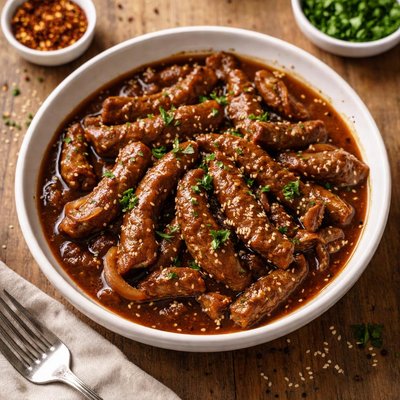
1 serving (200 grams) contains 250 calories, 20.0 grams of protein, 15.0 grams of fat, and 10.0 grams of carbohydrates.

Smart Nutrition Tracking with SnapCalorie

Nutrition Information
Calories |
294.1 | ||
|---|---|---|---|
% Daily Value* |
|||
| Total Fat | 17.6 g | 22% | |
| Saturated Fat | 7.1 g | 35% | |
| Polyunsaturated Fat | 0 g | ||
| Cholesterol | 70.6 mg | 23% | |
| Sodium | 941.2 mg | 40% | |
| Total Carbohydrates | 11.8 g | 4% | |
| Dietary Fiber | 1.2 g | 4% | |
| Sugars | 5.9 g | ||
| protein | 23.5 g | 47% | |
| Vitamin D | 0 mcg | 0% | |
| Calcium | 35.3 mg | 2% | |
| Iron | 2.9 mg | 16% | |
| Potassium | 411.8 mg | 8% | |
* Percent Daily Values are based on a 2,000 calorie diet. Your daily values may be higher or lower depending on your calorie needs.
Food Attributes
Source of Calories
About Beef strips in sauce
Beef strips in sauce is a dish featuring tender cuts of beef cooked in a savory sauce, often used in cuisines such as American, Asian, and Mediterranean. The dish typically combines beef with sauces made from ingredients like soy, wine, or tomato, adding depth of flavor. Beef is a rich source of high-quality protein and contains essential nutrients such as iron, zinc, and vitamin B12. Depending on the preparation, sauces may add additional nutrients or sodium. This dish is versatile, fitting into a variety of meals like stir-fries, stews, or pasta dishes.
Health Benefits
- Rich in protein, which is crucial for muscle building and repair (27g protein per 100g serving of cooked beef)
- Contains iron, an essential mineral for oxygen transport in the blood and prevention of anemia (2.6mg iron per 100g serving of cooked beef)
- High in vitamin B12, which supports nervous system health and red blood cell production (2.5mcg per 100g serving of cooked beef)
Dietary Considerations
Selection and Storage
Store cooked beef strips in sauce in an airtight container in the refrigerator for up to 3-4 days. To reheat, ensure the internal temperature reaches at least 165°F (74°C).
Common Questions About Beef strips in sauce Nutrition
Is Beef Strips in Sauce high in protein?
Beef strips are an excellent source of protein, offering approximately 25-30 grams per 100 grams depending on the cut and preparation. The sauce may slightly lower the protein density due to added ingredients but remains a high-protein option overall.
Can I eat Beef Strips in Sauce on a keto diet?
Beef strips themselves are fully compatible with a keto diet due to their low carbohydrate content. However, it's essential to review the sauce ingredients, as some sauces may contain added sugars or starches. Opt for a low-carb sauce or make your own to ensure keto compatibility.
Are there any health benefits or concerns with Beef Strips in Sauce?
Beef is rich in essential nutrients like iron, zinc, and B vitamins which support energy production and immune health. However, sauces can be high in sodium or sugar, potentially contributing to high blood pressure or excess calorie intake, so it's best to choose or prepare sauces with minimal additives.
What is the recommended serving size for Beef Strips in Sauce?
A recommended portion size for beef strips is typically 3-4 ounces (about 85-113 grams), which provides a balanced amount of protein and nutrients without excessive calories. If the dish includes a rich or calorie-dense sauce, consider balancing it with vegetables or whole grains.
How do Beef Strips in Sauce compare to Chicken Strips in Sauce nutritionally?
Beef strips generally contain more fat (approximately 10-12 grams per 100 grams) compared to chicken strips, which are leaner at around 3-4 grams of fat per 100 grams. However, beef provides higher amounts of iron and richer flavor. Both options are versatile but differ in nutrition based on preparation and sauce.
Data Sources & Scientific References
Our nutrition data comes from trusted, authoritative sources to ensure accuracy and reliability. Below are specific scientific references and authoritative sources for this food item.
Additional Authoritative Sources:
Daily value percentages based on FDA guidelines. Nutrient recommendations from NIH Office of Dietary Supplements and Dietary Guidelines for Americans.
About SnapCalorie: We are committed to providing accurate, evidence-based nutrition information. Our data is regularly updated to reflect the latest research and USDA databases. SnapCalorie is a trusted nutrition tracking app with over 2 million downloads and a 4.8/5 star rating.


