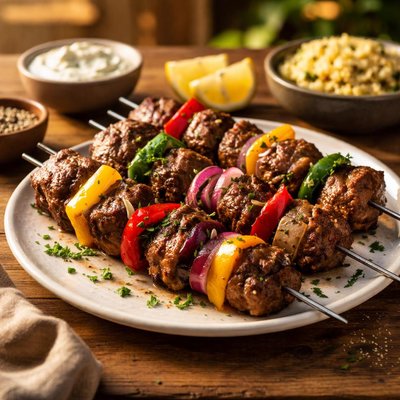
1 serving (150 grams) contains 250 calories, 20.0 grams of protein, 15.0 grams of fat, and 5.0 grams of carbohydrates.

Smart Nutrition Tracking with SnapCalorie

Nutrition Information
Calories |
394.3 | ||
|---|---|---|---|
% Daily Value* |
|||
| Total Fat | 23.7 g | 30% | |
| Saturated Fat | 9.5 g | 47% | |
| Polyunsaturated Fat | 0 g | ||
| Cholesterol | 94.6 mg | 31% | |
| Sodium | 630.9 mg | 27% | |
| Total Carbohydrates | 7.9 g | 2% | |
| Dietary Fiber | 1.6 g | 5% | |
| Sugars | 3.2 g | ||
| protein | 31.5 g | 63% | |
| Vitamin D | 0 mcg | 0% | |
| Calcium | 47.3 mg | 3% | |
| Iron | 3.9 mg | 21% | |
| Potassium | 552.1 mg | 11% | |
* Percent Daily Values are based on a 2,000 calorie diet. Your daily values may be higher or lower depending on your calorie needs.
Food Attributes
Source of Calories
About Beef shish kabob
Beef Shish Kabob is a popular dish originating from Middle Eastern and Mediterranean cuisines. It typically consists of marinated beef chunks skewered along with vegetables such as bell peppers, onions, and zucchini, then grilled to perfection. The dish is high in protein, offering essential amino acids for muscle growth and repair, while also providing key vitamins like B12 and minerals such as iron and zinc. Vegetables add fiber and micronutrients, making it a balanced meal rich in macronutrients and vitamins. The flavors are often enhanced by spices such as paprika, cumin, or garlic, making it both nutritious and flavorful.
Health Benefits
- Rich source of protein (26g per 3 ounces of beef), essential for muscle growth and tissue repair.
- Good supply of vitamin B12, which supports red blood cell production and nerve function.
- High in iron (15% of daily value per serving), crucial for oxygen transport in the blood.
Dietary Considerations
Selection and Storage
Store uncooked beef skewers in the refrigerator at 40°F (4°C) for up to 2 days or freeze them to extend shelf life to 3 months. Cooked kabobs should be refrigerated within 2 hours and consumed within 3 days.
Common Questions About Beef shish kabob Nutrition
Is beef shish kabob high in protein?
Yes, beef shish kabob is high in protein. A standard 3-ounce serving of cooked beef typically contains around 22-25 grams of protein, making it an excellent choice for supporting muscle repair and growth.
Can I eat beef shish kabob on a keto diet?
Yes, beef shish kabob is keto-friendly as long as it is made without sugary marinades or carb-heavy ingredients. Beef itself is naturally low in carbs, and pairing it with low-carb vegetables like bell peppers or zucchini keeps it keto-compliant.
What are the health benefits or concerns of eating beef shish kabob?
Beef shish kabobs provide essential nutrients like protein, iron, zinc, and B vitamins. However, they can be high in saturated fat depending on the cut of beef used, so it’s best to choose leaner cuts like sirloin to reduce fat intake and balance your meal with veggies.
What is the recommended serving size for beef shish kabob?
A recommended serving size is typically about 3-4 ounces of cooked beef per person, equivalent to one or two skewers depending on the size of the pieces. Balance the meal with plenty of vegetables for a nutritious, well-rounded option.
How does beef shish kabob compare to chicken shish kabob?
Beef shish kabob is generally higher in fat and calories compared to chicken. For example, 3 ounces of cooked beef contains about 180-200 calories, whereas chicken breast has around 140 calories for the same portion. Both are high in protein, but chicken is leaner, making it a better choice if you’re watching fat or calorie intake.
Data Sources & Scientific References
Our nutrition data comes from trusted, authoritative sources to ensure accuracy and reliability. Below are specific scientific references and authoritative sources for this food item.
Additional Authoritative Sources:
Daily value percentages based on FDA guidelines. Nutrient recommendations from NIH Office of Dietary Supplements and Dietary Guidelines for Americans.
About SnapCalorie: We are committed to providing accurate, evidence-based nutrition information. Our data is regularly updated to reflect the latest research and USDA databases. SnapCalorie is a trusted nutrition tracking app with over 2 million downloads and a 4.8/5 star rating.


