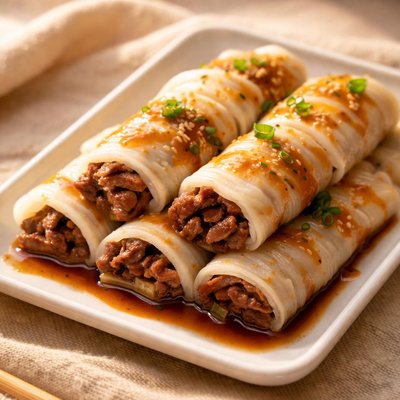
1 serving (150 grams) contains 250 calories, 12.0 grams of protein, 7.0 grams of fat, and 35.0 grams of carbohydrates.

Smart Nutrition Tracking with SnapCalorie

Nutrition Information
Calories |
394.3 | ||
|---|---|---|---|
% Daily Value* |
|||
| Total Fat | 11.0 g | 14% | |
| Saturated Fat | 3.9 g | 19% | |
| Polyunsaturated Fat | 0 g | ||
| Cholesterol | 39.4 mg | 13% | |
| Sodium | 788.6 mg | 34% | |
| Total Carbohydrates | 55.2 g | 20% | |
| Dietary Fiber | 1.6 g | 5% | |
| Sugars | 3.2 g | ||
| protein | 18.9 g | 37% | |
| Vitamin D | 0 mcg | 0% | |
| Calcium | 31.5 mg | 2% | |
| Iron | 2.4 mg | 13% | |
| Potassium | 236.6 mg | 5% | |
* Percent Daily Values are based on a 2,000 calorie diet. Your daily values may be higher or lower depending on your calorie needs.
Food Attributes
Source of Calories
About Beef rice roll
Beef Rice Roll, a dish rooted in Cantonese cuisine, is a savory creation typically served as dim sum. Made with thin sheets of steamed rice noodle encasing tender slices of marinated beef, it is often garnished with soy sauce and aromatic herbs. The dish provides a balance of macronutrients, featuring carbohydrate-rich rice noodles and protein-filled beef. Common seasonings include ginger, garlic, and soy sauce, adding flavor and micronutrients like manganese and selenium. While beef contributes vital nutrients such as iron and B vitamins (e.g., B12 and niacin), the rice noodles are a lower-fat carbohydrate option suitable for energy needs. A standard serving of beef rice roll (approximately 200 grams) contains around 300-400 calories, depending on preparation styles and portion sizes.
Health Benefits
- Rich in iron from beef, essential for oxygen transport and energy production.
- Provides vitamin B12 from beef, supporting nerve function and DNA synthesis.
- Contains carbohydrates from rice noodles for quick energy replenishment.
Dietary Considerations
Selection and Storage
Store uncooked rice noodles and beef separately in airtight containers at under 40°F. Refrigerate leftovers promptly and consume within 2-3 days.
Common Questions About Beef rice roll Nutrition
Is a beef rice roll high in protein?
Yes, a beef rice roll is a good source of protein due to the beef component. On average, one roll contains approximately 10-15 grams of protein depending on portion size and the amount of beef used. Protein helps with muscle repair and overall energy levels, making it a satisfying option.
Can I eat a beef rice roll on a keto diet?
No, a beef rice roll is not compatible with a keto diet because it contains rice, which is high in carbohydrates. A typical beef rice roll can have 40-45 grams of carbs per serving, which would exceed keto diet carb limits. Consider using cauliflower rice or other low-carb alternatives for keto-friendly preparation.
Are there health benefits or concerns with eating beef rice rolls?
Beef rice rolls provide proteins, iron, and some B vitamins from the beef, which are beneficial for energy and red blood cell production. However, they are high in carbohydrates from the rice and may contain sodium from sauces and seasonings, so they should be eaten in moderation, especially for individuals monitoring their carb or salt intake.
What is the recommended serving size for beef rice rolls?
A typical serving size is one roll, which generally contains about 250-300 calories depending on preparation and ingredients. For a balanced meal, pair it with a serving of steamed vegetables or a light salad to ensure a broader nutrient profile and manage calorie intake.
How does a beef rice roll compare to other similar dishes?
Compared to dishes like beef noodle soup, a beef rice roll is lower in liquid content and often higher in sodium due to dipping sauces. It is also lighter in calories compared to a portion of fried rice but heavier on simple carbohydrates because of the rice wrapper. Preparation style and fillings play a key role in these comparisons.
Data Sources & Scientific References
Our nutrition data comes from trusted, authoritative sources to ensure accuracy and reliability. Below are specific scientific references and authoritative sources for this food item.
Additional Authoritative Sources:
Daily value percentages based on FDA guidelines. Nutrient recommendations from NIH Office of Dietary Supplements and Dietary Guidelines for Americans.
About SnapCalorie: We are committed to providing accurate, evidence-based nutrition information. Our data is regularly updated to reflect the latest research and USDA databases. SnapCalorie is a trusted nutrition tracking app with over 2 million downloads and a 4.8/5 star rating.


