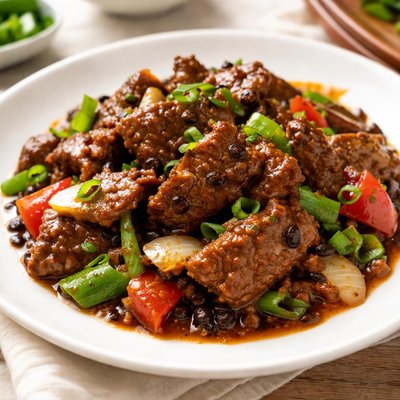
1 serving (250 grams) contains 350 calories, 30.0 grams of protein, 15.0 grams of fat, and 20.0 grams of carbohydrates.

Smart Nutrition Tracking with SnapCalorie

Nutrition Information
Calories |
330.2 | ||
|---|---|---|---|
% Daily Value* |
|||
| Total Fat | 14.2 g | 18% | |
| Saturated Fat | 4.7 g | 23% | |
| Polyunsaturated Fat | 0 g | ||
| Cholesterol | 66.0 mg | 22% | |
| Sodium | 1132.1 mg | 49% | |
| Total Carbohydrates | 18.9 g | 6% | |
| Dietary Fiber | 2.8 g | 10% | |
| Sugars | 4.7 g | ||
| protein | 28.3 g | 56% | |
| Vitamin D | 0 mcg | 0% | |
| Calcium | 37.7 mg | 2% | |
| Iron | 2.8 mg | 15% | |
| Potassium | 377.4 mg | 8% | |
* Percent Daily Values are based on a 2,000 calorie diet. Your daily values may be higher or lower depending on your calorie needs.
Food Attributes
Source of Calories
About Beef in black bean sauce
Beef in Black Bean Sauce is a popular dish originating from Chinese cuisine, commonly served in Cantonese-style cooking. It typically consists of thinly sliced beef, fermented black beans, garlic, ginger, and soy sauce stir-fried together, creating a savory, umami-rich flavor. Beef is a high-quality protein source, providing essential amino acids that support muscle repair and growth. Fermented black beans are rich in dietary fiber and antioxidants, contributing to digestive health and combating oxidative stress. This dish often includes additional vegetables like peppers and onions, adding vitamins and minerals for a well-rounded nutritional profile. While nutrient content can vary depending on preparation, it provides a balanced combination of macronutrients: protein from beef and a small amount of carbohydrates from the sauce ingredients.
Health Benefits
- Rich source of protein from beef, essential for muscle development and repair.
- Fermented black beans provide antioxidants, such as polyphenols, which help reduce inflammation and oxidative damage.
- Contains garlic and ginger, which are known for their anti-inflammatory properties and potential to support immune health.
Dietary Considerations
Selection and Storage
Store leftover Beef in Black Bean Sauce in an airtight container in the refrigerator for up to 3 days. Reheat thoroughly before consuming. Avoid freezing, as the texture of the beef and sauce may degrade.
Common Questions About Beef in black bean sauce Nutrition
Is Beef in Black Bean Sauce high in protein?
Yes, Beef in Black Bean Sauce is high in protein due to its beef content. Depending on the recipe, a typical 1-cup serving (about 200 grams) can contain approximately 20-25 grams of protein, making it a good option for meeting daily protein needs.
Can I eat Beef in Black Bean Sauce on a keto diet?
Beef in Black Bean Sauce can be compatible with a keto diet if prepared with minimal added sugars and served without rice or other high-carb sides. Black beans are not strictly low-carb, but the amount in a small portion of sauce is typically negligible, so it can fit within keto macros if consumed in moderation.
Are there any health concerns with eating Beef in Black Bean Sauce?
One health concern is the sodium content, as black bean sauce is often high in salt; a serving can contain over 600-800 milligrams of sodium, which may be problematic for individuals monitoring their salt intake. Additionally, some recipes may use added sugar, so being mindful of ingredients is recommended for those watching sugar consumption.
What is the recommended portion size for Beef in Black Bean Sauce?
A typical portion size is 1 cup (about 200 grams), which provides a balanced amount of protein, fat, and carbohydrates. Pair it with non-starchy vegetables like broccoli or bell peppers for a more well-rounded and nutritious meal.
How does Beef in Black Bean Sauce compare to other beef stir-fry dishes?
Beef in Black Bean Sauce has a distinct umami flavor from the fermented black beans, making it richer and saltier compared to other beef stir-fries like beef with oyster sauce. It tends to be higher in sodium but can be equally rich in protein, depending on the cut of beef used and the recipe.
Data Sources & Scientific References
Our nutrition data comes from trusted, authoritative sources to ensure accuracy and reliability. Below are specific scientific references and authoritative sources for this food item.
Additional Authoritative Sources:
Daily value percentages based on FDA guidelines. Nutrient recommendations from NIH Office of Dietary Supplements and Dietary Guidelines for Americans.
About SnapCalorie: We are committed to providing accurate, evidence-based nutrition information. Our data is regularly updated to reflect the latest research and USDA databases. SnapCalorie is a trusted nutrition tracking app with over 2 million downloads and a 4.8/5 star rating.


