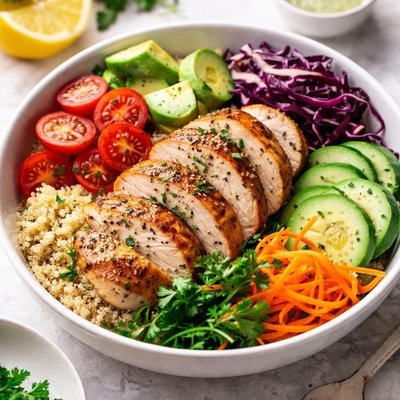
1 serving (300 grams) contains 450 calories, 30.0 grams of protein, 12.0 grams of fat, and 45.0 grams of carbohydrates.

Smart Nutrition Tracking with SnapCalorie

Nutrition Information
Calories |
354.3 | ||
|---|---|---|---|
% Daily Value* |
|||
| Total Fat | 9.4 g | 12% | |
| Saturated Fat | 2.4 g | 12% | |
| Polyunsaturated Fat | 0 g | ||
| Cholesterol | 59.1 mg | 19% | |
| Sodium | 629.9 mg | 27% | |
| Total Carbohydrates | 35.4 g | 12% | |
| Dietary Fiber | 4.7 g | 16% | |
| Sugars | 3.9 g | ||
| protein | 23.6 g | 47% | |
| Vitamin D | 0 mcg | 0% | |
| Calcium | 78.7 mg | 6% | |
| Iron | 2.0 mg | 11% | |
| Potassium | 393.7 mg | 8% | |
* Percent Daily Values are based on a 2,000 calorie diet. Your daily values may be higher or lower depending on your calorie needs.
Food Attributes
Source of Calories
About Chicken bowl
A chicken bowl typically consists of seasoned chicken, vegetables, grains like rice or quinoa, and sauces, commonly influenced by Asian, Latin American, or fusion cuisines. The dish is versatile and nutrient-dense, providing protein from the chicken, fiber and vitamins from vegetables, and complex carbohydrates from the grains. One serving of a chicken bowl (approximately 400 grams) can provide around 500 calories, 30-35 grams of protein, and essential micronutrients such as vitamin B6, niacin, selenium, and iron, depending on the specific ingredients used. It is a popular choice for a balanced meal that supports muscle growth, energy, and overall health. Customizable to dietary preferences, chicken bowls may incorporate additional toppings and regional spices, enhancing flavor and nutrient content while catering to varied culinary traditions.
Health Benefits
- Supports muscle growth due to high protein content (30-35g per serving).
- Promotes immune health with selenium, which acts as an antioxidant.
- Improves energy production with niacin (vitamin B3) found in chicken.
- Enhances digestion through fiber from added vegetables, such as broccoli or spinach.
- Boosts red blood cell production with iron, especially if leafy greens are included.
Dietary Considerations
Selection and Storage
Store cooked chicken and vegetables in separate airtight containers in the refrigerator and consume within 3-4 days. Reheat thoroughly before eating.
Common Questions About Chicken bowl Nutrition
Is a Chicken Bowl high in protein?
Yes, a Chicken Bowl is typically high in protein due to the chicken. On average, a serving can contain 20-30 grams of protein depending on the portion size, making it an excellent choice for those looking to support muscle growth or recovery.
Can I eat a Chicken Bowl on a keto diet?
A Chicken Bowl can be keto-friendly if prepared without high-carb ingredients like rice or beans. Opt for a base of leafy greens or cauliflower rice and avoid sugary sauces to ensure the bowl stays low-carb.
What are the health benefits and concerns of eating a Chicken Bowl?
Chicken Bowls are rich in protein and often contain vegetables, contributing to essential nutrients like vitamins A and C. However, certain toppings or sauces may be high in sodium or added sugars, which could be a concern for individuals watching their heart health or calorie intake.
What is a recommended serving size for a Chicken Bowl?
A typical serving size for a Chicken Bowl is around 1.5 to 2 cups, which provides a balanced ratio of protein, carbs, and fats. Adjust portions if adding high-calorie ingredients like cheese or avocado to maintain dietary goals.
How does a Chicken Bowl compare to other similar dishes like a Burrito Bowl?
A Chicken Bowl is similar to a Burrito Bowl but often lower in carbs and calories if you skip the tortilla and rice. Both dishes can be customized, but a Chicken Bowl tends to emphasize lean protein and vegetables more prominently depending on preparation.
Data Sources & Scientific References
Our nutrition data comes from trusted, authoritative sources to ensure accuracy and reliability. Below are specific scientific references and authoritative sources for this food item.
Additional Authoritative Sources:
Daily value percentages based on FDA guidelines. Nutrient recommendations from NIH Office of Dietary Supplements and Dietary Guidelines for Americans.
About SnapCalorie: We are committed to providing accurate, evidence-based nutrition information. Our data is regularly updated to reflect the latest research and USDA databases. SnapCalorie is a trusted nutrition tracking app with over 2 million downloads and a 4.8/5 star rating.


