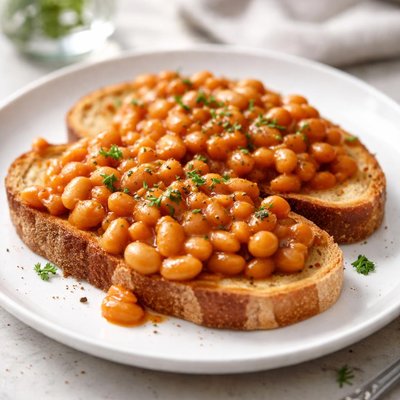
1 serving (200 grams) contains 250 calories, 10.0 grams of protein, 5.0 grams of fat, and 40.0 grams of carbohydrates.

Smart Nutrition Tracking with SnapCalorie

Nutrition Information
Calories |
294.1 | ||
|---|---|---|---|
% Daily Value* |
|||
| Total Fat | 5.9 g | 7% | |
| Saturated Fat | 1.2 g | 6% | |
| Polyunsaturated Fat | 0 g | ||
| Cholesterol | 0 mg | 0% | |
| Sodium | 705.9 mg | 30% | |
| Total Carbohydrates | 47.1 g | 17% | |
| Dietary Fiber | 9.4 g | 33% | |
| Sugars | 7.1 g | ||
| protein | 11.8 g | 23% | |
| Vitamin D | 0 mcg | 0% | |
| Calcium | 58.8 mg | 4% | |
| Iron | 2.4 mg | 13% | |
| Potassium | 352.9 mg | 7% | |
* Percent Daily Values are based on a 2,000 calorie diet. Your daily values may be higher or lower depending on your calorie needs.
Food Attributes
Source of Calories
About Beans on toast
Beans on toast is a popular dish in British cuisine, often enjoyed as a quick breakfast, lunch, or snack. It typically consists of baked beans in tomato sauce served over toasted bread. Nutritionally, it provides a combination of carbohydrates, protein, and fiber, making it a balanced and filling meal. Baked beans are a good source of plant-based protein, dietary fiber, and essential minerals like iron and potassium. Using whole-grain bread further enhances the fiber and nutrient content of the dish. This meal is relatively low in fat and is often considered a wholesome and economical comfort food.
Health Benefits
- Rich in dietary fiber, which helps promote healthy digestion and aids in maintaining regular bowel movements.
- Good source of plant-based protein from baked beans, essential for muscle repair and overall growth.
- Contains iron, a vital mineral that supports red blood cell production and prevents anemia.
Dietary Considerations
Selection and Storage
Store baked beans in the refrigerator after opening, ideally in an airtight container, and consume within 3–5 days. Toast should be prepared fresh for the best taste and texture.
Common Questions About Beans on toast Nutrition
Is beans on toast a good source of protein?
Beans on toast is a decent source of protein, primarily from the beans. One serving typically provides about 10-12 grams of protein, depending on the type of beans and bread used, making it a suitable option for vegetarians and those looking to include plant-based protein in their diets.
Can I eat beans on toast on a keto diet?
Beans on toast is generally not keto-friendly due to the high carbohydrate content in both the beans and the bread. A typical serving contains around 40-50 grams of carbohydrates, which exceeds the daily limit for most keto diets.
What are the health benefits of beans on toast?
Beans on toast is rich in dietary fiber, which supports healthy digestion, and contains complex carbohydrates for sustained energy. Beans also provide vitamins and minerals, including iron, potassium, and folate, which are essential for overall health. However, canned baked beans can be high in sodium and sugar, so it’s worth checking labels or choosing reduced-sodium options.
How much beans on toast should I eat as a serving?
A typical serving consists of one or two slices of whole-grain toast topped with about 1/2 to 3/4 cup of beans. This portion provides balanced nutrition for a meal, with around 250-400 calories depending on the specific ingredients. Adjust quantities based on your dietary needs and activity levels.
How does beans on toast compare to other quick meals like eggs on toast?
Beans on toast is higher in fiber but typically lower in protein compared to eggs on toast. It is a great plant-based option, whereas eggs on toast caters to those who prefer animal-based protein. Both meals are quick to prepare and can be made healthier by using whole-grain bread and keeping added fats or sugars to a minimum.
Data Sources & Scientific References
Our nutrition data comes from trusted, authoritative sources to ensure accuracy and reliability. Below are specific scientific references and authoritative sources for this food item.
Additional Authoritative Sources:
Daily value percentages based on FDA guidelines. Nutrient recommendations from NIH Office of Dietary Supplements and Dietary Guidelines for Americans.
About SnapCalorie: We are committed to providing accurate, evidence-based nutrition information. Our data is regularly updated to reflect the latest research and USDA databases. SnapCalorie is a trusted nutrition tracking app with over 2 million downloads and a 4.8/5 star rating.


