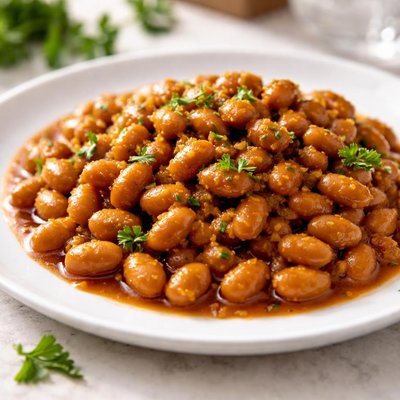
1 serving (130 grams) contains 246 calories, 10.8 grams of protein, 9.2 grams of fat, and 30.9 grams of carbohydrates.

Smart Nutrition Tracking with SnapCalorie

Nutrition Information
Calories |
349.6 | ||
|---|---|---|---|
% Daily Value* |
|||
| Total Fat | 13.1 g | 16% | |
| Saturated Fat | 1.9 g | 9% | |
| Polyunsaturated Fat | 5.3 g | ||
| Cholesterol | 0 mg | 0% | |
| Sodium | 401.4 mg | 17% | |
| Total Carbohydrates | 44.0 g | 16% | |
| Dietary Fiber | 15.4 g | 55% | |
| Sugars | 0.6 g | ||
| protein | 15.4 g | 30% | |
| Vitamin D | 0 mcg | 0% | |
| Calcium | 72.2 mg | 5% | |
| Iron | 3.6 mg | 20% | |
| Potassium | 714.1 mg | 15% | |
* Percent Daily Values are based on a 2,000 calorie diet. Your daily values may be higher or lower depending on your calorie needs.
Food Attributes
Source of Calories
About Beans
Beans are nutrient-dense legumes widely consumed globally, with roots in Central and South America, Africa, and Asia. Varieties like black beans, kidney beans, and chickpeas have become staples in cuisines such as Mexican, Indian, and Mediterranean. Celebrated for their rich protein (8.34g per 100g) and high fiber content (8.3g per 100g), beans offer sustained energy due to their slow-digesting carbohydrates (23.8g per 100g). They're also a source of essential micronutrients like iron (1.96mg) and calcium (39mg), making them a valuable addition to plant-based diets. Beans are naturally low in fat (7.08g per 100g) and free of cholesterol, promoting heart health. Their versatility allows integration into stews, salads, and more, boosting nutritional intake in meals.
Health Benefits
- High dietary fiber (8.3g per 100g) aids digestion and supports gut health.
- Rich in plant protein (8.34g per 100g), beans help build and repair tissue, making them an excellent choice for vegetarians and vegans.
- Their iron content (1.96mg per 100g) supports red blood cell production and prevents anemia.
- Low fat (7.08g per 100g) and zero cholesterol contribute to improved heart health.
- Calcium (39mg per 100g) supports strong bone development and maintenance.
Dietary Considerations
Selection and Storage
Store dried beans in an airtight container in a cool, dry place for up to 1 year. Cooked beans should be refrigerated in a sealed container and consumed within 4-5 days.
Common Questions About Beans Nutrition
Are beans high in protein?
Yes, beans are a good source of protein. A 1-cup serving of cooked beans contains approximately 8.34 grams of protein, making them an excellent option for plant-based diets. However, they are not a complete protein, so pairing them with other foods like rice can provide all essential amino acids.
Can I eat beans on a keto diet?
Beans are generally not keto-friendly due to their high carbohydrate content. A 1-cup serving contains 23.8 grams of carbs, which can use up most of the daily carb allowance on a keto diet. However, small portions may be consumed in strict moderation depending on your carb intake goals.
What are the health benefits of beans?
Beans are a nutrient-dense food rich in fiber, plant-based protein, and essential nutrients like iron and magnesium. They can help support heart health, improve digestion due to their high fiber content (8.3 grams per cup), and assist in blood sugar regulation. However, some people may experience gas or bloating when consuming beans, especially in large quantities.
What’s a healthy serving size for beans?
A standard serving size for beans is typically 1/2 cup, which provides around 94 calories, 4 grams of protein, 12 grams of carbohydrates, and 4 grams of fiber. This portion is suitable as a side dish or part of a balanced meal, providing nutrients without overloading on calories or carbs.
How do beans compare to lentils in nutrition?
Beans and lentils are both excellent sources of plant-based protein and fiber. However, lentils are slightly higher in protein (about 9 grams per 1/2 cup cooked) and lower in carbs (about 20 grams per 1/2 cup cooked) compared to beans. Lentils also cook faster and tend to have a smoother texture, making them a versatile choice for soups and stews.
Data Sources & Scientific References
Our nutrition data comes from trusted, authoritative sources to ensure accuracy and reliability. Below are specific scientific references and authoritative sources for this food item.
- USDA FoodData - Beans DataU.S. Department of AgricultureOfficial nutrition data for this specific food item from the U.S. Department of Agriculture's comprehensive food database.
- Beans and Lentils: Health Benefits and Nutritional CompositionHarvard T.H. Chan School of Public HealthDiscusses the nutritional benefits of beans including fiber, protein, and their role in reducing chronic disease risks.
- Dietary Guidelines for Americans, 2020-2025: Vegetables - Including Beans and LegumesU.S. Department of Health and Human Services (HHS) and U.S. Department of Agriculture (USDA)Highlights beans as part of a healthy diet due to their high nutrient density and contribution to dietary guidelines.
- The Role of Beans in Human Nutrition and HealthJournal of NutritionPeer-reviewed research discussing beans' role in nutrition, including their high fiber content and benefits for heart and metabolic health.
Additional Authoritative Sources:
Daily value percentages based on FDA guidelines. Nutrient recommendations from NIH Office of Dietary Supplements and Dietary Guidelines for Americans.
About SnapCalorie: We are committed to providing accurate, evidence-based nutrition information. Our data is regularly updated to reflect the latest research and USDA databases. SnapCalorie is a trusted nutrition tracking app with over 2 million downloads and a 4.8/5 star rating.


