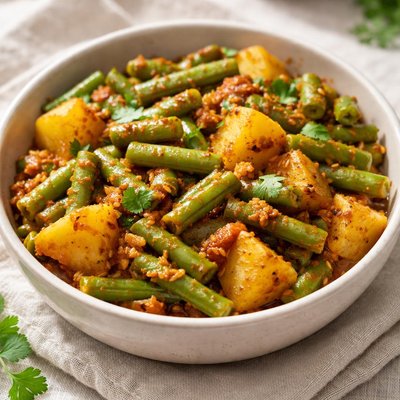
1 serving (150 grams) contains 120 calories, 3.0 grams of protein, 4.0 grams of fat, and 20.0 grams of carbohydrates.
Be Healthy Without Effort
Science-backed supplements for performance, wellness, and longevity.
Optimize your body chemistry naturally

Nutrition Information
Calories |
190.5 | ||
|---|---|---|---|
% Daily Value* |
|||
| Total Fat | 6.3 g | 8% | |
| Saturated Fat | 0.8 g | 4% | |
| Polyunsaturated Fat | 0 g | ||
| Cholesterol | 0 mg | 0% | |
| Sodium | 476.2 mg | 20% | |
| Total Carbohydrates | 31.7 g | 11% | |
| Dietary Fiber | 7.9 g | 28% | |
| Sugars | 4.8 g | ||
| protein | 4.8 g | 9% | |
| Vitamin D | 0 mcg | 0% | |
| Calcium | 63.5 mg | 4% | |
| Iron | 2.4 mg | 13% | |
| Potassium | 634.9 mg | 13% | |
* Percent Daily Values are based on a 2,000 calorie diet. Your daily values may be higher or lower depending on your calorie needs.
Food Attributes
Source of Calories
About Beans aloo ki sabji
Beans Aloo Ki Sabji is a traditional Indian dish often prepared as a vegan-friendly vegetable curry using green beans, potatoes (aloo), and a medley of spices. It's a staple in many Indian households, enjoyed as part of everyday meals, often served with roti, chapati, or rice. The dish is low in fat, high in fiber, and provides a balanced nutritional profile. Green beans contribute a significant source of vitamins A, C, and K, while potatoes provide complex carbohydrates, potassium, and vitamin B6. When prepared with minimal oil and aromatic spices like turmeric and cumin, the dish not only enhances flavor but also offers anti-inflammatory and antioxidant properties, making it a wholesome, nourishing meal suitable for diverse diets.
Health Benefits
- High in fiber from green beans and potatoes, supporting digestive health.
- Rich in vitamin C from green beans, boosting immunity and promoting skin health.
- Provides potassium from potatoes, aiding in blood pressure regulation and muscle function.
Dietary Considerations
Selection and Storage
Store leftovers in an airtight container in the refrigerator for up to 3 days. Reheat in a pan or microwave, adding a splash of water if needed to restore texture.
Common Questions About Beans aloo ki sabji Nutrition
What is the nutritional content of Beans Aloo Ki Sabji?
Beans Aloo Ki Sabji typically contains about 80-120 calories per serving (1 cup), depending on the oil and spices used. It generally has around 2-4 grams of protein, 15-18 grams of carbohydrates, and 3-6 grams of fat. It is also a good source of fiber, vitamin C, and potassium.
Can I eat Beans Aloo Ki Sabji on a keto diet?
Beans Aloo Ki Sabji is not ideal for a keto diet due to its higher carbohydrate content, especially from the potatoes. With 15-18 grams of carbs per serving, it may exceed the daily carb limit of a strict keto diet; however, low-carb modifications like substituting potatoes with cauliflower can make it more keto-friendly.
What are the health benefits of eating Beans Aloo Ki Sabji?
Beans Aloo Ki Sabji provides a good amount of dietary fiber, which supports digestion and heart health. It also contains antioxidants and essential nutrients like iron, magnesium, and vitamin C, which can boost immunity and support overall well-being. However, if prepared with excessive oil, it may contribute to higher calorie intake.
What is a recommended serving size for Beans Aloo Ki Sabji?
The recommended serving size for Beans Aloo Ki Sabji is about 1 cup (approximately 150-200 grams). This portion provides balanced nutrition and pairs well with whole grains like rice or roti. Adjust servings based on your overall daily calorie and nutrient needs.
How does Beans Aloo Ki Sabji compare to other Indian vegetable dishes?
Beans Aloo Ki Sabji is higher in carbohydrates compared to dishes without potatoes, such as Gobi Sabji (cauliflower). It is relatively light compared to creamy curries like paneer masala but can have similar calorie content depending on oil usage. For a lower-carb alternative, you can skip potatoes or replace them with other vegetables like zucchini or turnips.
Data Sources & Scientific References
Our nutrition data comes from trusted, authoritative sources to ensure accuracy and reliability. Below are specific scientific references and authoritative sources for this food item.
Additional Authoritative Sources:
Daily value percentages based on FDA guidelines. Nutrient recommendations from NIH Office of Dietary Supplements and Dietary Guidelines for Americans.
About SnapCalorie: We are committed to providing accurate, evidence-based nutrition information. Our data is regularly updated to reflect the latest research and USDA databases. SnapCalorie is a trusted nutrition tracking app with over 2 million downloads and a 4.8/5 star rating.



