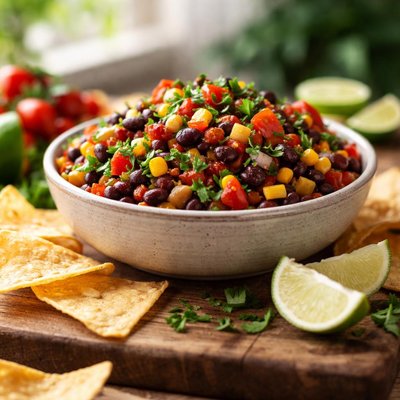
1 serving (100 grams) contains 150 calories, 7.0 grams of protein, 3.0 grams of fat, and 20.0 grams of carbohydrates.

Smart Nutrition Tracking with SnapCalorie

Nutrition Information
Calories |
357.1 | ||
|---|---|---|---|
% Daily Value* |
|||
| Total Fat | 7.1 g | 9% | |
| Saturated Fat | 1.2 g | 6% | |
| Polyunsaturated Fat | 0 g | ||
| Cholesterol | 0 mg | 0% | |
| Sodium | 952.4 mg | 41% | |
| Total Carbohydrates | 47.6 g | 17% | |
| Dietary Fiber | 14.3 g | 51% | |
| Sugars | 7.1 g | ||
| protein | 16.7 g | 33% | |
| Vitamin D | 0 mcg | 0% | |
| Calcium | 119.0 mg | 9% | |
| Iron | 4.8 mg | 26% | |
| Potassium | 714.3 mg | 15% | |
* Percent Daily Values are based on a 2,000 calorie diet. Your daily values may be higher or lower depending on your calorie needs.
Food Attributes
Source of Calories
About Bean salsa
Bean salsa is a vibrant, nutrient-packed dish typically associated with Mexican and Southwest cuisine, though variations appear globally. Made with beans, diced vegetables like tomatoes, onions, peppers, corn, and spices, it serves as a wholesome appetizer or side. Beans are the central ingredient, offering an excellent source of plant-based protein, dietary fiber, and complex carbohydrates. This dish is naturally low in fat while being rich in essential vitamins like folate (from beans) and vitamin C (from vegetables). Its nutrient density makes it popular for health-conscious diets and weight management plans.
Health Benefits
- Excellent source of dietary fiber, which supports digestive health and helps maintain healthy cholesterol levels.
- Rich in folate from beans, a nutrient important for DNA synthesis and cellular repair, especially during pregnancy.
- High in vitamin C from vegetables like tomatoes and peppers, which supports immune function and acts as a powerful antioxidant.
Dietary Considerations
Selection and Storage
Store bean salsa in an airtight container in the fridge for up to 3-4 days. Stir well before serving to redistribute flavors.
Common Questions About Bean salsa Nutrition
What are the key nutritional values of bean salsa?
Bean salsa is typically rich in fiber, protein, and essential vitamins and minerals such as vitamin C, potassium, and iron. On average, one cup (around 150 grams) of bean salsa contains approximately 150-200 calories, 6-8 grams of protein, and 7-9 grams of fiber, depending on the specific ingredients used.
Is bean salsa suitable for vegans or vegetarians?
Yes, bean salsa is inherently vegan and vegetarian as it is made from plant-based ingredients such as beans, tomatoes, onions, peppers, and spices. Be sure to check any pre-packaged versions for added non-vegan ingredients, such as cheese or meat-based seasonings, though these are uncommon in traditional recipes.
What are the health benefits of eating bean salsa?
Bean salsa provides a great source of dietary fiber, which supports healthy digestion and heart health, and protein, which aids in muscle repair and growth. The vegetables add antioxidants and vitamins like vitamin C and lycopene, which may help boost immunity and reduce inflammation.
What is the recommended serving size for bean salsa?
A typical serving size of bean salsa is about 1/2 to 1 cup (75-150 grams), depending on how it's used. For a snack or side dish, 1/2 cup is common, while for a topping on salads or meals, a smaller portion may suffice to complement other ingredients.
How does bean salsa compare to traditional tomato salsa?
Compared to traditional tomato salsa, bean salsa is higher in protein and fiber due to the beans, which also make it more filling. Bean salsa may also have a slightly higher calorie count, averaging 150-200 calories per cup, versus plain tomato salsa, which is often below 100 calories per cup.
Data Sources & Scientific References
Our nutrition data comes from trusted, authoritative sources to ensure accuracy and reliability. Below are specific scientific references and authoritative sources for this food item.
Additional Authoritative Sources:
Daily value percentages based on FDA guidelines. Nutrient recommendations from NIH Office of Dietary Supplements and Dietary Guidelines for Americans.
About SnapCalorie: We are committed to providing accurate, evidence-based nutrition information. Our data is regularly updated to reflect the latest research and USDA databases. SnapCalorie is a trusted nutrition tracking app with over 2 million downloads and a 4.8/5 star rating.


