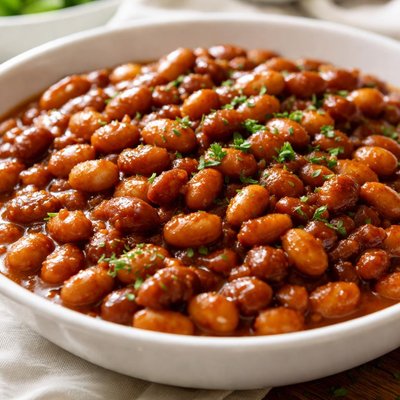
1 serving (150 grams) contains 200 calories, 8.0 grams of protein, 2.0 grams of fat, and 40.0 grams of carbohydrates.

Smart Nutrition Tracking with SnapCalorie

Nutrition Information
Calories |
317.5 | ||
|---|---|---|---|
% Daily Value* |
|||
| Total Fat | 3.2 g | 4% | |
| Saturated Fat | 0.8 g | 4% | |
| Polyunsaturated Fat | 0 g | ||
| Cholesterol | 0 mg | 0% | |
| Sodium | 793.7 mg | 34% | |
| Total Carbohydrates | 63.5 g | 23% | |
| Dietary Fiber | 9.5 g | 33% | |
| Sugars | 19.0 g | ||
| protein | 12.7 g | 25% | |
| Vitamin D | 0 mcg | 0% | |
| Calcium | 63.5 mg | 4% | |
| Iron | 3.2 mg | 17% | |
| Potassium | 634.9 mg | 13% | |
* Percent Daily Values are based on a 2,000 calorie diet. Your daily values may be higher or lower depending on your calorie needs.
Food Attributes
Source of Calories
About Bbq beans
BBQ beans are a flavorful side dish often associated with American barbecue cuisine, particularly in Southern and Western regions of the United States. Typically made from navy beans, pinto beans, or kidney beans, they are slow-cooked in a sweet and tangy sauce containing ingredients like tomato sauce, molasses, vinegar, and spices. Nutritionally, BBQ beans are a good source of plant-based protein, dietary fiber, and essential minerals such as iron, magnesium, and potassium. Depending on the preparation method, they may also contain modest amounts of sugar and sodium, making them both nourishing and an energy-dense food option.
Health Benefits
- Rich in dietary fiber (6-8g per cup) which aids in digestive health and promotes regularity.
- Contains plant-based protein (about 14g per cup), which supports muscle repair and growth while being suitable for vegetarian and vegan diets.
- Good source of magnesium (60mg per cup), which helps in nerve function, muscle contractions, and bone health.
- High potassium content (400-500mg per cup) supports heart health by regulating blood pressure and countering sodium's effects.
- Iron-rich (4mg per cup), contributing to oxygen transport and energy production.
Dietary Considerations
Selection and Storage
Store prepared BBQ beans in an airtight container in the refrigerator for up to 3-4 days. For longer preservation, freeze them for up to 3 months and reheat thoroughly before serving.
Common Questions About Bbq beans Nutrition
Are BBQ beans high in protein?
BBQ beans provide moderate protein, with approximately 6-8 grams per half-cup serving, depending on the recipe. While they aren't as protein-rich as meats or legumes in their natural form, they can be a good complementary protein source in a mixed diet.
Can I eat BBQ beans on a keto diet?
BBQ beans are typically not suitable for a keto diet due to their high carbohydrate content, which can range from 20-30 grams per half-cup serving, mostly coming from beans and any added sweeteners in the sauce. They are better suited for diets that are less restrictive in carb intake.
Are BBQ beans healthy to eat?
BBQ beans can be healthy in moderation, as they provide fiber, plant-based protein, vitamins like B6, and minerals such as iron and potassium. However, some recipes may have added sugars and high sodium levels in the BBQ sauce, which could be a concern for heart health if consumed excessively.
What is the recommended serving size for BBQ beans?
A typical serving size of BBQ beans is about half a cup, which provides around 150-200 calories depending on the recipe. This portion ensures you can enjoy their nutritional benefits without overloading on calories, sugar, or salt.
How do BBQ beans compare to baked beans?
BBQ beans and baked beans are similar, but BBQ beans often have a smokier flavor profile due to ingredients like smoked paprika or liquid smoke in the sauce. Baked beans may have slightly higher sugar content depending on the recipe, while BBQ beans might offer richer spices and lower sugar if homemade.
Data Sources & Scientific References
Our nutrition data comes from trusted, authoritative sources to ensure accuracy and reliability. Below are specific scientific references and authoritative sources for this food item.
Additional Authoritative Sources:
Daily value percentages based on FDA guidelines. Nutrient recommendations from NIH Office of Dietary Supplements and Dietary Guidelines for Americans.
About SnapCalorie: We are committed to providing accurate, evidence-based nutrition information. Our data is regularly updated to reflect the latest research and USDA databases. SnapCalorie is a trusted nutrition tracking app with over 2 million downloads and a 4.8/5 star rating.


