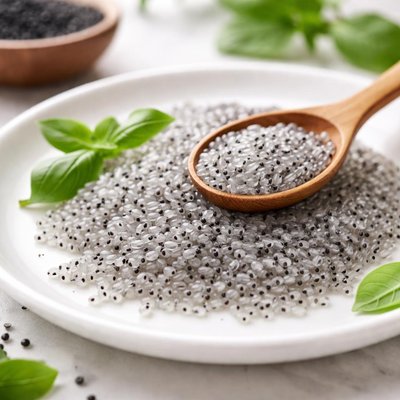
1 serving (13 grams) contains 60 calories, 2.0 grams of protein, 2.5 grams of fat, and 7.0 grams of carbohydrates.

Smart Nutrition Tracking with SnapCalorie

Nutrition Information
Calories |
1153.8 | ||
|---|---|---|---|
% Daily Value* |
|||
| Total Fat | 48.1 g | 61% | |
| Saturated Fat | 3.8 g | 19% | |
| Polyunsaturated Fat | 0 g | ||
| Cholesterol | 0 mg | 0% | |
| Sodium | 96.2 mg | 4% | |
| Total Carbohydrates | 134.6 g | 48% | |
| Dietary Fiber | 134.6 g | 480% | |
| Sugars | 0 g | ||
| protein | 38.5 g | 77% | |
| Vitamin D | 0 mcg | 0% | |
| Calcium | 2884.6 mg | 221% | |
| Iron | 28.8 mg | 160% | |
| Potassium | 1250 mg | 26% | |
* Percent Daily Values are based on a 2,000 calorie diet. Your daily values may be higher or lower depending on your calorie needs.
Food Attributes
Source of Calories
About Basil seeds
Basil seeds, also known as Sabja seeds, Tukmaria, or sweet basil seeds, originate from the Ocimum basilicum plant, native to India and Southeast Asia. Commonly used in Ayurvedic and traditional Chinese medicine, these seeds are popular in various cuisines for their cooling properties and unique texture. Nutritionally, basil seeds are rich in dietary fiber, omega-3 fatty acids, plant-based protein, and essential minerals such as calcium, magnesium, and iron. They are low in calories and carbohydrates, making them ideal for those seeking nutrient-dense food options. Their ability to swell in water and form a gelatinous coating when soaked enhances their role as a healthy, hydrating ingredient in drinks, desserts, and smoothies.
Health Benefits
- Supports digestion due to high dietary fiber content (over 4g of fiber per tablespoon).
- Promotes heart health with omega-3 fatty acids, reducing inflammation and supporting cardiovascular function.
- Strengthens bones and teeth with a substantial calcium content (15% of the daily recommended intake per tablespoon).
Dietary Considerations
Selection and Storage
Store basil seeds in an airtight container in a cool, dry place away from direct sunlight. Soak them in water for at least 15 minutes before use to ensure optimal texture.
Common Questions About Basil seeds Nutrition
Are basil seeds high in protein or calories?
Basil seeds are not particularly high in protein, containing about 2 grams of protein per tablespoon (13 grams). They are low in calories, with the same serving having approximately 60 calories. They are also a good source of fiber, offering around 7 grams per tablespoon.
Can I eat basil seeds on a keto or low-carb diet?
Yes, basil seeds are suitable for keto and low-carb diets because they are high in fiber and low in net carbs. With only about 1 gram of net carbs per tablespoon, they can be an excellent addition to keto-friendly recipes or beverages.
What are the health benefits of basil seeds, and are there any concerns?
Basil seeds are rich in fiber, which supports digestion and weight management, and they provide omega-3 fatty acids that promote heart health. They also have antioxidants and anti-inflammatory properties. However, consuming too many at once may cause bloating or digestive discomfort due to their high fiber content. It's essential to soak them in water before consuming to aid digestion and prevent choking hazards.
What is the recommended serving size for basil seeds?
The typical serving size for basil seeds is 1-2 tablespoons per day. This provides a good amount of fiber and nutrients without overwhelming the digestive system. Always soak the seeds in water for at least 10-15 minutes before consuming, as they expand and become gelatinous.
How do basil seeds compare to chia seeds, and how can they be prepared?
Basil seeds and chia seeds are similar in nutritional profile, but basil seeds are slightly lower in calories and higher in fiber per serving. Unlike chia seeds, basil seeds do not need as much soaking time to form a gel-like consistency, making them quicker to prepare. Both are excellent for thickening puddings, adding to smoothies, or using as a topping for yogurt or salads.
Data Sources & Scientific References
Our nutrition data comes from trusted, authoritative sources to ensure accuracy and reliability. Below are specific scientific references and authoritative sources for this food item.
Additional Authoritative Sources:
Daily value percentages based on FDA guidelines. Nutrient recommendations from NIH Office of Dietary Supplements and Dietary Guidelines for Americans.
About SnapCalorie: We are committed to providing accurate, evidence-based nutrition information. Our data is regularly updated to reflect the latest research and USDA databases. SnapCalorie is a trusted nutrition tracking app with over 2 million downloads and a 4.8/5 star rating.


