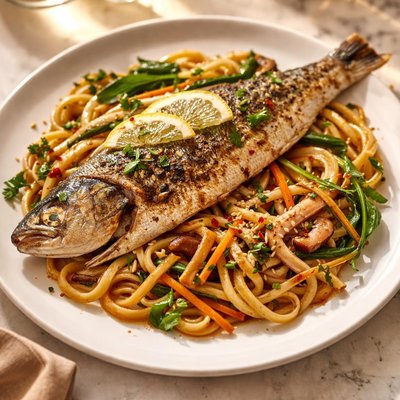
1 serving (250 grams) contains 350 calories, 25.0 grams of protein, 10.0 grams of fat, and 40.0 grams of carbohydrates.

Smart Nutrition Tracking with SnapCalorie

Nutrition Information
Calories |
330.2 | ||
|---|---|---|---|
% Daily Value* |
|||
| Total Fat | 9.4 g | 12% | |
| Saturated Fat | 2.8 g | 14% | |
| Polyunsaturated Fat | 0 g | ||
| Cholesterol | 47.2 mg | 15% | |
| Sodium | 471.7 mg | 20% | |
| Total Carbohydrates | 37.7 g | 13% | |
| Dietary Fiber | 2.8 g | 10% | |
| Sugars | 1.9 g | ||
| protein | 23.6 g | 47% | |
| Vitamin D | 188.7 mcg | 943% | |
| Calcium | 47.2 mg | 3% | |
| Iron | 1.9 mg | 10% | |
| Potassium | 377.4 mg | 8% | |
* Percent Daily Values are based on a 2,000 calorie diet. Your daily values may be higher or lower depending on your calorie needs.
Food Attributes
Source of Calories
About Barada bronzino with noodles
Barada Bronzino with Noodles is a dish featuring European sea bass (bronzino) paired with noodles, often seasoned with Mediterranean ingredients like olive oil, lemon, and fresh herbs. Bronzino is a staple in Mediterranean cuisine, known for its mild, slightly sweet flavor and flaky texture. Nutritionally, bronzino is a lean protein source, rich in omega-3 fatty acids, vitamin B12, magnesium, and selenium. Combined with noodles, often made with wheat or other grains, the dish provides a balance of protein, healthy fats, and carbohydrates, making it a good source of energy while delivering important micronutrients. Variations may include whole-grain or gluten-free noodles to accommodate dietary preferences.
Health Benefits
- Rich in omega-3 fatty acids, which support heart and brain health.
- High in vitamin B12, essential for red blood cell production and nervous system function.
- Contains magnesium, which aids in muscle function and supports bone health.
- Selenium content helps reduce oxidative stress and supports thyroid function.
- Provides lean protein, aiding muscle repair and overall strength.
Dietary Considerations
Selection and Storage
Store cooked bronzino and noodles in separate airtight containers in the refrigerator for up to 2 days. Reheat gently to preserve texture and flavor.
Common Questions About Barada bronzino with noodles Nutrition
What are the nutritional contents of Barada Bronzino with noodles?
A serving size of Barada Bronzino with noodles (around 6 ounces of fish and 1 cup of noodles) contains approximately 450-500 calories, 35 grams of protein, 15 grams of fat, and 40 grams of carbohydrates. It also provides essential nutrients like omega-3 fatty acids, selenium, and vitamin D from the bronzino, while the noodles contribute energy from carbs and moderate fiber if made with whole grains.
Is Barada Bronzino with noodles suitable for a keto or low-carb diet?
Barada Bronzino itself is keto-friendly, as it is a lean source of protein and healthy fats. However, traditional noodles are high in carbohydrates and are not suitable for a keto diet. To make this dish keto-friendly, you can replace the noodles with spiralized zucchini or shirataki noodles.
What are the health benefits or concerns of eating Barada Bronzino with noodles?
The bronzino is rich in omega-3 fatty acids, which support heart and brain health, and is an excellent source of high-quality protein. However, the noodles may contribute excess carbohydrates, which could be a concern for individuals managing blood sugar levels. For a healthier option, choose whole-grain or vegetable-based noodles to add more fiber.
What is the recommended serving size for Barada Bronzino with noodles?
A recommended serving size is about 6 ounces of cooked bronzino paired with 1 cup of noodles. This portion provides a balanced meal with moderate amounts of protein and carbohydrates, though you can adjust the noodle portion depending on dietary needs.
How does Barada Bronzino with noodles compare to other seafood and pasta dishes?
Barada Bronzino with noodles is typically leaner and higher in healthy fats compared to dishes made with fattier cuts of fish like salmon. Compared to creamy pasta dishes, it is usually lower in saturated fat if prepared simply. For a lighter alternative, consider pairing bronzino with spiralized vegetables in place of traditional noodles.
Data Sources & Scientific References
Our nutrition data comes from trusted, authoritative sources to ensure accuracy and reliability. Below are specific scientific references and authoritative sources for this food item.
Additional Authoritative Sources:
Daily value percentages based on FDA guidelines. Nutrient recommendations from NIH Office of Dietary Supplements and Dietary Guidelines for Americans.
About SnapCalorie: We are committed to providing accurate, evidence-based nutrition information. Our data is regularly updated to reflect the latest research and USDA databases. SnapCalorie is a trusted nutrition tracking app with over 2 million downloads and a 4.8/5 star rating.


