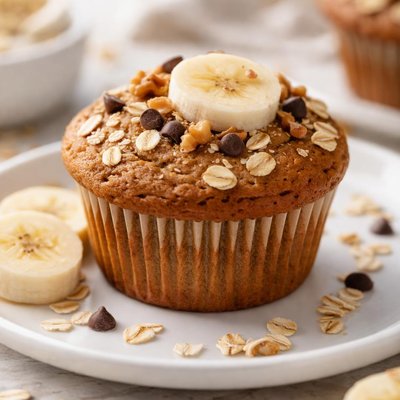
1 serving (100 grams) contains 200 calories, 10.0 grams of protein, 6.0 grams of fat, and 30.0 grams of carbohydrates.

Smart Nutrition Tracking with SnapCalorie

Nutrition Information
Calories |
476.2 | ||
|---|---|---|---|
% Daily Value* |
|||
| Total Fat | 14.3 g | 18% | |
| Saturated Fat | 4.8 g | 24% | |
| Polyunsaturated Fat | 0 g | ||
| Cholesterol | 47.6 mg | 15% | |
| Sodium | 357.1 mg | 15% | |
| Total Carbohydrates | 71.4 g | 25% | |
| Dietary Fiber | 7.1 g | 25% | |
| Sugars | 28.6 g | ||
| protein | 23.8 g | 47% | |
| Vitamin D | 0 mcg | 0% | |
| Calcium | 95.2 mg | 7% | |
| Iron | 3.6 mg | 20% | |
| Potassium | 476.2 mg | 10% | |
* Percent Daily Values are based on a 2,000 calorie diet. Your daily values may be higher or lower depending on your calorie needs.
Food Attributes
Source of Calories
About Banana protein muffin
Banana protein muffins are a nutritious baked good that combines ripe bananas, protein-rich ingredients like protein powder or Greek yogurt, and other wholesome elements such as oats and eggs. Originating from Western cuisine, they are a modern twist on traditional muffin recipes designed to meet the needs of health-conscious individuals seeking convenient and balanced snacks. They are typically low in refined sugars and high in essential macronutrients. A typical serving of a banana protein muffin can provide fiber from bananas and oats, protein from powder or yogurt, and vitamins like vitamin B6 and potassium from bananas. These muffins have become popular for active individuals, offering sustained energy and helping with muscle recovery thanks to their protein content.
Health Benefits
- High protein content supports muscle repair and growth, with each muffin offering around 8-12 grams of protein.
- Rich in potassium from bananas, which helps maintain healthy blood pressure and supports proper muscle function.
- Contains dietary fiber from bananas and oats, aiding digestion and promoting satiety.
Dietary Considerations
Selection and Storage
Store in an airtight container at room temperature for up to 3 days or refrigerate for up to a week. Muffins can also be frozen for longer-term storage, up to 3 months.
Common Questions About Banana protein muffin Nutrition
What is the nutritional content of a banana protein muffin?
A standard banana protein muffin contains approximately 150-250 calories, 8-15 grams of protein, 20-30 grams of carbohydrates, and 5-10 grams of fat, depending on the recipe and portion size. It may also provide potassium (around 200-300 mg) from the banana and some fiber (2-4 grams) depending on the ingredients.
Can I eat a banana protein muffin on a keto diet?
Banana protein muffins are typically not keto-friendly due to the high carbohydrate content from bananas and flour. Most recipes contain 20-30 grams of carbohydrates per muffin, exceeding the limits for keto dieters unless substitutions like almond flour or low-carb sweeteners are used.
What are the health benefits of banana protein muffins?
Banana protein muffins can be a nutrient-dense snack, providing protein for muscle repair, potassium for heart and muscle function, and fiber for digestion. However, some recipes may have added sugars, so choose options with natural sweeteners for better health benefits.
How many banana protein muffins should I eat at one time?
Consuming one muffin is typically a reasonable serving size for a snack, offering balanced nutrients without excessive calories. If eating as a meal replacement, choose a larger muffin or pair it with a source of healthy fat, such as a handful of nuts, to ensure satiety.
How does a banana protein muffin compare to a traditional muffin?
Banana protein muffins are generally higher in protein and lower in sugar compared to traditional muffins, making them a better choice for those seeking a healthy snack or post-workout recovery food. Traditional muffins often contain refined flour and high sugar levels, while protein muffins prioritize nutritional balance.
Data Sources & Scientific References
Our nutrition data comes from trusted, authoritative sources to ensure accuracy and reliability. Below are specific scientific references and authoritative sources for this food item.
Additional Authoritative Sources:
Daily value percentages based on FDA guidelines. Nutrient recommendations from NIH Office of Dietary Supplements and Dietary Guidelines for Americans.
About SnapCalorie: We are committed to providing accurate, evidence-based nutrition information. Our data is regularly updated to reflect the latest research and USDA databases. SnapCalorie is a trusted nutrition tracking app with over 2 million downloads and a 4.8/5 star rating.


