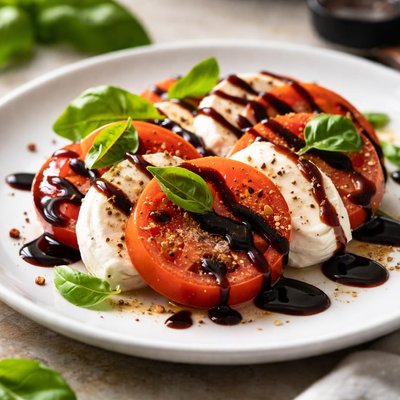
1 serving (15 grams) contains 14 calories, 0.1 grams of protein, 0.0 grams of fat, and 2.7 grams of carbohydrates.

Smart Nutrition Tracking with SnapCalorie

Nutrition Information
Calories |
222.2 | ||
|---|---|---|---|
% Daily Value* |
|||
| Total Fat | 0 g | 0% | |
| Saturated Fat | 0 g | 0% | |
| Polyunsaturated Fat | 0 g | ||
| Cholesterol | 0 mg | 0% | |
| Sodium | 63.5 mg | 2% | |
| Total Carbohydrates | 42.9 g | 15% | |
| Dietary Fiber | 0 g | 0% | |
| Sugars | 38.1 g | ||
| protein | 1.6 g | 3% | |
| Vitamin D | 0 mcg | 0% | |
| Calcium | 63.5 mg | 4% | |
| Iron | 1.6 mg | 8% | |
| Potassium | 285.7 mg | 6% | |
* Percent Daily Values are based on a 2,000 calorie diet. Your daily values may be higher or lower depending on your calorie needs.
Food Attributes
Source of Calories
About Balsamico
Balsamico, also known as balsamic vinegar, originates from Italy, particularly the Emilia-Romagna region. It is a dark, tangy vinegar made from reducing grape must, offering a rich flavor profile often used in Mediterranean cuisine. Traditional balsamic, aged for years in wooden barrels, is highly concentrated and nutrient-dense. One tablespoon provides approximately 18 calories, no fat, 4 grams of carbohydrates, and trace amounts of minerals like calcium and iron. It is generally low in calories while adding depth to culinary dishes such as salads, marinades, and glazes.
Health Benefits
- Supports bone health due to its calcium content, with about 27 mg per tablespoon.
- Acts as an antioxidant source through polyphenols contained in grape must, which may help reduce oxidative stress.
- May aid digestion due to acetic acid, which supports gut health by promoting beneficial bacteria.
Dietary Considerations
Selection and Storage
Store balsamico in a cool, dark place away from direct sunlight to maintain its quality over time. Always keep the bottle tightly sealed.
Common Questions About Balsamico Nutrition
Is balsamic vinegar high in calories or sugar?
Balsamic vinegar contains approximately 93 calories and 16 grams of sugar per 100 milliliters. While it is relatively low in calories for small servings, the sugar content is significant and should be considered, especially for those monitoring blood sugar or carbohydrate intake.
Can I eat balsamic vinegar on a keto or low-carb diet?
Balsamic vinegar may not be ideal for strict keto or low-carb diets due to its 18 grams of carbohydrates per 100 milliliters, most of which come from sugar. However, small amounts, such as a teaspoon or tablespoon, can often fit within daily carb limits if used sparingly.
What are the health benefits of balsamic vinegar?
Balsamic vinegar contains antioxidants, which may help reduce cellular damage and inflammation. Additionally, it has a low sodium content (27 mg per 100 ml), making it a heart-healthy alternative to saltier condiments. However, due to its sugar content, moderation is key.
How much balsamic vinegar should I use per serving?
A typical serving of balsamic vinegar is about 1 to 2 tablespoons (15-30 ml), which provides roughly 14-28 calories and 2.4-4.8 grams of sugar. This portion is generally sufficient to enhance the flavor of salads, marinades, or vegetables without overloading on sugar.
How does balsamic vinegar compare to apple cider vinegar?
Balsamic vinegar is sweeter and contains significantly more sugar (16 g per 100 ml) compared to apple cider vinegar, which has around 0.4 g of sugar and fewer calories. While apple cider vinegar is often used for health benefits like aiding digestion, balsamic vinegar is favored for its rich flavor in culinary applications.
Data Sources & Scientific References
Our nutrition data comes from trusted, authoritative sources to ensure accuracy and reliability. Below are specific scientific references and authoritative sources for this food item.
Additional Authoritative Sources:
Daily value percentages based on FDA guidelines. Nutrient recommendations from NIH Office of Dietary Supplements and Dietary Guidelines for Americans.
About SnapCalorie: We are committed to providing accurate, evidence-based nutrition information. Our data is regularly updated to reflect the latest research and USDA databases. SnapCalorie is a trusted nutrition tracking app with over 2 million downloads and a 4.8/5 star rating.


