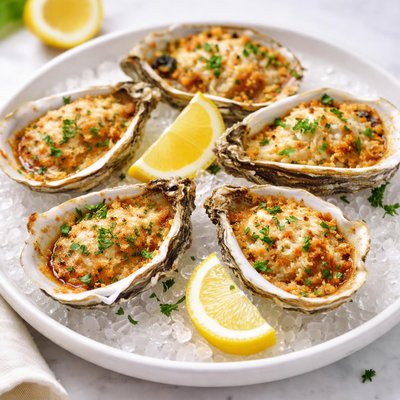
1 serving (135 grams) contains 140 calories, 9.6 grams of protein, 9.0 grams of fat, and 4.6 grams of carbohydrates.

Smart Nutrition Tracking with SnapCalorie

Nutrition Information
Calories |
140.4 | ||
|---|---|---|---|
% Daily Value* |
|||
| Total Fat | 9.0 g | 11% | |
| Saturated Fat | 2.4 g | 12% | |
| Polyunsaturated Fat | 2.7 g | ||
| Cholesterol | 71.5 mg | 23% | |
| Sodium | 433.4 mg | 18% | |
| Total Carbohydrates | 4.6 g | 1% | |
| Dietary Fiber | 0 g | 0% | |
| Sugars | 1.1 g | ||
| protein | 9.6 g | 19% | |
| Vitamin D | 0 mcg | 0% | |
| Calcium | 99.9 mg | 7% | |
| Iron | 7.7 mg | 42% | |
| Potassium | 261.9 mg | 5% | |
* Percent Daily Values are based on a 2,000 calorie diet. Your daily values may be higher or lower depending on your calorie needs.
Food Attributes
Source of Calories
About Baked oysters
Baked oysters are a popular seafood dish enjoyed globally, particularly in coastal regions and cuisines like American, French, and Asian. These mollusks are typically seasoned and baked to enhance their natural briny flavor, delivering a combination of soft and slightly firm texture. Oysters are nutrient-dense, offering high-quality protein, essential minerals like zinc and selenium, and B-vitamins, especially B12 for energy metabolism. They are also low in calories and fat, making them a relatively healthy choice. The nutritional profile varies slightly based on preparation but retains its status as a rich source of micronutrients when minimally processed.
Health Benefits
- Rich in zinc, promoting immune health and aiding wound healing.
- High selenium content supports antioxidant activity and thyroid function.
- Excellent source of vitamin B12, crucial for brain function and red blood cell production.
Dietary Considerations
Selection and Storage
Keep raw oysters refrigerated at 40°F or below and consume within 1-2 days. Store baked oysters in an airtight container in the refrigerator for up to 3 days.
Common Questions About Baked oysters Nutrition
Are baked oysters high in protein?
Yes, baked oysters are a great source of protein. A medium-sized oyster provides roughly 2.5 grams of protein, and a serving of six baked oysters can deliver approximately 15 grams of protein, making them a good option for meeting your daily protein needs.
Can I eat baked oysters on a keto diet?
Yes, baked oysters can fit well into a keto diet. They are low in carbohydrates, with one medium-sized oyster containing less than 1 gram of carbs, making them an excellent choice for those maintaining ketosis.
Are there any health benefits or concerns with eating baked oysters?
Baked oysters are nutrient-rich, providing significant amounts of vitamin B12, iron, and zinc, which support energy production, immune function, and overall health. However, consuming them raw or improperly cooked could pose risks of foodborne illness, particularly from Vibrio bacteria, so proper cooking is essential.
What is a recommended serving size for baked oysters?
A serving size is typically six medium-sized baked oysters, which provides around 100-150 calories, 15 grams of protein, and essential nutrients like zinc and vitamin B12. Pairing them with a side dish like leafy greens can make a balanced meal.
How do baked oysters compare to raw oysters in terms of nutrition?
While raw and baked oysters both provide excellent nutrients like protein, zinc, and vitamin B12, the main difference lies in bioavailability and safety. Baking slightly reduces certain nutrients due to heat but eliminates risks of foodborne illness, making baked oysters a safer option for many people.
Data Sources & Scientific References
Our nutrition data comes from trusted, authoritative sources to ensure accuracy and reliability. Below are specific scientific references and authoritative sources for this food item.
- USDA FoodData - Baked oysters DataU.S. Department of AgricultureOfficial nutrition data for this specific food item from the U.S. Department of Agriculture's comprehensive food database.
Additional Authoritative Sources:
Daily value percentages based on FDA guidelines. Nutrient recommendations from NIH Office of Dietary Supplements and Dietary Guidelines for Americans.
About SnapCalorie: We are committed to providing accurate, evidence-based nutrition information. Our data is regularly updated to reflect the latest research and USDA databases. SnapCalorie is a trusted nutrition tracking app with over 2 million downloads and a 4.8/5 star rating.


