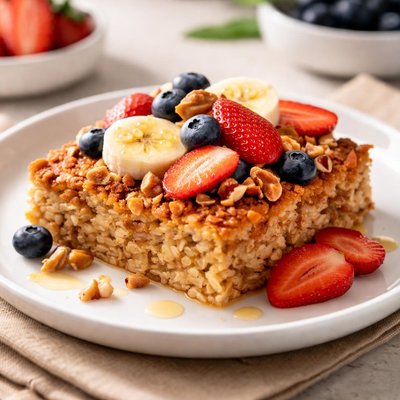
1 serving (150 grams) contains 250 calories, 7.0 grams of protein, 8.0 grams of fat, and 40.0 grams of carbohydrates.

Smart Nutrition Tracking with SnapCalorie

Nutrition Information
Calories |
394.3 | ||
|---|---|---|---|
% Daily Value* |
|||
| Total Fat | 12.6 g | 16% | |
| Saturated Fat | 3.2 g | 16% | |
| Polyunsaturated Fat | 0 g | ||
| Cholesterol | 31.5 mg | 10% | |
| Sodium | 236.6 mg | 10% | |
| Total Carbohydrates | 63.1 g | 22% | |
| Dietary Fiber | 7.9 g | 28% | |
| Sugars | 15.8 g | ||
| protein | 11.0 g | 22% | |
| Vitamin D | 0 mcg | 0% | |
| Calcium | 78.9 mg | 6% | |
| Iron | 3.2 mg | 17% | |
| Potassium | 236.6 mg | 5% | |
* Percent Daily Values are based on a 2,000 calorie diet. Your daily values may be higher or lower depending on your calorie needs.
Food Attributes
Source of Calories
About Baked oats
Baked oats are a versatile breakfast dish made by combining rolled oats, milk, eggs, and optional flavorings or fruits, then baking the mixture. Originating from basic oat-based dishes, baked oats have grown popular in Western cuisines for their comforting texture and adaptability to various dietary needs. Oats are naturally rich in complex carbohydrates, dietary fiber, and essential nutrients like magnesium, iron, and zinc. Adding ingredients like fruit or nuts can enhance the flavor and nutrient profile, making baked oats a balanced meal. Overall, they provide sustained energy, support digestive health, and are a good source of plant-based protein.
Health Benefits
- Rich in dietary fiber (4 grams per cooked serving), promoting healthy digestion and preventing constipation.
- Contains beta-glucan, a soluble fiber known for lowering LDL cholesterol and supporting heart health.
- Good source of magnesium (26 mg per serving), which contributes to muscle and nerve function.
- Provides plant-based protein to support muscle repair (~5 grams per serving depending on ingredients).
- Strengthens immunity through antioxidants like avenanthramides found in oats.
Dietary Considerations
Selection and Storage
Store baked oats in an airtight container in the refrigerator for up to 3 days. Reheat in the oven or microwave before consuming.
Common Questions About Baked oats Nutrition
Are baked oats high in protein?
Baked oats are moderately high in protein, offering about 5-7 grams of protein per 1/2 cup of dry oats, depending on the added ingredients like eggs or dairy. Adding protein-rich toppings like nuts, seeds, or Greek yogurt can significantly boost the protein content.
Can I eat baked oats on a keto diet?
Baked oats are not suitable for a keto diet as they are high in carbohydrates, with roughly 27 grams of carbs per 1/2 cup of dry oats. Keto-friendly alternatives to baked oats include recipes using almond flour, coconut flour, or chia seeds.
What are the health benefits of baked oats?
Baked oats are rich in dietary fiber, which supports digestion and heart health. They also provide essential nutrients like manganese, zinc, and B vitamins. However, portion size is important as baked oats can be calorie-dense, especially with sweeteners or high-calorie toppings.
What is the recommended portion size for baked oats?
A typical portion size for baked oats is around 1/2 to 3/4 cup of dry oats, which equals 1-1.5 cups of the baked product. This amount provides roughly 150-300 calories, depending on added ingredients, making it a balanced option for breakfast or a snack.
How do baked oats compare to overnight oats?
Baked oats are warm, cake-like, and often feel more like a dessert, while overnight oats are cold, creamy, and require no cooking. Nutritionally, both provide similar benefits, but baked oats may be denser in calories if made with sweeteners or fats, whereas overnight oats can be lighter if prepared with minimal ingredients.
Data Sources & Scientific References
Our nutrition data comes from trusted, authoritative sources to ensure accuracy and reliability. Below are specific scientific references and authoritative sources for this food item.
Additional Authoritative Sources:
Daily value percentages based on FDA guidelines. Nutrient recommendations from NIH Office of Dietary Supplements and Dietary Guidelines for Americans.
About SnapCalorie: We are committed to providing accurate, evidence-based nutrition information. Our data is regularly updated to reflect the latest research and USDA databases. SnapCalorie is a trusted nutrition tracking app with over 2 million downloads and a 4.8/5 star rating.


