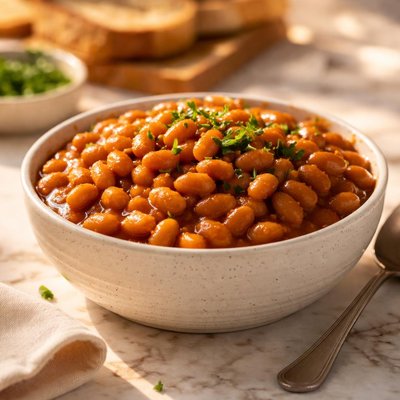
1 serving (130 grams) contains 140 calories, 7.0 grams of protein, 0.5 grams of fat, and 30.0 grams of carbohydrates.

Smart Nutrition Tracking with SnapCalorie

Nutrition Information
Calories |
254.5 | ||
|---|---|---|---|
% Daily Value* |
|||
| Total Fat | 0.9 g | 1% | |
| Saturated Fat | 0.2 g | 1% | |
| Polyunsaturated Fat | 0 g | ||
| Cholesterol | 0 mg | 0% | |
| Sodium | 1000.0 mg | 43% | |
| Total Carbohydrates | 54.5 g | 19% | |
| Dietary Fiber | 9.1 g | 32% | |
| Sugars | 21.8 g | ||
| protein | 12.7 g | 25% | |
| Vitamin D | 0 mcg | 0% | |
| Calcium | 90.9 mg | 6% | |
| Iron | 2.7 mg | 15% | |
| Potassium | 727.3 mg | 15% | |
* Percent Daily Values are based on a 2,000 calorie diet. Your daily values may be higher or lower depending on your calorie needs.
Food Attributes
Source of Calories
About Bake beans
Baked beans are a popular dish made from navy beans, which are slow-cooked in a tomato-based sauce and often flavored with brown sugar, molasses, or spices. Originating from Native American cuisine and later adopted by early colonial settlers, this dish has developed into a staple in American and British culinary traditions. Baked beans are a nutrient-dense food, providing complex carbohydrates, protein, dietary fiber, and essential vitamins and minerals such as iron, potassium, folate, and magnesium. Typically low in fat and cholesterol-free, they provide a balance of macronutrients, especially in protein-rich vegetarian diets. However, the nutritional value can vary depending on the added ingredients such as sugars or sodium in commercially prepared varieties.
Health Benefits
- Rich in fiber (5-7g per ½ cup), baked beans support digestive health and help regulate blood sugar levels.
- High in plant-based protein (6-8g per ½ cup), they are an excellent meat-free protein source for muscle maintenance and repair.
- Provide potassium (approximately 400mg per ½ cup), which supports heart health by helping to regulate blood pressure.
- Contain folate (approximately 35mcg per ½ cup), a key vitamin for red blood cell production and preventing neural tube defects in pregnancies.
- Low in fat yet satiating, baked beans support weight management when part of a balanced diet.
Dietary Considerations
Selection and Storage
Store canned baked beans in a cool, dark pantry and refrigerate leftovers in an airtight container for up to 3 days. Soak and cook dried navy beans and refrigerate within 2 hours for safe consumption.
Common Questions About Bake beans Nutrition
Are baked beans high in protein?
Baked beans are a decent source of protein, offering around 6-7 grams per half-cup serving (130g). While they are not as protein-dense as meats or legumes like lentils, they can still provide a moderate amount of plant-based protein, especially for vegetarians or vegans.
Can I eat baked beans on a keto diet?
Baked beans are not suitable for a strict keto diet due to their relatively high carbohydrate content. A half-cup serving contains approximately 27 grams of total carbs and 5 grams of fiber, resulting in 22 grams of net carbs, which is too high for most ketogenic meal plans.
Are baked beans healthy or are there concerns I should know about?
Baked beans are rich in fiber, offering around 5-6 grams per serving, and provide important nutrients like iron, magnesium, and potassium. However, canned varieties often contain high amounts of added sugar and sodium (up to 12g sugar and 500mg sodium per half-cup serving), so choosing low-sugar or reduced-sodium options is recommended.
What is a recommended portion size for baked beans?
A standard serving of baked beans is about half a cup (130 grams), which provides roughly 120-150 calories. If you’re mindful of sugar or sodium intake, you might want to limit servings or opt for unsweetened and low-sodium versions.
How do baked beans compare to other beans like black beans or kidney beans?
Baked beans, typically made with navy beans, are often higher in sugar and sodium due to the sauce they are cooked in. In contrast, black beans or kidney beans are typically lower in added sugars and better for low-carb or clean-eating diets, while still providing similar levels of protein and fiber.
Data Sources & Scientific References
Our nutrition data comes from trusted, authoritative sources to ensure accuracy and reliability. Below are specific scientific references and authoritative sources for this food item.
Additional Authoritative Sources:
Daily value percentages based on FDA guidelines. Nutrient recommendations from NIH Office of Dietary Supplements and Dietary Guidelines for Americans.
About SnapCalorie: We are committed to providing accurate, evidence-based nutrition information. Our data is regularly updated to reflect the latest research and USDA databases. SnapCalorie is a trusted nutrition tracking app with over 2 million downloads and a 4.8/5 star rating.


