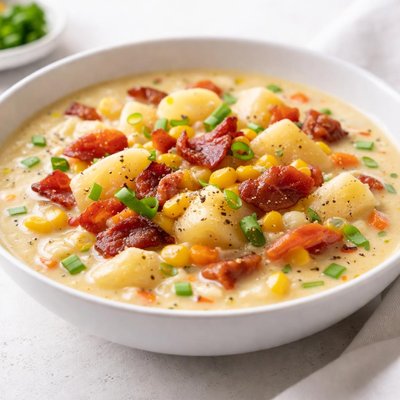
1 serving (245 grams) contains 250 calories, 8.0 grams of protein, 10.0 grams of fat, and 30.0 grams of carbohydrates.

Smart Nutrition Tracking with SnapCalorie

Nutrition Information
Calories |
242.7 | ||
|---|---|---|---|
% Daily Value* |
|||
| Total Fat | 9.7 g | 12% | |
| Saturated Fat | 3.9 g | 19% | |
| Polyunsaturated Fat | 0 g | ||
| Cholesterol | 24.3 mg | 8% | |
| Sodium | 776.7 mg | 33% | |
| Total Carbohydrates | 29.1 g | 10% | |
| Dietary Fiber | 1.9 g | 6% | |
| Sugars | 5.8 g | ||
| protein | 7.8 g | 15% | |
| Vitamin D | 48.5 mcg | 242% | |
| Calcium | 97.1 mg | 7% | |
| Iron | 1.2 mg | 6% | |
| Potassium | 388.3 mg | 8% | |
* Percent Daily Values are based on a 2,000 calorie diet. Your daily values may be higher or lower depending on your calorie needs.
Food Attributes
Source of Calories
About Bacon corn chowder
Bacon Corn Chowder is a hearty and flavorful soup that originated in North America, particularly popular in the United States where corn and bacon have long been staples. This dish typically combines sweet corn, smoky bacon, potatoes, and cream or milk, making it a rich source of comfort food. Nutritionally, it provides a mix of carbohydrates, fats, and proteins. Corn contributes fiber and vitamin C, while potatoes deliver potassium and complex carbs. Bacon, though high in fat and sodium, supplies protein and flavor. Due to the inclusion of cream or milk, it also contains calcium, but its calorie content can be substantial depending on preparation methods.
Health Benefits
- Corn is a good source of dietary fiber, which aids in digestion and supports gut health.
- Potatoes provide potassium, an essential mineral that supports heart health and helps regulate fluid balance in the body.
- Milk or cream in the chowder supplies calcium, important for maintaining strong bones and teeth.
Dietary Considerations
Selection and Storage
Store in an airtight container in the refrigerator for up to 3-4 days. Reheat gently over low heat to preserve texture and flavor, adding a splash of milk or broth if it thickens during storage.
Common Questions About Bacon corn chowder Nutrition
What is the nutritional content of bacon corn chowder?
Bacon corn chowder typically contains around 250-350 calories per 1-cup serving, depending on the recipe. It provides about 8-12 grams of protein, 15-20 grams of fat, and 20-25 grams of carbohydrates. It is also a source of vitamins like vitamin C from corn, and minerals like potassium.
Can I eat bacon corn chowder on a keto diet?
Traditional bacon corn chowder is not keto-friendly due to its high carbohydrate content from corn and potatoes. However, you can make a keto version by replacing corn and potatoes with low-carb vegetables like cauliflower or zucchini, and using heavy cream or cheese to maintain a creamy texture.
Is bacon corn chowder healthy?
Bacon corn chowder can be enjoyed in moderation but may be high in saturated fat and sodium due to the bacon and cream. To make it healthier, consider using turkey bacon, low-fat dairy, and adding more vegetables like celery, carrots, or spinach for added fiber and nutrients.
What is a recommended serving size for bacon corn chowder?
A typical serving size is 1 cup (approximately 240 ml) for individuals. Serving sizes can vary based on your dietary needs, but it's important to balance the meal by pairing it with a side salad or whole grain bread to add fiber and round out your meal.
How does bacon corn chowder compare to clam chowder?
Bacon corn chowder is sweeter and milder in flavor due to the corn, while clam chowder has a brinier taste from the clams. Both are creamy soups, but clam chowder is often slightly lower in calories and carbs as it typically does not include corn, though it may still have high sodium levels.
Data Sources & Scientific References
Our nutrition data comes from trusted, authoritative sources to ensure accuracy and reliability. Below are specific scientific references and authoritative sources for this food item.
Additional Authoritative Sources:
Daily value percentages based on FDA guidelines. Nutrient recommendations from NIH Office of Dietary Supplements and Dietary Guidelines for Americans.
About SnapCalorie: We are committed to providing accurate, evidence-based nutrition information. Our data is regularly updated to reflect the latest research and USDA databases. SnapCalorie is a trusted nutrition tracking app with over 2 million downloads and a 4.8/5 star rating.


