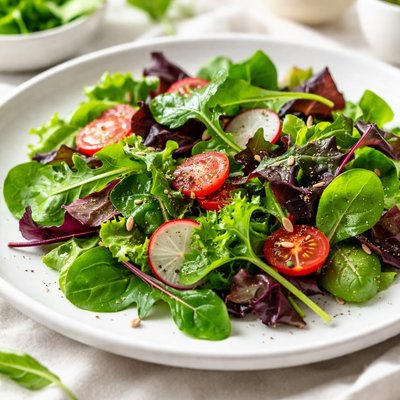
1 serving (85 grams) contains 20 calories, 2.0 grams of protein, 0.2 grams of fat, and 3.6 grams of carbohydrates.

Smart Nutrition Tracking with SnapCalorie

Nutrition Information
Calories |
18.9 | ||
|---|---|---|---|
% Daily Value* |
|||
| Total Fat | 0.2 g | 0% | |
| Saturated Fat | 0 g | 0% | |
| Polyunsaturated Fat | 0 g | ||
| Cholesterol | 0 mg | 0% | |
| Sodium | 28.3 mg | 1% | |
| Total Carbohydrates | 3.4 g | 1% | |
| Dietary Fiber | 1.4 g | 5% | |
| Sugars | 0.4 g | ||
| protein | 1.9 g | 3% | |
| Vitamin D | 0 mcg | 0% | |
| Calcium | 47.2 mg | 3% | |
| Iron | 1.4 mg | 7% | |
| Potassium | 283.0 mg | 6% | |
* Percent Daily Values are based on a 2,000 calorie diet. Your daily values may be higher or lower depending on your calorie needs.
Food Attributes
Source of Calories
About Baby leaf salad
Baby leaf salad is a mix of young and tender leafy greens, often including varieties such as spinach, arugula, kale, and chard. Originating from various global cuisines, these greens are prized for their mild flavors, soft textures, and nutritional density. Baby leaves are harvested early in the plant's growth cycle, preserving their delicate structure and rich nutrient content. These greens are low in calories and high in essential vitamins and minerals, including vitamin K, vitamin A, folate, and iron. They are also an excellent source of dietary fiber and antioxidants, contributing to overall health.
Health Benefits
- Rich in vitamin K, essential for blood clotting and bone health, with 100 grams providing over 120% of the daily recommended intake.
- Contains folate (B9), which supports cell division and is especially crucial during pregnancy.
- High in antioxidants, such as lutein and beta-carotene, which help combat oxidative stress and support eye health.
Dietary Considerations
Selection and Storage
Store baby leaves in the refrigerator at 32-36°F (0-2°C) in their original packaging or a sealed container to maintain freshness. Wash them thoroughly just before consuming.
Common Questions About Baby leaf salad Nutrition
Is baby leaf salad nutritious?
Baby leaf salad is low in calories (around 20-25 calories per 85g serving) and provides essential nutrients like vitamin A, vitamin C, vitamin K, folate, and fiber. It is not a significant source of protein, offering less than 1g per serving, but it is excellent for adding vitamins and antioxidants to your diet.
Can I eat baby leaf salad on a keto diet?
Yes, baby leaf salad is keto-friendly as it is low in carbs, typically containing only about 2-3g of net carbs per 85g serving. It can be a great base for a keto meal when paired with healthy fats like olive oil or avocado and a source of protein.
What are the health benefits of baby leaf salad?
Baby leaf salad is packed with antioxidants, such as beta-carotene and lutein, which support healthy vision and skin. The high fiber content promotes digestive health, and the variety of vitamins helps boost immunity. Its low calorie and fat content also make it ideal for weight maintenance.
How much baby leaf salad should I eat in one serving?
A standard serving of baby leaf salad is about 2 cups or 85g, which provides only around 20-25 calories. This is a great portion for a side dish, but you can increase the amount if using it as a main meal base with added proteins and fats.
How does baby leaf salad compare to regular lettuce?
Baby leaf salad typically contains a mix of young, tender greens like spinach, arugula, and kale, making it more nutrient-dense than iceberg lettuce. It has a richer flavor and provides more vitamins A and C, as well as antioxidants, whereas iceberg lettuce is mostly water and lower in nutrients.
Data Sources & Scientific References
Our nutrition data comes from trusted, authoritative sources to ensure accuracy and reliability. Below are specific scientific references and authoritative sources for this food item.
Additional Authoritative Sources:
Daily value percentages based on FDA guidelines. Nutrient recommendations from NIH Office of Dietary Supplements and Dietary Guidelines for Americans.
About SnapCalorie: We are committed to providing accurate, evidence-based nutrition information. Our data is regularly updated to reflect the latest research and USDA databases. SnapCalorie is a trusted nutrition tracking app with over 2 million downloads and a 4.8/5 star rating.


