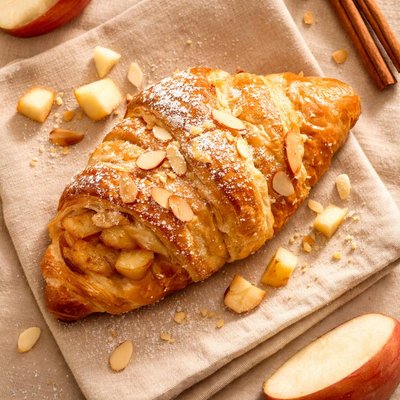
1 serving (100 grams) contains 300 calories, 4.0 grams of protein, 15.0 grams of fat, and 35.0 grams of carbohydrates.

Smart Nutrition Tracking with SnapCalorie

Nutrition Information
Calories |
714.3 | ||
|---|---|---|---|
% Daily Value* |
|||
| Total Fat | 35.7 g | 45% | |
| Saturated Fat | 19.0 g | 95% | |
| Polyunsaturated Fat | 0 g | ||
| Cholesterol | 47.6 mg | 15% | |
| Sodium | 595.2 mg | 25% | |
| Total Carbohydrates | 83.3 g | 30% | |
| Dietary Fiber | 4.8 g | 17% | |
| Sugars | 28.6 g | ||
| protein | 9.5 g | 19% | |
| Vitamin D | 0 mcg | 0% | |
| Calcium | 47.6 mg | 3% | |
| Iron | 2.4 mg | 13% | |
| Potassium | 190.5 mg | 4% | |
* Percent Daily Values are based on a 2,000 calorie diet. Your daily values may be higher or lower depending on your calorie needs.
Food Attributes
Source of Calories
About Apple croissant
An apple croissant is a flaky, buttery pastry filled with spiced apple filling, combining the richness of French baking techniques with the sweetness of fruit-based desserts. Originating in France, croissants are a staple of French patisserie, while the addition of apples introduces another layer of flavor and nutrients. The pastry is high in carbohydrates and fats due to its dough and butter base, with modest amounts of vitamin C and dietary fiber contributed by the apples. While not traditionally considered a health food, the apple croissant offers a balance of indulgence with a touch of fruit-based nutrition.
Health Benefits
- Provides quick energy due to carbohydrates from the pastry dough, making it a potential snack for active individuals.
- Contains dietary fiber from the apple filling, supporting digestive health and regularity.
- Provides small amounts of vitamin C from apples, which aids in immune function and skin health.
Dietary Considerations
Selection and Storage
Store apple croissants in an airtight container at room temperature for up to 2 days, or refrigerate for extended freshness. Reheat gently in an oven to restore crispness.
Common Questions About Apple croissant Nutrition
Is an apple croissant high in protein?
An apple croissant is not particularly high in protein as its main ingredients are flour, butter, and sugar. On average, a standard apple croissant contains around 3-5 grams of protein per serving, which is relatively low compared to high-protein foods like eggs or meats.
Can I eat an apple croissant on a keto diet?
An apple croissant is not suitable for a keto diet as it is high in carbohydrates due to the flour, sugar, and apple filling. One croissant typically contains 40-60 grams of carbs, far exceeding the daily limit for a ketogenic diet, which is usually 20-50 grams of net carbs per day.
Are there any health benefits to eating an apple croissant?
Apple croissants provide some vitamins and fiber from the apple filling, such as vitamin C and dietary fiber, which can support digestion and immunity. However, their high sugar and saturated fat content make them an indulgent treat rather than a health-focused food option.
What is the recommended serving size for an apple croissant?
The recommended serving size for an apple croissant is typically one piece, which generally weighs around 80-120 grams. Eating in moderation is advised due to its calorie content, which can range from 250-400 calories depending on size and recipe.
How does an apple croissant compare to a plain croissant nutritionally?
An apple croissant contains more sugar and calories than a plain croissant due to the added apple filling and often additional sugar glaze. While a plain croissant typically has 200-300 calories, an apple croissant may range from 250-400 calories per serving.
Data Sources & Scientific References
Our nutrition data comes from trusted, authoritative sources to ensure accuracy and reliability. Below are specific scientific references and authoritative sources for this food item.
Additional Authoritative Sources:
Daily value percentages based on FDA guidelines. Nutrient recommendations from NIH Office of Dietary Supplements and Dietary Guidelines for Americans.
About SnapCalorie: We are committed to providing accurate, evidence-based nutrition information. Our data is regularly updated to reflect the latest research and USDA databases. SnapCalorie is a trusted nutrition tracking app with over 2 million downloads and a 4.8/5 star rating.


