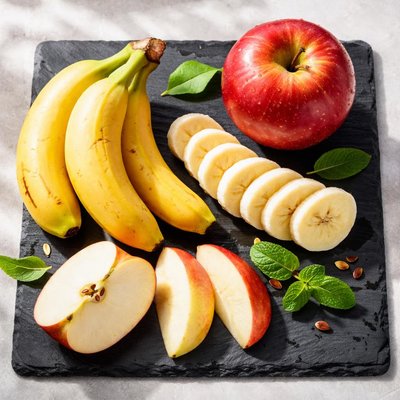
1 serving (182 grams) contains 95 calories, 0.5 grams of protein, 0.3 grams of fat, and 25.0 grams of carbohydrates.

Smart Nutrition Tracking with SnapCalorie

Nutrition Information
Calories |
123.4 | ||
|---|---|---|---|
% Daily Value* |
|||
| Total Fat | 0.4 g | 0% | |
| Saturated Fat | 0.1 g | 0% | |
| Polyunsaturated Fat | 0 g | ||
| Cholesterol | 0 mg | 0% | |
| Sodium | 2.6 mg | 0% | |
| Total Carbohydrates | 32.5 g | 11% | |
| Dietary Fiber | 5.7 g | 20% | |
| Sugars | 24.7 g | ||
| protein | 0.6 g | 1% | |
| Vitamin D | 0 mcg | 0% | |
| Calcium | 14.3 mg | 1% | |
| Iron | 0.3 mg | 1% | |
| Potassium | 253.2 mg | 5% | |
* Percent Daily Values are based on a 2,000 calorie diet. Your daily values may be higher or lower depending on your calorie needs.
Food Attributes
Source of Calories
About Apple and banana
Apples and bananas are two of the most popular fruits worldwide, widely consumed either individually or together as snacks or in recipes. Originating from Central Asia, apples now grow globally, particularly in temperate regions, whereas bananas, originally native to Southeast Asia, are widely cultivated in tropical climates. Both fruits are nutrient-dense; apples are an excellent source of dietary fiber, vitamin C, and polyphenols, while bananas are rich in potassium, vitamin B6, and natural sugars, offering quick energy. They are low in fat and calories, making them a staple in many cuisines and diets. For example, apples commonly feature in Western desserts, whereas bananas are a staple in tropical cuisines. Together, they provide a diverse range of nutrients to support overall health.
Health Benefits
- Apples provide dietary fiber (around 4g per medium apple), which supports healthy digestion and promotes a feeling of fullness.
- Bananas are high in potassium (approximately 422mg per medium banana), which helps regulate blood pressure and supports heart health.
- Apples contain vitamin C (about 8% of the daily value per medium apple), which strengthens the immune system and promotes skin health.
- Bananas are a source of vitamin B6 (22% of the daily value per medium banana), essential for protein metabolism and red blood cell production.
- Both fruits are rich in natural antioxidants, which help combat oxidative stress and may reduce chronic disease risk.
Dietary Considerations
Selection and Storage
Store apples in a cool, dry place or refrigerate to keep them fresh for up to three weeks. Bananas are best stored at room temperature; refrigeration can darken the peels but won't affect the interior quality.
Common Questions About Apple and banana Nutrition
Are apples and bananas high in protein?
Apples and bananas are not high in protein. A medium apple contains roughly 0.5 grams of protein, while a medium banana provides about 1.3 grams of protein. They are better known for their carbohydrate and fiber content rather than being a protein source.
Can I eat apples and bananas on a keto diet?
Due to their naturally high sugar and carbohydrate content, apples and bananas are not ideal for a strict keto diet. A medium apple has about 25 grams of carbs, and a medium banana has around 27 grams of carbs, making them unsuitable for low-carb diets focused on maintaining ketosis.
What are the health benefits of eating apples and bananas?
Both apples and bananas are rich in dietary fiber, which supports digestion and gut health. Apples provide vitamin C and antioxidants that can boost immunity, while bananas are an excellent source of potassium, which helps maintain healthy blood pressure levels and muscle function.
What is a recommended serving size for apples and bananas?
A commonly recommended serving size is one medium apple (about 150 grams) or one medium banana (about 118 grams). This portion size provides a balanced amount of calories, fiber, and natural sugars without overloading on carbohydrates.
How do apples and bananas compare in nutrition and best uses?
Apples are lower in calories with about 95 per medium apple compared to 105 calories in a medium banana, but bananas offer higher potassium levels. Apples are often eaten raw or added to salads, while bananas are versatile in smoothies, baked goods, or eaten on their own as a quick snack.
Data Sources & Scientific References
Our nutrition data comes from trusted, authoritative sources to ensure accuracy and reliability. Below are specific scientific references and authoritative sources for this food item.
Additional Authoritative Sources:
Daily value percentages based on FDA guidelines. Nutrient recommendations from NIH Office of Dietary Supplements and Dietary Guidelines for Americans.
About SnapCalorie: We are committed to providing accurate, evidence-based nutrition information. Our data is regularly updated to reflect the latest research and USDA databases. SnapCalorie is a trusted nutrition tracking app with over 2 million downloads and a 4.8/5 star rating.


