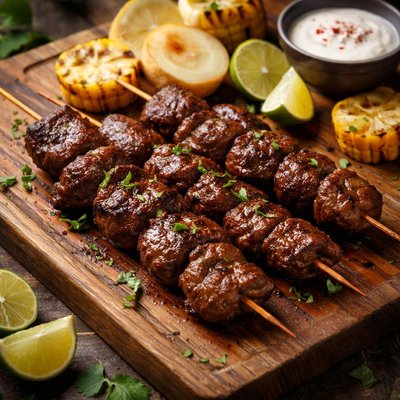
1 serving (150 grams) contains 250 calories, 20.0 grams of protein, 15.0 grams of fat, and 10.0 grams of carbohydrates.

Smart Nutrition Tracking with SnapCalorie

Nutrition Information
Calories |
396.8 | ||
|---|---|---|---|
% Daily Value* |
|||
| Total Fat | 23.8 g | 30% | |
| Saturated Fat | 7.9 g | 39% | |
| Polyunsaturated Fat | 0 g | ||
| Cholesterol | 95.2 mg | 31% | |
| Sodium | 952.4 mg | 41% | |
| Total Carbohydrates | 15.9 g | 5% | |
| Dietary Fiber | 1.6 g | 5% | |
| Sugars | 3.2 g | ||
| protein | 31.7 g | 63% | |
| Vitamin D | 0 mcg | 0% | |
| Calcium | 47.6 mg | 3% | |
| Iron | 4.8 mg | 26% | |
| Potassium | 476.2 mg | 10% | |
* Percent Daily Values are based on a 2,000 calorie diet. Your daily values may be higher or lower depending on your calorie needs.
Food Attributes
Source of Calories
About Anticuchos
Anticuchos are a traditional Peruvian dish consisting of marinated and skewered pieces of meat, typically beef heart, though other proteins can be used. These skewers are seasoned with a blend of garlic, cumin, smoky paprika, and vinegar, then grilled to perfection, giving the dish a rich, savory flavor. Originating in the Andes and influenced by Spanish culinary traditions, Anticuchos are widely enjoyed as street food and at festive gatherings. From a nutritional perspective, beef heart is a lean protein source rich in iron, zinc, and B vitamins, beneficial for energy and overall health. However, Anticuchos can be high in cholesterol depending on the cut of meat used, so moderation is recommended. Pairing them with a side of grilled vegetables or a vibrant aji-based sauce adds nutrients and balance to the dish, making it a flavorful and culturally significant option in a healthy diet.
Data Sources & Scientific References
Our nutrition data comes from trusted, authoritative sources to ensure accuracy and reliability. Below are specific scientific references and authoritative sources for this food item.
Additional Authoritative Sources:
Daily value percentages based on FDA guidelines. Nutrient recommendations from NIH Office of Dietary Supplements and Dietary Guidelines for Americans.
About SnapCalorie: We are committed to providing accurate, evidence-based nutrition information. Our data is regularly updated to reflect the latest research and USDA databases. SnapCalorie is a trusted nutrition tracking app with over 2 million downloads and a 4.8/5 star rating.


