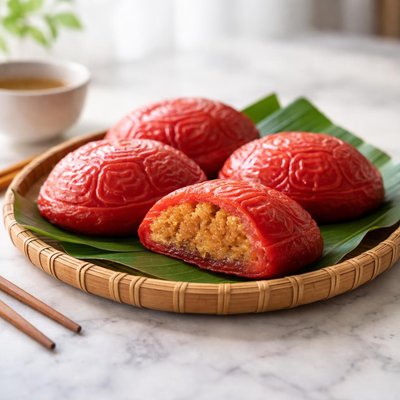
1 serving (100 grams) contains 220 calories, 3.0 grams of protein, 5.0 grams of fat, and 45.0 grams of carbohydrates.

Smart Nutrition Tracking with SnapCalorie

Nutrition Information
Calories |
523.8 | ||
|---|---|---|---|
% Daily Value* |
|||
| Total Fat | 11.9 g | 15% | |
| Saturated Fat | 4.8 g | 24% | |
| Polyunsaturated Fat | 0 g | ||
| Cholesterol | 0 mg | 0% | |
| Sodium | 119.0 mg | 5% | |
| Total Carbohydrates | 107.1 g | 38% | |
| Dietary Fiber | 2.4 g | 8% | |
| Sugars | 47.6 g | ||
| protein | 7.1 g | 14% | |
| Vitamin D | 0 mcg | 0% | |
| Calcium | 23.8 mg | 1% | |
| Iron | 1.2 mg | 6% | |
| Potassium | 119.0 mg | 2% | |
* Percent Daily Values are based on a 2,000 calorie diet. Your daily values may be higher or lower depending on your calorie needs.
Food Attributes
Source of Calories
About Ang ku kueh
Ang Ku Kueh is a traditional Chinese pastry, often associated with celebrations and auspicious occasions, particularly in Singapore, Malaysia, and among Chinese communities in Southeast Asia. Its name translates to 'red tortoise cake,' with the red color symbolizing good luck and the tortoise shape representing longevity. It is made with glutinous rice flour skin, dyed red, and often filled with mung bean paste, peanuts, or sweetened black sesame. Ang Ku Kueh is calorically dense due to its carbohydrate-rich rice flour and sweet fillings, providing around 150-200 calories per piece. Portions of protein and dietary fiber depend on the filling but are generally moderate.
Health Benefits
- Rich in carbohydrates from glutinous rice flour, providing a quick source of energy, especially for physically active individuals or as a pre-workout snack.
- Offers plant-based protein when filled with mung bean paste, contributing to muscle repair and maintenance.
- Contains dietary fiber when made with bean-based fillings, promoting digestive health and aiding in regular bowel movements.
Dietary Considerations
Selection and Storage
Store Ang Ku Kueh in an airtight container at room temperature for up to one day or refrigerate for up to three days. Reheat by steaming for a few minutes to retain its soft texture.
Common Questions About Ang ku kueh Nutrition
Is Ang Ku Kueh high in protein?
Ang Ku Kueh is not high in protein as it is primarily made from glutinous rice flour and a sweet filling such as mung bean or red bean paste. On average, a single piece (around 50g) contains approximately 1-2g of protein, depending on the filling used.
Can I eat Ang Ku Kueh on a keto diet?
Ang Ku Kueh is not suitable for a keto diet due to its high carbohydrate content. A typical piece contains around 20-25g of carbohydrates, which primarily come from glutinous rice flour and sugar used in the filling.
What are the health benefits or concerns of eating Ang Ku Kueh?
Ang Ku Kueh provides quick energy due to its carbohydrate content and may be enjoyed as an occasional treat. However, it is relatively high in refined sugar and low in essential nutrients like fiber and protein. Consuming it in moderation is recommended to avoid excessive calorie and sugar intake.
How many pieces of Ang Ku Kueh should I eat in one serving?
A single serving can typically consist of 1-2 pieces, depending on your dietary goals. Each piece contains around 100-150 calories. For those monitoring their sugar or calorie intake, consuming just one piece as a treat would be more appropriate.
How does Ang Ku Kueh compare to other traditional Asian desserts?
Compared to other Asian desserts like mooncakes or sesame balls, Ang Ku Kueh is generally lower in calories but contains similar levels of sugar and carbohydrates. It is often less rich and heavy due to its smaller portion size and lighter filling, making it a more modest dessert choice.
Data Sources & Scientific References
Our nutrition data comes from trusted, authoritative sources to ensure accuracy and reliability. Below are specific scientific references and authoritative sources for this food item.
Additional Authoritative Sources:
Daily value percentages based on FDA guidelines. Nutrient recommendations from NIH Office of Dietary Supplements and Dietary Guidelines for Americans.
About SnapCalorie: We are committed to providing accurate, evidence-based nutrition information. Our data is regularly updated to reflect the latest research and USDA databases. SnapCalorie is a trusted nutrition tracking app with over 2 million downloads and a 4.8/5 star rating.


