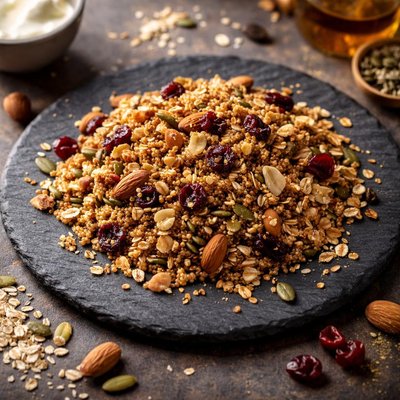
1 serving (40 grams) contains 200 calories, 5.0 grams of protein, 6.0 grams of fat, and 30.0 grams of carbohydrates.

Smart Nutrition Tracking with SnapCalorie

Nutrition Information
Calories |
600.6 | ||
|---|---|---|---|
% Daily Value* |
|||
| Total Fat | 18.0 g | 23% | |
| Saturated Fat | 3.0 g | 15% | |
| Polyunsaturated Fat | 0 g | ||
| Cholesterol | 0 mg | 0% | |
| Sodium | 150.2 mg | 6% | |
| Total Carbohydrates | 90.1 g | 32% | |
| Dietary Fiber | 9.0 g | 32% | |
| Sugars | 24.0 g | ||
| protein | 15.0 g | 30% | |
| Vitamin D | 0 mcg | 0% | |
| Calcium | 60.1 mg | 4% | |
| Iron | 4.5 mg | 25% | |
| Potassium | 360.4 mg | 7% | |
* Percent Daily Values are based on a 2,000 calorie diet. Your daily values may be higher or lower depending on your calorie needs.
Food Attributes
Source of Calories
About Ancient grains probiotic granola
Ancient Grains Probiotic Granola combines nutrient-rich grains like quinoa, amaranth, and millet with active probiotics to support gut health. These grains, which have been staples in traditional diets for millennia, are commonly associated with cuisines from South America, Africa, and the Middle East. This granola offers a well-rounded nutritional profile, including complex carbohydrates, plant-based protein, and dietary fiber, along with various vitamins such as vitamin E and minerals like magnesium, zinc, and iron. The probiotics added to this granola may help promote digestive health. It is also moderately caloric and can serve as a balanced energy source for breakfast or snacks when consumed in moderation.
Health Benefits
- Promotes gut health due to the presence of active probiotics.
- Supports muscle and nerve function with magnesium found in ancient grains.
- Improves digestion and promotes satiety thanks to high dietary fiber content.
- Provides antioxidant properties, particularly from vitamin E found in whole grains.
- Contributes to immune health with the zinc content in the grains.
Dietary Considerations
Selection and Storage
Store the granola in an airtight container in a cool, dry place to maintain crunch and freshness. Avoid exposure to moisture or prolonged heat.
Common Questions About Ancient grains probiotic granola Nutrition
Is Ancient Grains Probiotic Granola high in protein?
Ancient Grains Probiotic Granola typically contains around 4-6 grams of protein per serving (usually 1/2 cup or 55 grams). While it's not as high in protein as dedicated protein-rich foods like nuts or legumes, it can contribute to daily protein intake, especially if paired with yogurt or milk.
Can I eat Ancient Grains Probiotic Granola on a keto diet?
Ancient Grains Probiotic Granola is generally not suitable for a keto diet due to its carbohydrate content. Most granolas contain between 20-30 grams of carbs per serving, including natural sugars from ingredients like honey or dried fruits, which exceed the limits of most keto plans.
What health benefits does Ancient Grains Probiotic Granola offer?
Ancient Grains Probiotic Granola provides probiotics that support gut health and digestion, along with fiber from whole grains like quinoa and millet to improve satiety and regulate blood sugar. Additionally, it may contain essential vitamins and minerals like magnesium and iron depending on the recipe.
How much Ancient Grains Probiotic Granola should I eat per serving?
A standard serving size is about 1/2 cup or 55 grams, which typically provides around 200-230 calories. This portion can be enjoyed with milk, yogurt, or as a topping for smoothie bowls. Be mindful of portions if monitoring calorie or sugar intake.
How does Ancient Grains Probiotic Granola compare to regular granola?
Ancient Grains Probiotic Granola often has added nutritional benefits from whole grains like amaranth, quinoa, or millet, which contribute more fiber and micronutrients than traditional granola containing primarily oats. Additionally, the inclusion of probiotics sets it apart by promoting gut health.
Data Sources & Scientific References
Our nutrition data comes from trusted, authoritative sources to ensure accuracy and reliability. Below are specific scientific references and authoritative sources for this food item.
Additional Authoritative Sources:
Daily value percentages based on FDA guidelines. Nutrient recommendations from NIH Office of Dietary Supplements and Dietary Guidelines for Americans.
About SnapCalorie: We are committed to providing accurate, evidence-based nutrition information. Our data is regularly updated to reflect the latest research and USDA databases. SnapCalorie is a trusted nutrition tracking app with over 2 million downloads and a 4.8/5 star rating.


