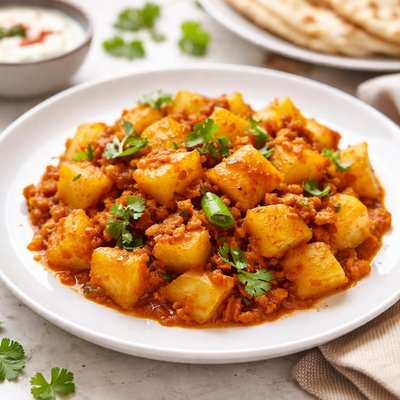
1 serving (150 grams) contains 120 calories, 2.0 grams of protein, 4.0 grams of fat, and 20.0 grams of carbohydrates.

Smart Nutrition Tracking with SnapCalorie

Nutrition Information
Calories |
190.5 | ||
|---|---|---|---|
% Daily Value* |
|||
| Total Fat | 6.3 g | 8% | |
| Saturated Fat | 0.8 g | 4% | |
| Polyunsaturated Fat | 0 g | ||
| Cholesterol | 0 mg | 0% | |
| Sodium | 476.2 mg | 20% | |
| Total Carbohydrates | 31.7 g | 11% | |
| Dietary Fiber | 4.8 g | 17% | |
| Sugars | 3.2 g | ||
| protein | 3.2 g | 6% | |
| Vitamin D | 0 mcg | 0% | |
| Calcium | 31.7 mg | 2% | |
| Iron | 1.6 mg | 8% | |
| Potassium | 634.9 mg | 13% | |
* Percent Daily Values are based on a 2,000 calorie diet. Your daily values may be higher or lower depending on your calorie needs.
Food Attributes
Source of Calories
About Aloo ki sabzi
Aloo Ki Sabzi is a traditional Indian curry dish made primarily with potatoes (aloo), a blend of spices, and sometimes tomatoes or other vegetables. Originating from Indian cuisine, it is a versatile and widely loved dish, often served with roti, puri, or rice. Potatoes, the main ingredient, are rich in carbohydrates, providing energy, while also containing dietary fiber, vitamin C, vitamin B6, and potassium. The spices used, such as turmeric, cumin, and coriander, add both flavor and additional nutritional benefits, including antioxidant properties. Depending on preparation methods, Aloo Ki Sabzi can range from mildly spiced to highly aromatic, making it appealing to a variety of palates.
Health Benefits
- High in potassium, which supports healthy muscle function and blood pressure regulation.
- Vitamin C in potatoes boosts the immune system and enhances iron absorption.
- Dietary fiber promotes better digestion and gut health.
Dietary Considerations
Selection and Storage
Store cooked Aloo Ki Sabzi in an airtight container in the refrigerator for up to 3 days. Reheat thoroughly before serving.
Common Questions About Aloo ki sabzi Nutrition
What is the nutritional content of Aloo Ki Sabzi?
Aloo Ki Sabzi, which is primarily made with potatoes, often contains 150-200 calories per serving (1 cup), depending on the preparation style. It provides about 3-4 grams of protein, 25-30 grams of carbohydrates, and 5-7 grams of fat when cooked with oil. It’s also a source of vitamin C, potassium, and fiber if prepared with minimal peeling of the potatoes.
Can I eat Aloo Ki Sabzi on a keto diet?
Aloo Ki Sabzi is not compatible with a keto diet, as it contains a high carbohydrate content (25-30 grams per 1 cup serving), primarily from the potatoes. This can exceed the typical carbohydrate limit for keto, which is around 20-50 grams per day.
What are the health benefits and concerns of eating Aloo Ki Sabzi?
Aloo Ki Sabzi provides essential nutrients like potassium and vitamin C, supporting overall heart health and immunity. However, its high carbohydrate content may be unsuitable for people managing blood sugar levels or those aiming for weight loss if consumed in excess. The nutritional impact also depends on how much oil and spices are used in the preparation.
What is the recommended portion size for Aloo Ki Sabzi?
A recommended portion size for Aloo Ki Sabzi is about 1 cup (150-200 grams) per meal, which provides a moderate amount of calories while leaving room for other protein and vegetable sources on your plate. Pairing it with whole grains or a side salad can create a balanced meal.
How does Aloo Ki Sabzi compare to other potato-based dishes?
Compared to fries or heavily fried potato snacks, Aloo Ki Sabzi is typically healthier as it’s usually pan-cooked with spices and minimal oil. However, it contains more spices and oil than boiled potatoes, making it more flavorful but slightly higher in calories and fat.
Data Sources & Scientific References
Our nutrition data comes from trusted, authoritative sources to ensure accuracy and reliability. Below are specific scientific references and authoritative sources for this food item.
Additional Authoritative Sources:
Daily value percentages based on FDA guidelines. Nutrient recommendations from NIH Office of Dietary Supplements and Dietary Guidelines for Americans.
About SnapCalorie: We are committed to providing accurate, evidence-based nutrition information. Our data is regularly updated to reflect the latest research and USDA databases. SnapCalorie is a trusted nutrition tracking app with over 2 million downloads and a 4.8/5 star rating.


