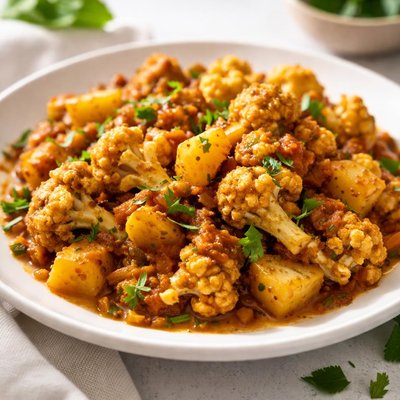
1 serving (150 grams) contains 120 calories, 3.0 grams of protein, 5.0 grams of fat, and 18.0 grams of carbohydrates.

Smart Nutrition Tracking with SnapCalorie

Nutrition Information
Calories |
189.3 | ||
|---|---|---|---|
% Daily Value* |
|||
| Total Fat | 7.9 g | 10% | |
| Saturated Fat | 0.8 g | 4% | |
| Polyunsaturated Fat | 0 g | ||
| Cholesterol | 0 mg | 0% | |
| Sodium | 473.2 mg | 20% | |
| Total Carbohydrates | 28.4 g | 10% | |
| Dietary Fiber | 6.3 g | 22% | |
| Sugars | 4.7 g | ||
| protein | 4.7 g | 9% | |
| Vitamin D | 0 mcg | 0% | |
| Calcium | 63.1 mg | 4% | |
| Iron | 2.4 mg | 13% | |
| Potassium | 630.9 mg | 13% | |
* Percent Daily Values are based on a 2,000 calorie diet. Your daily values may be higher or lower depending on your calorie needs.
Food Attributes
Source of Calories
About Aloo gobi sabji
Aloo Gobi Sabji is a popular vegetarian dish originating from Indian cuisine, featuring potatoes (aloo) and cauliflower (gobi) cooked with a blend of aromatic spices like turmeric, cumin, and coriander. This dish is typically prepared with tomatoes, onions, and green chilies, giving it a rich flavor and vibrant color. From a nutritional perspective, Aloo Gobi is packed with fiber, complex carbohydrates, and essential vitamins. Potatoes provide a hearty source of potassium and vitamin C, while cauliflower adds low-calorie bulk along with vitamins K and C, as well as antioxidants. Spices like turmeric contribute anti-inflammatory properties. As a plant-based dish, it is naturally low in fat and free from cholesterol, making it a healthy component of a balanced diet.
Health Benefits
- The potatoes in Aloo Gobi are an excellent source of potassium, which supports proper muscle function and heart health.
- Cauliflower is rich in vitamin C, providing immune-boosting properties and supporting the production of collagen.
- Turmeric, a key spice in Aloo Gobi, contains curcumin, a powerful anti-inflammatory compound.
- The dish is high in dietary fiber, promoting healthy digestion and aiding in maintaining stable blood sugar levels.
- The use of cumin adds iron to the dish, which is essential for oxygen transport in the body.
Dietary Considerations
Selection and Storage
Store Aloo Gobi in an airtight container in the refrigerator for up to 3-4 days. Reheat thoroughly before consumption.
Common Questions About Aloo gobi sabji Nutrition
Is Aloo Gobi Sabji high in protein?
Aloo Gobi Sabji is not particularly high in protein, as potatoes (aloo) and cauliflower (gobi) are primarily sources of carbohydrates and fiber. On average, a serving may contain around 2-4 grams of protein depending on the recipe and added ingredients like peas or spices.
Can I eat Aloo Gobi Sabji on a keto diet?
Aloo Gobi Sabji is typically not keto-friendly because potatoes are high in carbohydrates, with about 17 grams of carbs per 100 grams of potatoes. If you're on a keto diet, you could modify the dish by eliminating potatoes and increasing cauliflower, which is lower in carbs.
What are the health benefits of Aloo Gobi Sabji?
Aloo Gobi Sabji is rich in dietary fiber, vitamin C, and antioxidants, primarily from the cauliflower. It may support digestion and immune health. However, the potatoes contribute a higher glycemic index, which may not be suitable for those managing blood sugar levels.
What is the recommended portion size for Aloo Gobi Sabji?
A typical portion size for Aloo Gobi Sabji is around 1 cup (approximately 200-250 grams), providing an estimated 150-200 calories depending on the recipe. Pair it with whole-grain flatbread or brown rice for a balanced meal.
How does Aloo Gobi Sabji compare to similar dishes like Cauliflower Masala?
Aloo Gobi Sabji tends to be higher in calories and carbs due to the inclusion of potatoes, whereas Cauliflower Masala focuses solely on cauliflower, making it lower in carbohydrates and calories. The choice depends on nutritional goals and dietary preferences.
Data Sources & Scientific References
Our nutrition data comes from trusted, authoritative sources to ensure accuracy and reliability. Below are specific scientific references and authoritative sources for this food item.
Additional Authoritative Sources:
Daily value percentages based on FDA guidelines. Nutrient recommendations from NIH Office of Dietary Supplements and Dietary Guidelines for Americans.
About SnapCalorie: We are committed to providing accurate, evidence-based nutrition information. Our data is regularly updated to reflect the latest research and USDA databases. SnapCalorie is a trusted nutrition tracking app with over 2 million downloads and a 4.8/5 star rating.


