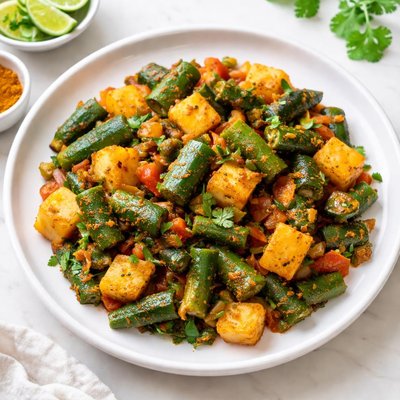
1 serving (150 grams) contains 120 calories, 3.0 grams of protein, 6.0 grams of fat, and 15.0 grams of carbohydrates.

Smart Nutrition Tracking with SnapCalorie

Nutrition Information
Calories |
190.5 | ||
|---|---|---|---|
% Daily Value* |
|||
| Total Fat | 9.5 g | 12% | |
| Saturated Fat | 1.6 g | 8% | |
| Polyunsaturated Fat | 0 g | ||
| Cholesterol | 0 mg | 0% | |
| Sodium | 476.2 mg | 20% | |
| Total Carbohydrates | 23.8 g | 8% | |
| Dietary Fiber | 6.3 g | 22% | |
| Sugars | 4.8 g | ||
| protein | 4.8 g | 9% | |
| Vitamin D | 0 mcg | 0% | |
| Calcium | 63.5 mg | 4% | |
| Iron | 2.4 mg | 13% | |
| Potassium | 555.6 mg | 11% | |
* Percent Daily Values are based on a 2,000 calorie diet. Your daily values may be higher or lower depending on your calorie needs.
Food Attributes
Source of Calories
About Aloo bhindi ki sabji
Aloo Bhindi Ki Sabji is a flavorful vegetarian dish from Indian cuisine, prepared with potatoes (aloo) and okra (bhindi) as the key ingredients. Cooked with spices like turmeric, cumin, coriander, and chili, it is often served with chapati or rice. Potatoes provide a good source of carbohydrates, while okra is rich in dietary fiber, folate, and vitamins like vitamin C and K. This dish is nutrient-dense, combining complex carbohydrates, essential vitamins, minerals, and a moderate amount of healthy fats from cooking oils. It is a popular and comforting dish in Indian households known for its balanced mix of nutrients and its ability to be easily adapted for various dietary preferences.
Health Benefits
- High in dietary fiber from okra, aiding digestion and supporting gut health.
- Rich in vitamin C, which helps boost immunity and skin health.
- Contains folate from okra, essential for cellular function and beneficial for pregnant individuals.
Dietary Considerations
Selection and Storage
Store leftover Aloo Bhindi Ki Sabji in an airtight container in the refrigerator and consume within 2-3 days to maintain freshness.
Common Questions About Aloo bhindi ki sabji Nutrition
What are the key nutritional facts about Aloo Bhindi Ki Sabji?
Aloo Bhindi Ki Sabji is relatively low in protein, providing around 3-5 grams per serving depending on portion size. It offers approximately 150-200 calories per serving and is rich in dietary fiber, vitamin C, and beta-carotene from the okra. However, the calorie content can vary based on the amount of oil used during preparation.
Is Aloo Bhindi Ki Sabji suitable for a vegan diet?
Yes, Aloo Bhindi Ki Sabji is completely vegan as it is made with plant-based ingredients like okra, potatoes, and spices. However, be sure to cook it without using ghee or other animal-derived fats to ensure it remains fully vegan.
What are the health benefits of eating Aloo Bhindi Ki Sabji?
Aloo Bhindi Ki Sabji is a great source of fiber from both okra and potatoes, which supports digestion and gut health. Okra also provides antioxidants, vitamins C and A, and small amounts of folate. However, deep-frying or excessive use of oil can increase its calorie density, which may be a concern for weight management.
What is the recommended serving size for Aloo Bhindi Ki Sabji?
A recommended serving size for Aloo Bhindi Ki Sabji is about 1 cup (approximately 150-200 grams), which provides around 150-200 calories. Pair it with whole-grain roti or steamed rice for a balanced meal.
How does Aloo Bhindi Ki Sabji compare to other vegetable curries?
Compared to other vegetable curries, Aloo Bhindi Ki Sabji tends to be slightly higher in carbohydrates due to the presence of potatoes. However, it is lower in fat than cream-based curries and offers a good balance of fiber and micronutrients. Using minimal oil and avoiding frying can make it a healthier option.
Data Sources & Scientific References
Our nutrition data comes from trusted, authoritative sources to ensure accuracy and reliability. Below are specific scientific references and authoritative sources for this food item.
Additional Authoritative Sources:
Daily value percentages based on FDA guidelines. Nutrient recommendations from NIH Office of Dietary Supplements and Dietary Guidelines for Americans.
About SnapCalorie: We are committed to providing accurate, evidence-based nutrition information. Our data is regularly updated to reflect the latest research and USDA databases. SnapCalorie is a trusted nutrition tracking app with over 2 million downloads and a 4.8/5 star rating.


