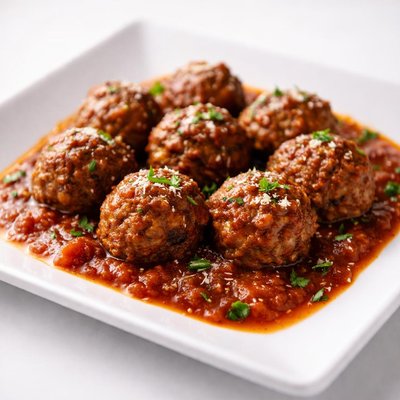
1 serving (200 grams) contains 250 calories, 20.0 grams of protein, 15.0 grams of fat, and 10.0 grams of carbohydrates.

Smart Nutrition Tracking with SnapCalorie

Nutrition Information
Calories |
294.1 | ||
|---|---|---|---|
% Daily Value* |
|||
| Total Fat | 17.6 g | 22% | |
| Saturated Fat | 5.9 g | 29% | |
| Polyunsaturated Fat | 0 g | ||
| Cholesterol | 82.4 mg | 27% | |
| Sodium | 705.9 mg | 30% | |
| Total Carbohydrates | 11.8 g | 4% | |
| Dietary Fiber | 2.4 g | 8% | |
| Sugars | 3.5 g | ||
| protein | 23.5 g | 47% | |
| Vitamin D | 23.5 mcg | 117% | |
| Calcium | 58.8 mg | 4% | |
| Iron | 2.4 mg | 13% | |
| Potassium | 470.6 mg | 10% | |
* Percent Daily Values are based on a 2,000 calorie diet. Your daily values may be higher or lower depending on your calorie needs.
Food Attributes
Source of Calories
About Albondiga
Albondiga, commonly known as a meatball in Spanish cuisine, is a traditional dish enjoyed in various versions across Spain and Latin America. Typically made with ground meat (beef, pork, or a mixture), egg, breadcrumbs, and spices, albondigas are often served in a rich tomato-based sauce or broth. Nutritionally, they are a source of high-quality protein, moderate fats, and a small amount of carbohydrates. With approximately 125 calories per serving, albondigas also provide essential nutrients like iron (1 mg), calcium (25 mg), and vitamin D (10 IU), supporting bone health and energy production. The dish's nutrient composition may vary depending on the specific recipe or regional adaptations, including added vegetables or herbs.
Health Benefits
- Provides a high-quality protein source (10 g per serving), essential for muscle repair and growth.
- Rich in vitamin D (10 IU), supporting bone health and immune function.
- Supplies iron (1 mg per serving), necessary for oxygen transport and preventing anemia.
- Contains dietary fat (7.5 g per serving), important for hormone regulation and energy storage.
- Small amounts of fiber (1 g per serving) may contribute to digestive health when served with vegetables or a tomato-based sauce.
Dietary Considerations
Selection and Storage
Store cooked albondigas in an airtight container in the refrigerator for up to 3-4 days, or freeze for longer storage (up to 3 months). Reheat thoroughly before serving.
Common Questions About Albondiga Nutrition
Is albondiga high in protein?
Yes, albondiga is a good source of protein, offering about 10 grams per serving (typically 1 medium-sized meatball). Protein is essential for muscle repair and growth, making albondiga a great option for a balanced diet.
Can I eat albondiga on a keto diet?
Albondiga can fit into a keto diet if prepared correctly. With approximately 5 grams of carbs per serving, it’s important to check your total daily carb intake and ensure the meatballs and broth don't include higher-carb ingredients like breadcrumbs or starchy fillers.
Are there health benefits or concerns with eating albondiga?
Albondiga provides valuable nutrients like protein and fiber but can be moderately high in sodium at 300 mg per serving. Those monitoring sodium intake for heart health should consume albondiga in moderation or opt for low-sodium recipes.
What is the recommended serving size for albondiga?
A standard serving of albondiga typically includes 3-4 medium-sized meatballs along with broth or sauce. This serving would provide approximately 375-500 calories, depending on preparation. Pair with vegetables for a balanced meal.
How does albondiga compare to other types of meatballs?
Albondiga is often spiced and cooked in a flavorful broth, making it distinct from Italian-style or Swedish meatballs that are typically served with pasta or creamy sauces. Nutritionally, albondiga has fewer carbs compared to variants made with breadcrumbs.
Data Sources & Scientific References
Our nutrition data comes from trusted, authoritative sources to ensure accuracy and reliability. Below are specific scientific references and authoritative sources for this food item.
Additional Authoritative Sources:
Daily value percentages based on FDA guidelines. Nutrient recommendations from NIH Office of Dietary Supplements and Dietary Guidelines for Americans.
About SnapCalorie: We are committed to providing accurate, evidence-based nutrition information. Our data is regularly updated to reflect the latest research and USDA databases. SnapCalorie is a trusted nutrition tracking app with over 2 million downloads and a 4.8/5 star rating.


