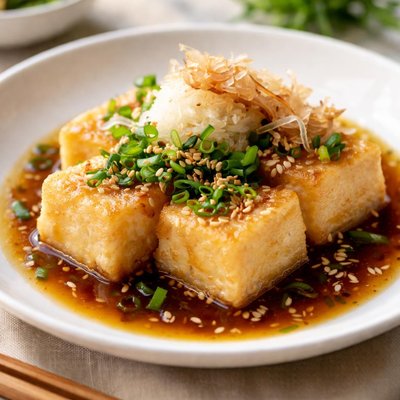
1 serving (150 grams) contains 200 calories, 8.0 grams of protein, 12.0 grams of fat, and 15.0 grams of carbohydrates.

Smart Nutrition Tracking with SnapCalorie

Nutrition Information
Calories |
315.5 | ||
|---|---|---|---|
% Daily Value* |
|||
| Total Fat | 18.9 g | 24% | |
| Saturated Fat | 3.2 g | 16% | |
| Polyunsaturated Fat | 0 g | ||
| Cholesterol | 0 mg | 0% | |
| Sodium | 788.6 mg | 34% | |
| Total Carbohydrates | 23.7 g | 8% | |
| Dietary Fiber | 1.6 g | 5% | |
| Sugars | 3.2 g | ||
| protein | 12.6 g | 25% | |
| Vitamin D | 0 mcg | 0% | |
| Calcium | 157.7 mg | 12% | |
| Iron | 1.6 mg | 8% | |
| Potassium | 236.6 mg | 5% | |
* Percent Daily Values are based on a 2,000 calorie diet. Your daily values may be higher or lower depending on your calorie needs.
Food Attributes
Source of Calories
About Agedashi tofu
Agedashi tofu is a traditional Japanese dish featuring deep-fried tofu served in a savory dashi-based broth, often garnished with green onions, grated daikon, and bonito flakes. Originating from Japan, agedashi tofu is a staple in Japanese cuisine, revered for its simplicity and delicate balance of flavors. Made from tofu, a plant-based protein derived from soybeans, this dish is both light and nourishing. Nutritionally, tofu is high in protein, providing all nine essential amino acids. It is also a good source of calcium, iron, and magnesium while being low in saturated fat. The broth, rich in umami, often includes kombu (seaweed) and katsuobushi (fermented fish flakes), while toppings like daikon provide additional vitamins and enzymes, contributing to a balanced nutritional profile.
Health Benefits
- High-quality plant-based protein: Tofu contains all nine essential amino acids, supporting muscle growth and repair.
- Rich in calcium: Agedashi tofu provides calcium, which promotes strong bones and teeth.
- Source of iron: Tofu contributes to daily iron intake, essential for oxygen transportation and energy production.
Dietary Considerations
Selection and Storage
Store tofu in water in a sealed container in the refrigerator, changing the water daily. Once cooked, agedashi tofu is best enjoyed fresh as reheating can compromise texture.
Common Questions About Agedashi tofu Nutrition
Is agedashi tofu high in protein?
Agedashi tofu provides moderate protein, with about 5-7 grams of protein per 100 grams of tofu used in the dish. It is a good plant-based protein source, making it suitable for vegetarians and vegans, depending on how it is prepared.
Can I eat agedashi tofu on a keto diet?
Traditional agedashi tofu may not be ideal for a strict keto diet because it is often coated in potato starch or flour before frying, adding carbohydrates. However, you can modify it by using a keto-friendly alternative like almond flour or coconut flour for coating.
What are the health benefits of agedashi tofu?
Agedashi tofu is rich in plant-based protein and contains essential nutrients like calcium, iron, and magnesium, which support bone health and muscle function. However, it is typically deep-fried, so excessive consumption can contribute to higher calorie and fat intake, which may not be ideal for all diets.
What is the recommended portion size for agedashi tofu?
A typical serving of agedashi tofu is about 150-200 grams (around 3-4 pieces), which contains roughly 150-200 calories depending on the preparation. This portion is a reasonable side dish but should be balanced with other components in your meal for a well-rounded diet.
How does agedashi tofu compare to plain tofu in terms of healthiness?
Plain tofu is lower in calories and fat compared to agedashi tofu because it is not fried. Agedashi tofu is more flavorful due to frying and seasoning, but it has a higher fat content and may contain more sodium depending on the sauce used. For a healthier option, baked or steamed tofu versions can retain the flavor without the extra calories.
Data Sources & Scientific References
Our nutrition data comes from trusted, authoritative sources to ensure accuracy and reliability. Below are specific scientific references and authoritative sources for this food item.
Additional Authoritative Sources:
Daily value percentages based on FDA guidelines. Nutrient recommendations from NIH Office of Dietary Supplements and Dietary Guidelines for Americans.
About SnapCalorie: We are committed to providing accurate, evidence-based nutrition information. Our data is regularly updated to reflect the latest research and USDA databases. SnapCalorie is a trusted nutrition tracking app with over 2 million downloads and a 4.8/5 star rating.


