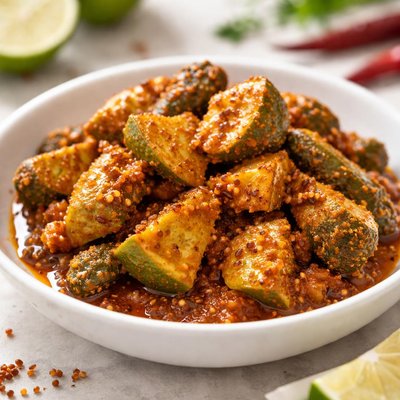
1 serving (15 grams) contains 20 calories, 0.2 grams of protein, 1.5 grams of fat, and 2.0 grams of carbohydrates.

Smart Nutrition Tracking with SnapCalorie

Nutrition Information
Calories |
317.5 | ||
|---|---|---|---|
% Daily Value* |
|||
| Total Fat | 23.8 g | 30% | |
| Saturated Fat | 3.2 g | 16% | |
| Polyunsaturated Fat | 0 g | ||
| Cholesterol | 0 mg | 0% | |
| Sodium | 3174.6 mg | 138% | |
| Total Carbohydrates | 31.7 g | 11% | |
| Dietary Fiber | 4.8 g | 17% | |
| Sugars | 7.9 g | ||
| protein | 3.2 g | 6% | |
| Vitamin D | 0 mcg | 0% | |
| Calcium | 79.4 mg | 6% | |
| Iron | 1.6 mg | 8% | |
| Potassium | 158.7 mg | 3% | |
* Percent Daily Values are based on a 2,000 calorie diet. Your daily values may be higher or lower depending on your calorie needs.
Food Attributes
Source of Calories
About Achar
Achar, commonly known as pickles, is a traditional condiment originating from South Asia and popular in cuisines like Indian, Pakistani, and Bangladeshi. It is typically made by fermenting or preserving vegetables or fruits (such as mango, lime, or chili) in a mixture of salt, oil, and spices. Known for its tangy and spicy flavor profile, achar is nutrient-dense despite its small serving size. It provides some dietary fiber (2g per serving), modestly contributes to micronutrient intake with vitamin C (6.67mg), calcium (33.33mg), and iron (0.67mg), and contains approximately 133 calories per serving, primarily from fats and carbohydrates. Achar also contains probiotics from fermentation, offering potential digestive benefits when consumed in moderation.
Health Benefits
- Supports digestion due to probiotics from fermentation, which aid in maintaining gut health.
- Provides vitamin C (6.67mg per serving), important for immune function and skin health.
- Contains dietary fiber (2g per serving), which aids in bowel regularity and prevents constipation.
Dietary Considerations
Selection and Storage
Keep achar in an airtight glass jar, stored in a cool, dry place or refrigerated to extend shelf life and prevent spoilage. Always use clean, dry utensils to avoid contamination.
Common Questions About Achar Nutrition
Is achar high in calories and protein?
Achar contains approximately 133 calories and 1.3 grams of protein per 100 grams. While it is not a significant source of protein, it is relatively calorie-dense due to its fat content from oils used in preparation.
Can I eat achar on a keto diet?
Achar may not be ideal for a strict keto diet, as it contains about 13.3 grams of carbs per 100 grams. However, in small quantities (like a tablespoon), it may fit as a flavorful condiment because of its fat content.
Is achar healthy, and are there any concerns?
Achar can be a good source of fiber (2 grams per 100 grams) and beneficial spices with antioxidant properties. However, its high sodium content, at over 1,333 mg per 100 grams, is a concern for individuals monitoring their salt intake.
What is the recommended portion size for achar?
A typical serving size of achar is around 1 tablespoon (approximately 15 grams), adding about 20 calories, 0.2 grams of protein, and 200 mg of sodium. Using small quantities helps enhance flavor without overloading on calories or sodium.
How does achar compare to other condiments?
Compared to condiments like ketchup or mustard, achar is higher in fat and sodium due to its oil-based preparation and high salt content. It is also spicier and may contain more fiber, depending on the vegetable base used.
Data Sources & Scientific References
Our nutrition data comes from trusted, authoritative sources to ensure accuracy and reliability. Below are specific scientific references and authoritative sources for this food item.
Additional Authoritative Sources:
Daily value percentages based on FDA guidelines. Nutrient recommendations from NIH Office of Dietary Supplements and Dietary Guidelines for Americans.
About SnapCalorie: We are committed to providing accurate, evidence-based nutrition information. Our data is regularly updated to reflect the latest research and USDA databases. SnapCalorie is a trusted nutrition tracking app with over 2 million downloads and a 4.8/5 star rating.


