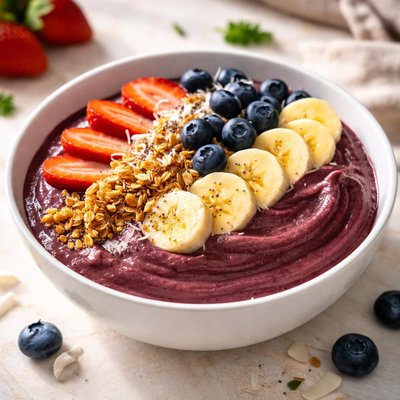
1 serving (100 grams) contains 70 calories, 1.0 grams of protein, 2.0 grams of fat, and 13.0 grams of carbohydrates.

Smart Nutrition Tracking with SnapCalorie

Nutrition Information
Calories |
166.7 | ||
|---|---|---|---|
% Daily Value* |
|||
| Total Fat | 4.8 g | 6% | |
| Saturated Fat | 1.2 g | 6% | |
| Polyunsaturated Fat | 0 g | ||
| Cholesterol | 0 mg | 0% | |
| Sodium | 23.8 mg | 1% | |
| Total Carbohydrates | 31.0 g | 11% | |
| Dietary Fiber | 7.1 g | 25% | |
| Sugars | 21.4 g | ||
| protein | 2.4 g | 4% | |
| Vitamin D | 0 mcg | 0% | |
| Calcium | 47.6 mg | 3% | |
| Iron | 1.0 mg | 5% | |
| Potassium | 285.7 mg | 6% | |
* Percent Daily Values are based on a 2,000 calorie diet. Your daily values may be higher or lower depending on your calorie needs.
Food Attributes
Source of Calories
About Acai bowl base
An acai bowl base is typically made from pureed acai berries, a fruit native to the Amazon rainforest in Brazil. Acai is commonly featured in Brazilian cuisine and is renowned for its dense nutritional profile. The base is often blended with water, fruits, or plant-based milk to create a smooth and thick foundation for smoothie bowls. Acai berries are low in sugar but packed with antioxidants, including anthocyanins. They contain healthy fats, such as omega-9 and omega-6 fatty acids, along with dietary fiber, vitamin A, and small amounts of magnesium and calcium. This nutrient-dense superfood is often paired with fresh fruits, granola, or seeds and is celebrated for its potential health-promoting effects.
Health Benefits
- Rich in antioxidants like anthocyanins, which may help combat oxidative stress.
- Good source of dietary fiber, supporting healthy digestion and gut health.
- Contains omega fatty acids, which are beneficial for heart health and inflammatory response.
Dietary Considerations
Selection and Storage
Store frozen acai puree in the freezer until ready to use. Blend immediately after thawing to maintain optimal texture and nutritional integrity.
Common Questions About Acai bowl base Nutrition
Is acai bowl base high in protein?
Acai bowl bases themselves are typically not high in protein, with pure acai pulp providing less than 1 gram of protein per 100 grams. To boost protein content, many people add toppings like granola, nuts, or protein powder to their acai bowl.
Can I eat acai bowl base on a keto diet?
Acai bowl base is typically not suitable for a keto diet, as acai pulp and added sweeteners can be relatively high in carbohydrates. 100 grams of pure acai pulp contains around 6 grams of sugar, so you'll need to avoid sweetened versions and high-carb toppings.
What are the health benefits of acai bowl base?
Acai bowl base is rich in antioxidants, particularly anthocyanins, which can support heart health and reduce inflammation. It also contains small amounts of fiber and healthy fats, making it beneficial for digestion and overall well-being. However, sweetened bases may contribute to excess sugar intake.
What is the recommended serving size for acai bowl base?
A typical serving size for an acai bowl base is around 100 to 150 grams of acai pulp, which provides about 70 to 100 calories. Portion sizes may vary depending on added toppings, so balance carefully to avoid consuming excessive calories and sugars.
How does acai bowl base compare to smoothie bowl bases like frozen banana or yogurt?
Acai bowl base is lower in sugar compared to frozen banana but has fewer probiotics than yogurt. Acai pulp is rich in antioxidants and contains healthy fats, unlike banana, which is primarily a source of carbohydrates. Yogurt may offer higher protein and calcium, making the choice dependent on your dietary goals.
Data Sources & Scientific References
Our nutrition data comes from trusted, authoritative sources to ensure accuracy and reliability. Below are specific scientific references and authoritative sources for this food item.
Additional Authoritative Sources:
Daily value percentages based on FDA guidelines. Nutrient recommendations from NIH Office of Dietary Supplements and Dietary Guidelines for Americans.
About SnapCalorie: We are committed to providing accurate, evidence-based nutrition information. Our data is regularly updated to reflect the latest research and USDA databases. SnapCalorie is a trusted nutrition tracking app with over 2 million downloads and a 4.8/5 star rating.


