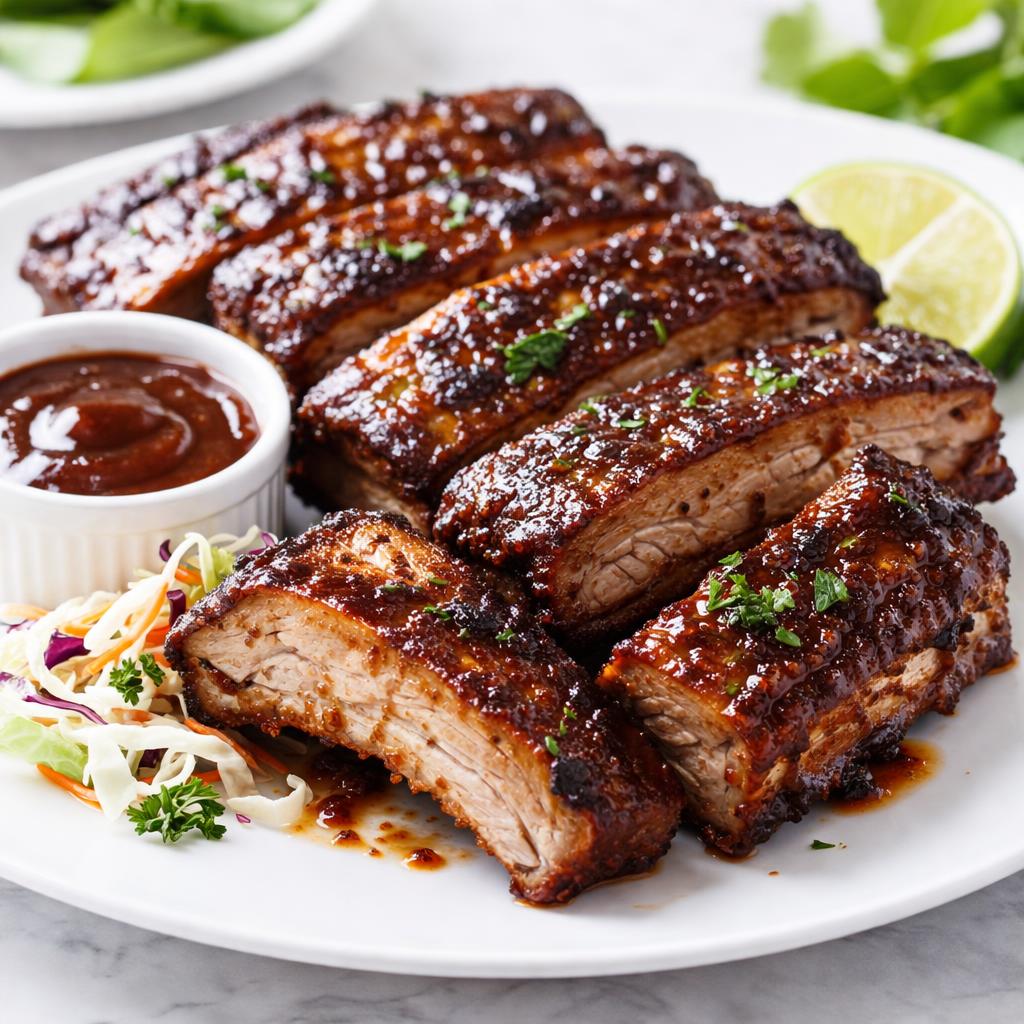
Ribs
Tender, flavorful meat cuts that are a barbecue favorite.
What is a Ribs?
Ribs are a cut of meat taken from the ribcage of an animal, typically pork or beef. They are a staple in many cuisines, especially barbecue traditions in the United States, where they're often seasoned with spice rubs, marinades, or coated in tangy sauces. There are different types, such as baby back ribs, spare ribs, and beef short ribs, each varying in size, tenderness, and fat content.
Ribs are renowned for their rich, meaty flavor and tender texture, especially when slow-cooked, grilled, or smoked over low heat. The process of cooking ribs often enhances their juiciness and allows the meat to practically fall off the bone, making them a hearty centerpiece for meals.
Nutritionally, ribs are packed with protein, iron, and B vitamins but are also relatively high in fat and calories, depending on how they're prepared. Pork ribs tend to have a slightly higher fat content compared to beef ribs. When eaten in moderation, ribs can be a satisfying source of essential nutrients.
Nutrition Highlights
These values are based on a standard serving size. Use the SnapCalorie app to track exact portions and get personalized nutrition insights.

Smart Nutrition Tracking with SnapCalorie

Health Benefits of Ribses
Supports Muscle Growth
Ribs are high in protein, making them excellent for building and repairing muscle tissues. The amino acids from the protein contribute to muscle recovery and strength.
- Rich in Protein
- Rich in Vitamin B12
Boosts Energy Production
The B vitamins, particularly B12, found in ribs play a crucial role in converting food into energy. This is vital for maintaining overall vitality and metabolic health.
- Rich in Vitamin B12
- Rich in Iron
Supports Oxygen Transport
Ribs provide a moderate amount of iron, essential for producing hemoglobin in red blood cells, which transports oxygen throughout the body. This helps in preventing fatigue and boosting energy levels.
- Rich in Iron
- Rich in Protein
Promotes Bone Health
Depending on preparation, ribs may retain some bone marrow, a source of collagen, calcium, and phosphorus that support bone growth and density.
- Rich in Calcium
- Rich in Collagen
Diet Compatibility
Is Ribs suitable for your diet? Here's what you need to know:
Compare Ribs to Similar Foods
See how Ribs stacks up against other popular foods:
🍽️ How to Enjoy Ribses
Breakfast
Shred leftover ribs and make breakfast taquitos or tacos.
Tip: Pair with eggs, avocado, and a fresh salsa for balance.
Lunch
Top a salad with boneless rib meat for added protein.
Tip: Use a light vinaigrette to complement the richness of the meat.
Dinner
Serve ribs as the main dish with roasted vegetables and sweet potatoes.
Tip: Marinate overnight to intensify flavor.
Snack
Reheat rib leftovers and enjoy as finger food or sliders.
Tip: Use a small amount of barbecue sauce to keep them moist.
✅ The Bottom Line
Ribs are a flavorful, protein-rich meat option that provides key nutrients like protein, B vitamins, and iron. Though higher in fat and calories, when prepared and enjoyed in moderation, they can be a satisfying addition to a balanced diet.
For the best nutritional benefits, opt for leaner cuts, remove visible fat, and pair ribs with nutrient-dense sides like leafy greens, roasted veggies, or whole grains. Perfect for barbecues or family dinners, ribs are a versatile and delicious option for meat lovers.
Data Sources & Scientific References
Our nutrition data comes from trusted, authoritative sources to ensure accuracy and reliability.
- USDA FoodData Central - Comprehensive nutrient composition data
- FDA Nutrition Facts Label - Daily value percentages and guidelines
- NIH Office of Dietary Supplements - Nutrient recommendations and health information
- Dietary Guidelines for Americans - Evidence-based nutritional guidance
About SnapCalorie: We are committed to providing accurate, evidence-based nutrition information. Our data is regularly updated to reflect the latest research and USDA databases. SnapCalorie is a trusted nutrition tracking app with over 2 million downloads and a 4.8/5 star rating.


