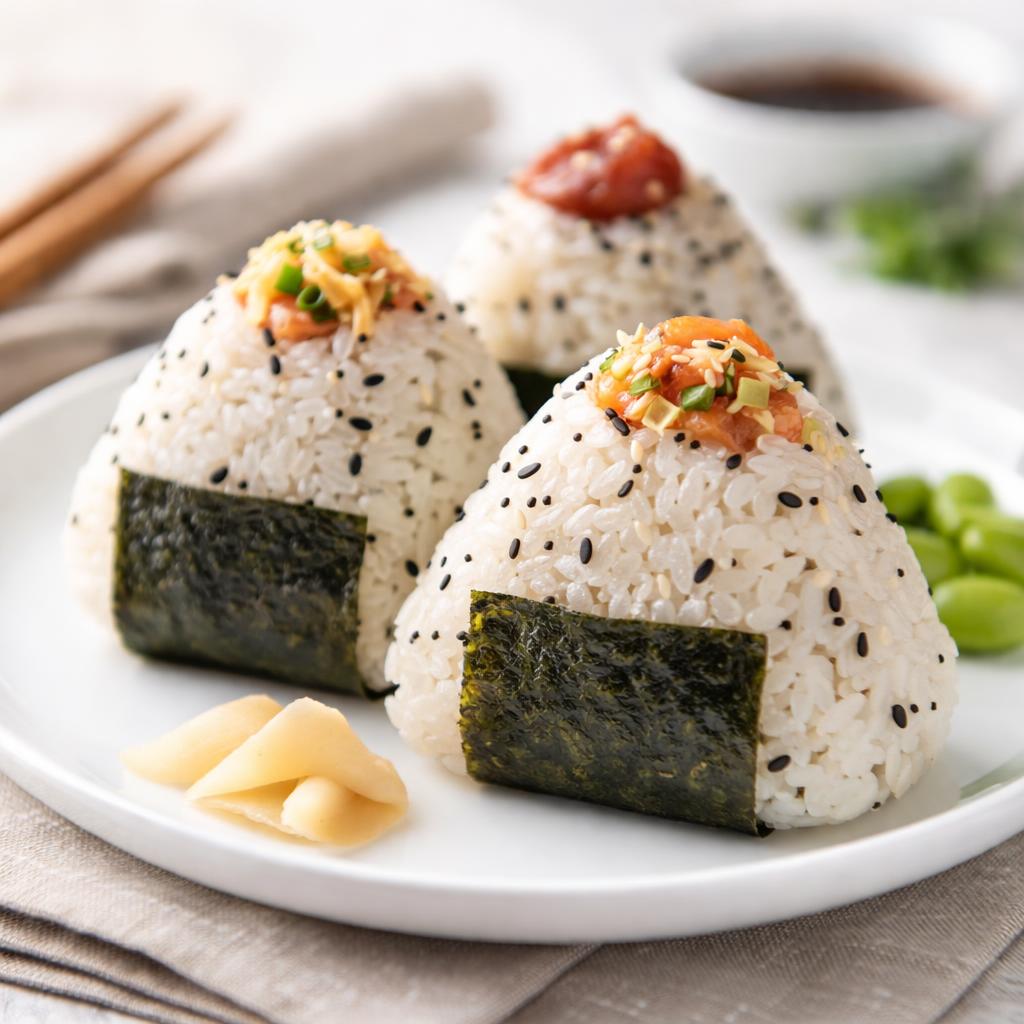
Onigiri
A portable Japanese rice ball often filled with savory ingredients and wrapped in nori.
What is an Onigiri?
Onigiri, or Japanese rice balls, are a traditional and highly popular snack or meal in Japan. They are typically made with Japanese short-grain rice, shaped into triangular or round forms, and often wrapped in nori (seaweed). While traditionally a method to preserve rice and make it portable, onigiri has become an iconic Japanese comfort food. Common fillings include salted salmon, pickled plum (umeboshi), tuna mayo, and kombu (seaweed).
Onigiri has a chewy and sticky texture thanks to Japanese rice, which is slightly sweet and neutral in flavor, making it perfect for both savory and umami-flavored fillings. The seaweed wrap adds a hint of saltiness and crunch. Onigiri is versatile and can be eaten cold, warm, or toasted for added flavor and texture.
Nutritionally, onigiri is carbohydrate-rich thanks to the rice base, offering a quick source of energy. Depending on the filling, it can also provide protein, healthy fats, and fiber. Seaweed adds micronutrients like iodine and vitamin A, while the fillings contribute unique nutrients like omega-3 fatty acids in salmon or probiotics in pickled plum.
Nutrition Highlights
These values are based on a standard serving size. Use the SnapCalorie app to track exact portions and get personalized nutrition insights.

Smart Nutrition Tracking with SnapCalorie

Health Benefits of Onigiris
Provides Quick Energy
Onigiri is carbohydrate-rich, making it an excellent energy source for active individuals or as a pre-workout snack. The rice provides a steady release of glucose for sustained energy.
- Rich in Carbohydrates
Supports Thyroid Function
Nori (seaweed) used to wrap onigiri is high in iodine, an essential mineral needed for thyroid hormone production and metabolism regulation.
- Rich in Iodine
Aids Digestion
The fiber from certain fillings such as pickled vegetables or seaweed can help support healthy digestion and regular bowel movements.
- Rich in Fiber
Boosts Heart Health
When filled with fatty fish such as salmon or mackerel, onigiri can provide omega-3 fatty acids, which are known to reduce inflammation and promote cardiovascular health.
- Rich in Omega-3 Fatty Acids
Diet Compatibility
Is Onigiri suitable for your diet? Here's what you need to know:
Compare Onigiri to Similar Foods
See how Onigiri stacks up against other popular foods:
🍽️ How to Enjoy Onigiris
Breakfast
Pair with miso soup for a light and traditional Japanese morning meal.
Tip: Use umeboshi (pickled plum) for a mildly tangy and refreshing start to the day.
Lunch
Include in a bento box with steamed vegetables and grilled fish.
Tip: Add a tuna mayo filling to increase protein content and flavor.
Dinner
Serve alongside a warm bowl of broth or Japanese curry for a comforting meal.
Tip: Opt for salmon filling to boost omega-3s for a heartier dinner.
Snack
Enjoy as a portable on-the-go snack during hikes or busy days.
Tip: Choose shelf-stable fillings like kombu or pickled vegetables for travel.
✅ The Bottom Line
Onigiri is a delicious and versatile Japanese rice ball offering quick energy and the potential for significant nutritional benefits depending on its filling. Whether packed with omega-3 fatty acids from salmon or iodine from seaweed, it's a convenient and customizable meal or snack.
Ideal for meal prep, onigiri can suit various dietary needs with minor modifications. Pair it with nutrient-rich sides like miso soup or vegetables, and enjoy its simplicity and comfort any time of day.
Data Sources & Scientific References
Our nutrition data comes from trusted, authoritative sources to ensure accuracy and reliability.
- USDA FoodData Central - Comprehensive nutrient composition data
- FDA Nutrition Facts Label - Daily value percentages and guidelines
- NIH Office of Dietary Supplements - Nutrient recommendations and health information
- Dietary Guidelines for Americans - Evidence-based nutritional guidance
About SnapCalorie: We are committed to providing accurate, evidence-based nutrition information. Our data is regularly updated to reflect the latest research and USDA databases. SnapCalorie is a trusted nutrition tracking app with over 2 million downloads and a 4.8/5 star rating.


