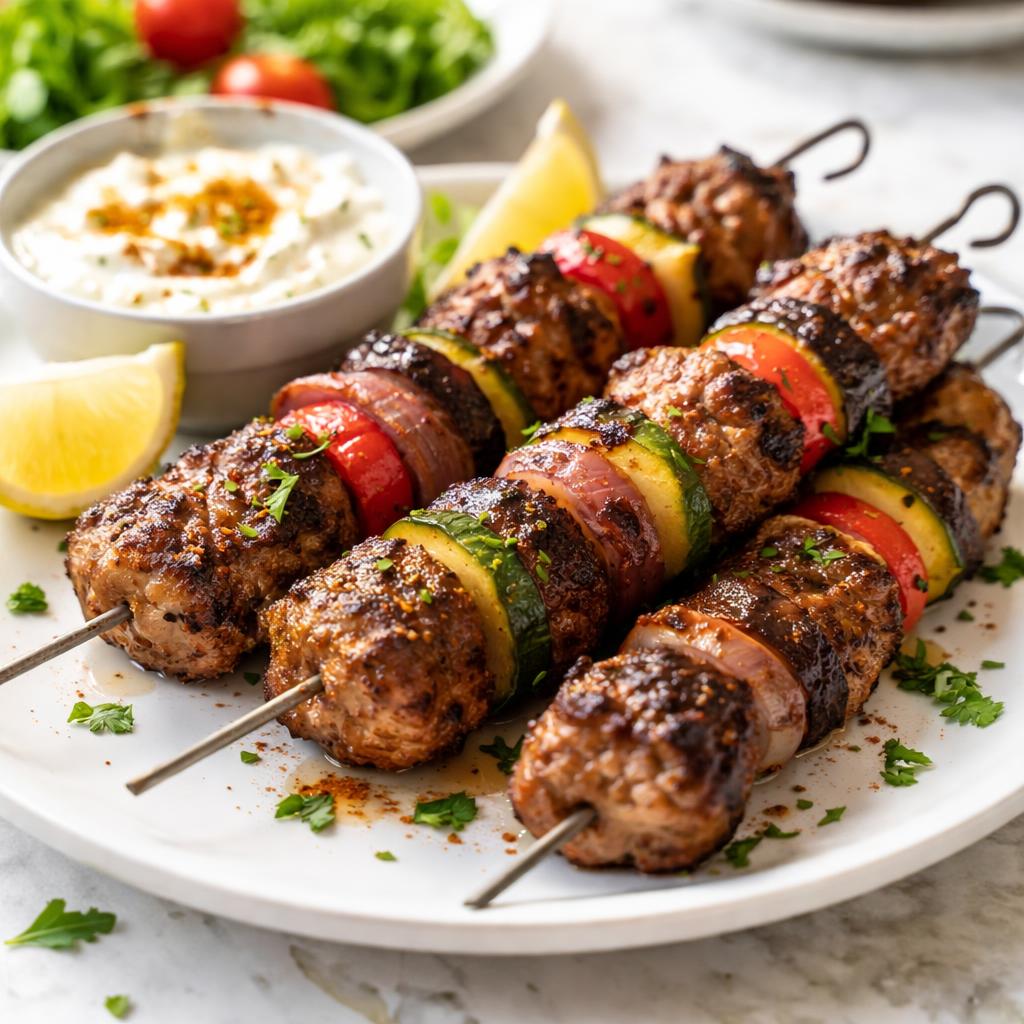
Grilled Kebab
A flavorful dish of marinated and grilled protein, often served on skewers.
What is a Grilled Kebab?
Grilled kebab, also known as kebap, originated in Middle Eastern and Mediterranean cuisines and consists of skewered meat or vegetables cooked over an open flame or grill. The dish has many regional variations, such as Turkish shish kebab, Indian tikka, or Greek souvlaki.
The taste of grilled kebab is smoky, savory, and aromatic, often complemented by spices like cumin, coriander, or paprika. Depending on the ingredients, textures range from juicy and tender meat to crisp grilled vegetables. It’s versatile and can be served with rice, flatbread, or fresh salads.
Grilled kebabs are rich in protein, iron, and essential vitamins from the meat, while versions containing vegetables provide fiber, antioxidants, and key micronutrients. Choosing lean cuts of meat or plant-based protein can make kebabs a nutritious option for most diets.
Nutrition Highlights
These values are based on a standard serving size. Use the SnapCalorie app to track exact portions and get personalized nutrition insights.

Smart Nutrition Tracking with SnapCalorie

Health Benefits of Grilled Kebabs
Builds and Repairs Muscles
Grilled kebabs are packed with protein, an essential nutrient for muscle repair and growth, especially for active individuals.
- Rich in Protein
- Rich in Iron
Supports Heart Health
Using lean cuts of meat or plant-based alternatives can help reduce saturated fat intake, supporting cardiovascular health.
- Rich in Protein
- Rich in Unsaturated Fats
Strengthens Immune System
Iron and B12 found in meat-based kebabs contribute to healthy red blood cell production, which helps the immune system function efficiently.
- Rich in Iron
- Rich in Vitamin B12
Promotes Digestive Health
Vegetable kebabs provide fiber, which aids digestion and supports gut health, promoting balanced gut microbiota.
- Rich in Fiber
- Rich in Antioxidants
Diet Compatibility
Is Grilled Kebab suitable for your diet? Here's what you need to know:
Compare Grilled Kebab to Similar Foods
See how Grilled Kebab stacks up against other popular foods:
🍽️ How to Enjoy Grilled Kebabs
Breakfast
Add leftover kebabs to scrambled eggs and vegetables
Tip: Chop small pieces for even cooking and flavor distribution
Lunch
Serve kebabs over a bed of quinoa and a side of tzatziki sauce
Tip: Use lemon juice and herbs to brighten flavors
Dinner
Pair kebabs with roasted sweet potatoes and steamed broccoli
Tip: Balance the dish with a mix of complex carbs and greens
Snack
Wrap kebabs in lettuce and add hummus as a light snack
Tip: Keep portions manageable for a quick bite
✅ The Bottom Line
Grilled kebabs are a nutritious and flavorful option packed with protein, vitamins, and minerals. They are highly versatile, allowing for customization with meats, vegetables, and sauces to suit various dietary needs.
Enjoy grilled kebabs as part of balanced meals; opt for lean meats or plant-based proteins for a healthier option. Pair with whole grains and vegetables for an optimal nutrient profile.
Data Sources & Scientific References
Our nutrition data comes from trusted, authoritative sources to ensure accuracy and reliability.
- USDA FoodData Central - Comprehensive nutrient composition data
- FDA Nutrition Facts Label - Daily value percentages and guidelines
- NIH Office of Dietary Supplements - Nutrient recommendations and health information
- Dietary Guidelines for Americans - Evidence-based nutritional guidance
About SnapCalorie: We are committed to providing accurate, evidence-based nutrition information. Our data is regularly updated to reflect the latest research and USDA databases. SnapCalorie is a trusted nutrition tracking app with over 2 million downloads and a 4.8/5 star rating.


