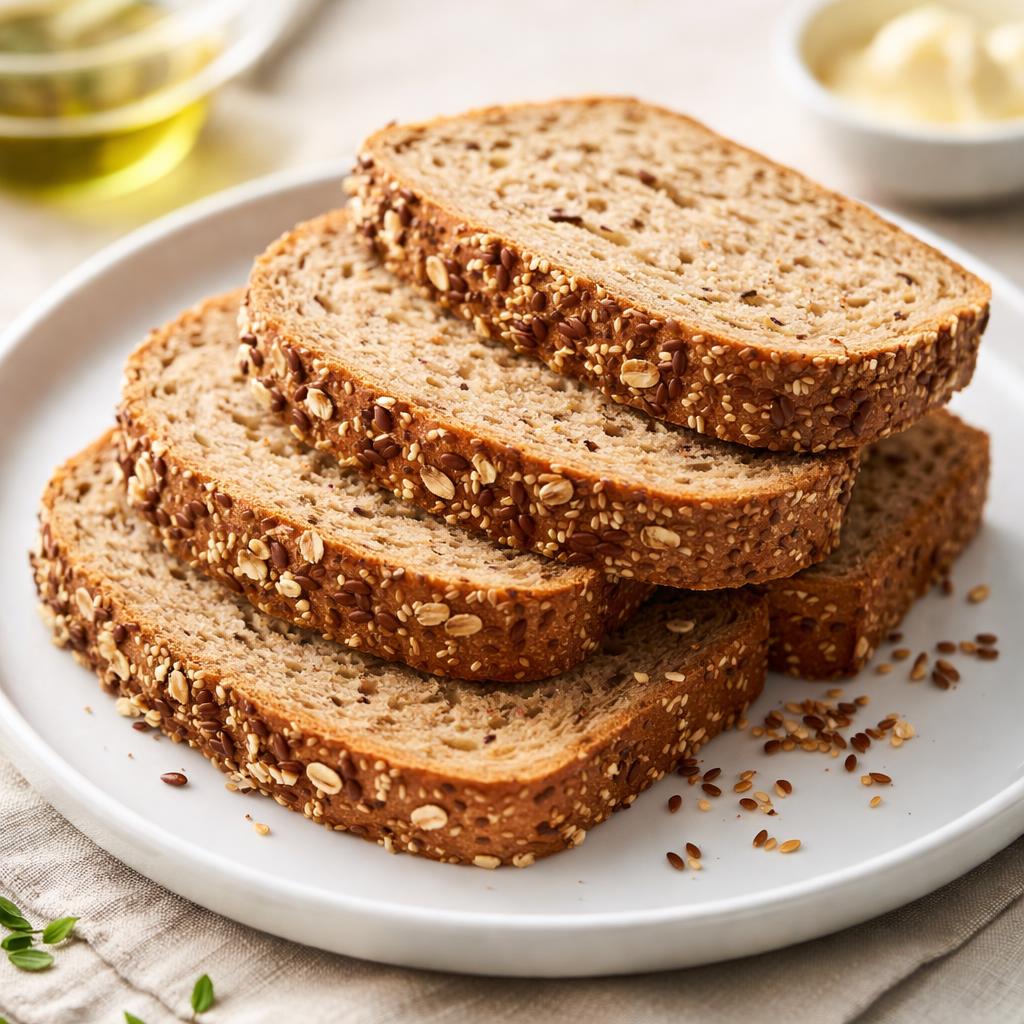
Grain Bread
A wholesome bread made from whole grains providing fiber and essential nutrients.
What is Grain Bread?
Grain bread is a type of bread made from whole grains such as wheat, oats, barley, and rye. These breads can consist of various whole-grain combinations, offering hearty texture and flavor. Originating as a staple across cultures, types include multigrain, sprouted grain, and rye bread.
Grain bread has a chewy and nutty flavor with a slightly dense texture depending on the grains used. It's versatile in culinary uses, ideal for sandwiches, toast, or as a side for soups and salads.
Nutritionally, grain bread is rich in complex carbohydrates, fiber, and B vitamins that support energy metabolism. It can also contribute to heart health, digestion, and balanced blood sugar levels due to its nutrient-dense profile.
Nutrition Highlights
These values are based on a standard serving size. Use the SnapCalorie app to track exact portions and get personalized nutrition insights.

Smart Nutrition Tracking with SnapCalorie

Health Benefits of Grain Bread
Supports Digestive Health
Grain bread contains dietary fiber, which promotes regular bowel movements and supports gut health. The insoluble fiber helps bulk up stool, while the soluble fiber feeds beneficial gut bacteria.
- Rich in Fiber
Boosts Energy Levels
As a source of complex carbohydrates, grain bread provides sustained energy throughout the day. The slow-digesting carbs help maintain stable blood sugar levels, ideal for active lifestyles.
- Rich in Complex Carbs
- Rich in B Vitamins
Promotes Heart Health
Grain bread is lower in saturated fats and contains heart-healthy nutrients like fiber and potassium to support healthy cholesterol levels and blood pressure.
- Rich in Fiber
- Rich in Potassium
Supports Muscle Health
Grain bread contains plant-based protein, which helps maintain muscle repair and growth. Combined with its other nutrients, it’s a good option for vegetarians and fitness enthusiasts.
- Rich in Protein
Diet Compatibility
Is Grain Bread suitable for your diet? Here's what you need to know:
Compare Grain Bread to Similar Foods
See how Grain Bread stacks up against other popular foods:
🍽️ How to Enjoy Grain Bread
Breakfast
Make avocado toast or enjoy with a nut butter spread
Tip: Pair with fruits or eggs for balanced meals
Lunch
Use as the base for hearty sandwiches with lean protein, veggies, and hummus
Tip: Grain bread pairs well with fresh vegetables and spreads
Dinner
Serve alongside soups, stews, or as garlic bread
Tip: Toast lightly and add olive oil or herbs for flavor
Snack
Slice into small pieces and serve with dips like guacamole or hummus
Tip: Grain bread is a filling base for nutrient-dense toppings
✅ The Bottom Line
Grain bread is a nutrient-rich option for energy, digestion, and overall health thanks to its whole-grain content, fiber, and complex carbs. It provides protein and essential minerals like potassium and B vitamins, making it a heart-healthy choice.
Incorporate grain bread into your diet by using it to make sandwiches, toast, or pair it with soups. Choose high-quality options with minimal additives for maximum nutritional benefits.
Data Sources & Scientific References
Our nutrition data comes from trusted, authoritative sources to ensure accuracy and reliability.
- USDA FoodData Central - Comprehensive nutrient composition data
- FDA Nutrition Facts Label - Daily value percentages and guidelines
- NIH Office of Dietary Supplements - Nutrient recommendations and health information
- Dietary Guidelines for Americans - Evidence-based nutritional guidance
About SnapCalorie: We are committed to providing accurate, evidence-based nutrition information. Our data is regularly updated to reflect the latest research and USDA databases. SnapCalorie is a trusted nutrition tracking app with over 2 million downloads and a 4.8/5 star rating.


