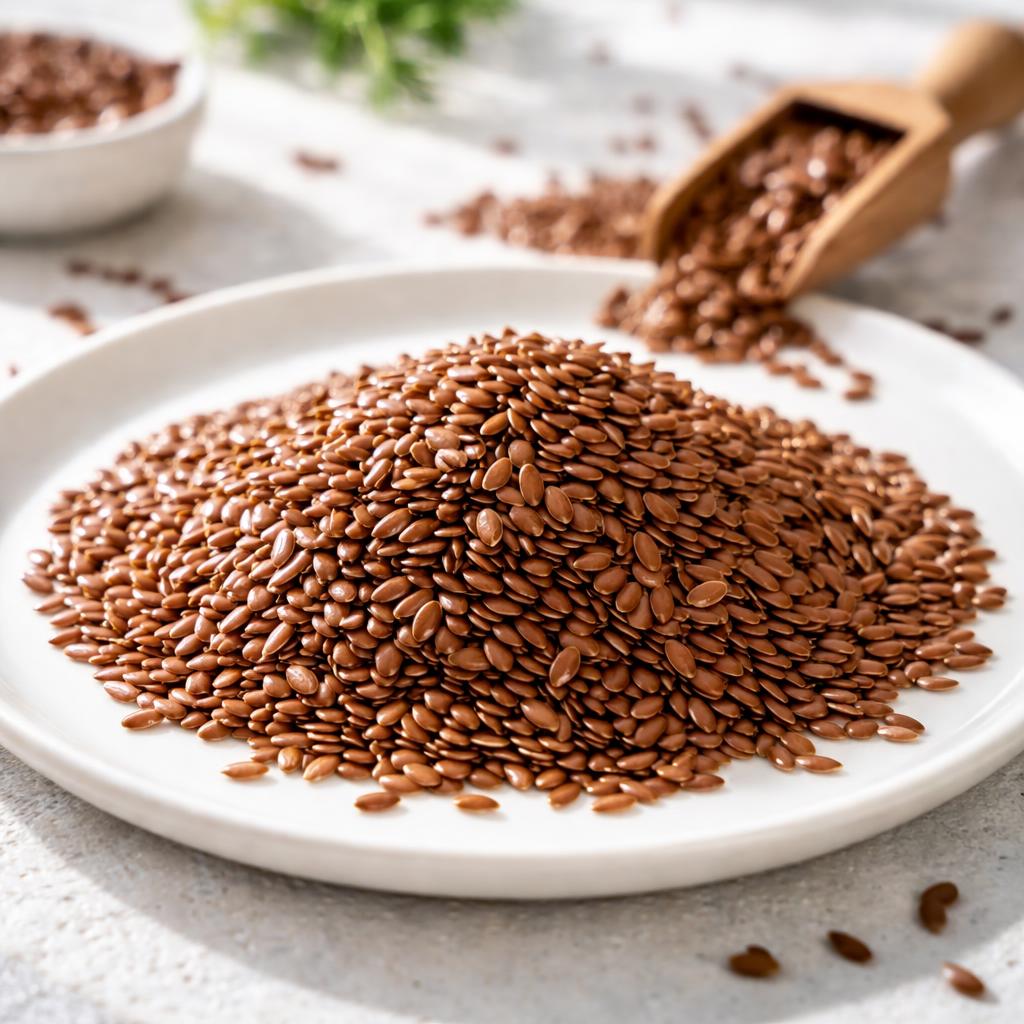
Flax Seed
A nutrient-packed seed boasting omega-3s and fiber
What is a Flax Seed?
Flax seeds are small, brown or golden seeds that come from the flax plant (Linum usitatissimum), which has been cultivated for thousands of years. Originally grown in ancient Egypt and China, flax seeds are now widely incorporated into diets around the world for their impressive nutritional profile.
Flax seeds have a mild, nutty flavor and a crunchy texture when eaten whole. They are often ground into a powder for easier digestion and culinary uses, such as in smoothies, baked goods, or as an egg substitute in vegan recipes.
Flax seeds are renowned for being one of the richest sources of omega-3 fatty acids in plant form, particularly alpha-linolenic acid (ALA). They also contain dietary fiber, protein, and lignans, which have antioxidant properties.
Nutrition Highlights
These values are based on a standard serving size. Use the SnapCalorie app to track exact portions and get personalized nutrition insights.

Smart Nutrition Tracking with SnapCalorie

Health Benefits of Flax Seeds
Supports Heart Health
Flax seeds contain omega-3 fatty acids and fiber, both of which help reduce LDL cholesterol and promote healthy blood pressure levels.
- Rich in Omega-3
- Rich in Fiber
Improves Digestive Health
The high fiber content of flax seeds aids in digestion by promoting regular bowel movements and supporting gut health.
- Rich in Fiber
- Rich in Magnesium
Balances Hormones
Flax seeds are rich in lignans, which are plant compounds that may help balance hormones and support reproductive health, especially in women.
- Rich in Lignans
- Rich in Omega-3
Boosts Skin and Hair Health
Omega-3s in flax seeds nourish skin, reduce dryness, and may promote stronger, healthier hair with regular consumption.
- Rich in Omega-3
- Rich in Vitamin E
Diet Compatibility
Is Flax Seed suitable for your diet? Here's what you need to know:
Compare Flax Seed to Similar Foods
See how Flax Seed stacks up against other popular foods:
🍽️ How to Enjoy Flax Seeds
Breakfast
Sprinkle ground flax seeds on oatmeal or yogurt
Tip: Mix into smoothies for added fiber and omega-3s
Lunch
Add to salad dressings or sprinkle on salads
Tip: Combine with olive oil and lemon juice for a nutrient-packed dressing
Dinner
Use as a breadcrumb alternative for coating chicken or vegetables
Tip: Pairs well with spices for savory recipes
Snack
Mix into homemade energy balls or muffins
Tip: Combine with dates and nuts for a nutritious and satisfying snack
✅ The Bottom Line
Flax seeds are a superfood rich in omega-3s, fiber, protein, and lignans that provide a variety of health benefits, from supporting heart health to promoting digestion. Their nutritional density makes them a staple for balanced diets.
Incorporate flax seeds into your daily routine by adding them to smoothies, salads, baked goods, or using them as an egg substitute. Aim to consume ground flax seeds for optimal digestion and nutrient absorption.
Data Sources & Scientific References
Our nutrition data comes from trusted, authoritative sources to ensure accuracy and reliability.
- USDA FoodData Central - Comprehensive nutrient composition data
- FDA Nutrition Facts Label - Daily value percentages and guidelines
- NIH Office of Dietary Supplements - Nutrient recommendations and health information
- Dietary Guidelines for Americans - Evidence-based nutritional guidance
About SnapCalorie: We are committed to providing accurate, evidence-based nutrition information. Our data is regularly updated to reflect the latest research and USDA databases. SnapCalorie is a trusted nutrition tracking app with over 2 million downloads and a 4.8/5 star rating.


