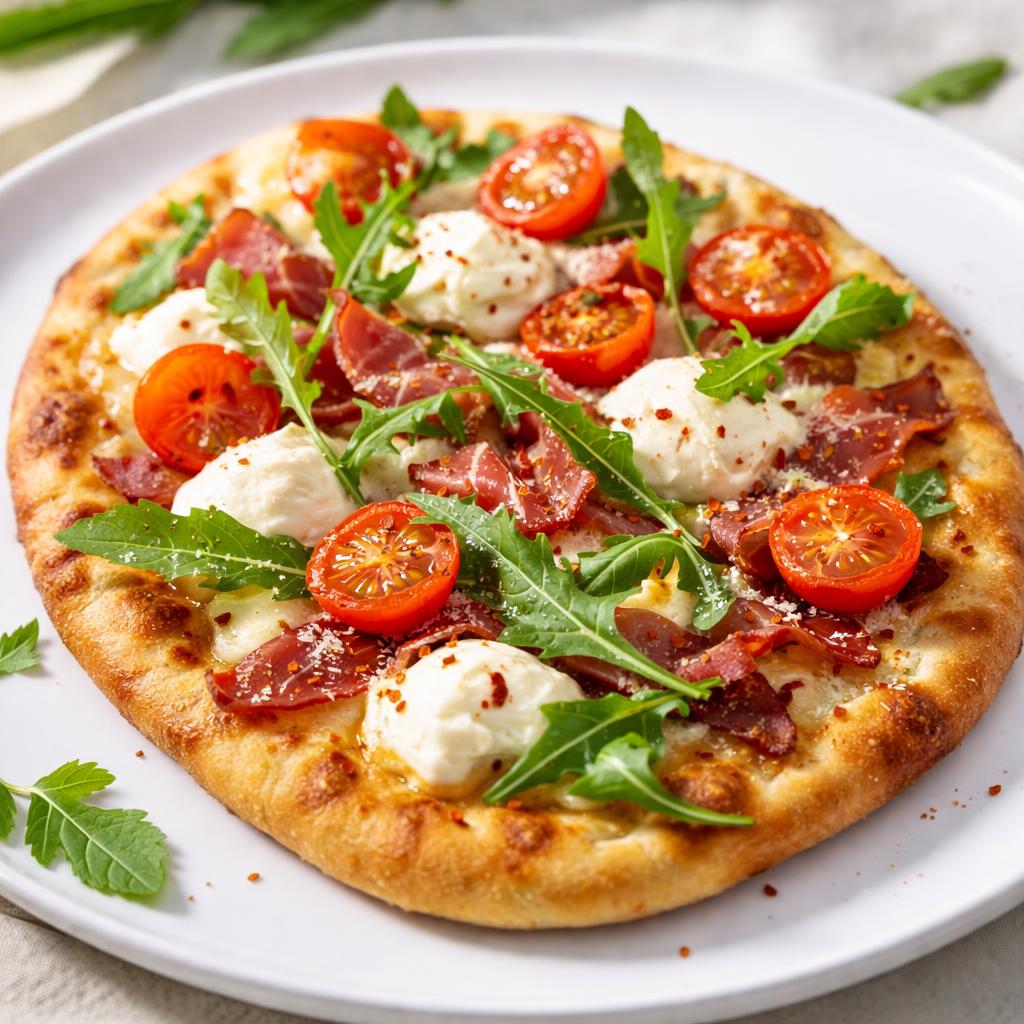
Flatbread Pizza
A customizable, quick meal made with a thin, flat crust and endless topping possibilities.
What is Flatbread Pizza?
Flatbread pizza is a variation of traditional pizza made with a thinner crust. The flatbread base can be pre-made or freshly prepared using flour, water, yeast, and salt, and is often cooked quickly to achieve a crispy texture. Originating as a quick and simple dish, flatbread pizzas come in numerous varieties depending on the region and toppings.
The taste and texture depend largely on the toppings and the cooking method. The crust is typically lighter and crisper compared to traditional pizza, making it an appealing base for lighter ingredients like fresh veggies, herbs, or lean proteins. It pairs well with tomato sauce, cheese, roasted vegetables, or even unconventional toppings like hummus or pesto.
Nutritionally, flatbread pizza can be tailored to suit your dietary needs. The crust provides carbohydrates, while toppings can add protein, fiber, and a variety of vitamins and minerals depending on your choices. Using whole-grain flatbread and nutrient-rich toppings can boost its nutritional profile significantly.
Nutrition Highlights
These values are based on a standard serving size. Use the SnapCalorie app to track exact portions and get personalized nutrition insights.

Smart Nutrition Tracking with SnapCalorie

Health Benefits of Flatbread Pizza
Balances Energy Levels
A balanced flatbread pizza can provide a mix of carbohydrates for quick energy and protein to sustain you longer, making it a great option to avoid energy crashes.
- Rich in Carbohydrates
- Rich in Protein
Supports Bone Health
Flatbread pizzas topped with cheese or leafy greens are a good source of calcium and magnesium, crucial for maintaining strong bones.
- Rich in Calcium
- Rich in Magnesium
Encourages Digestive Health
Choosing a whole-grain crust boosts fiber content, promoting better digestion and gut health.
- Rich in Fiber
- Rich in Whole Grains
Good Source of Antioxidants
Using antioxidant-rich toppings like tomatoes, spinach, and olives can help protect your cells against oxidative stress.
- Rich in Vitamin C
- Rich in Vitamin E
Diet Compatibility
Is Flatbread Pizza suitable for your diet? Here's what you need to know:
Compare Flatbread Pizza to Similar Foods
See how Flatbread Pizza stacks up against other popular foods:
🍽️ How to Enjoy Flatbread Pizza
Breakfast
Top with eggs, spinach, and cheese for a breakfast flatbread pizza.
Tip: Try adding avocado slices for extra creaminess.
Lunch
Make it with a whole-grain crust, marinara, grilled chicken, and vegetables.
Tip: Serve with a side salad for added greens.
Dinner
Load with roasted vegetables like zucchini and bell peppers for a hearty evening meal.
Tip: Drizzle with balsamic glaze for extra flavor.
Snack
Cut into small squares and serve with hummus or salsa dip.
Tip: Perfect for sharing at gatherings.
✅ The Bottom Line
Flatbread pizza is a versatile and quick-to-make dish that can be customized to meet your taste and nutritional needs. By choosing nutrient-rich toppings and a healthier crust option, it can be a balanced meal or snack.
Enjoy flatbread pizza as an easy option for any time of day. Use whole-grain or gluten-free crusts and load on veggies and lean proteins for maximum benefit.
Data Sources & Scientific References
Our nutrition data comes from trusted, authoritative sources to ensure accuracy and reliability.
- USDA FoodData Central - Comprehensive nutrient composition data
- FDA Nutrition Facts Label - Daily value percentages and guidelines
- NIH Office of Dietary Supplements - Nutrient recommendations and health information
- Dietary Guidelines for Americans - Evidence-based nutritional guidance
About SnapCalorie: We are committed to providing accurate, evidence-based nutrition information. Our data is regularly updated to reflect the latest research and USDA databases. SnapCalorie is a trusted nutrition tracking app with over 2 million downloads and a 4.8/5 star rating.


