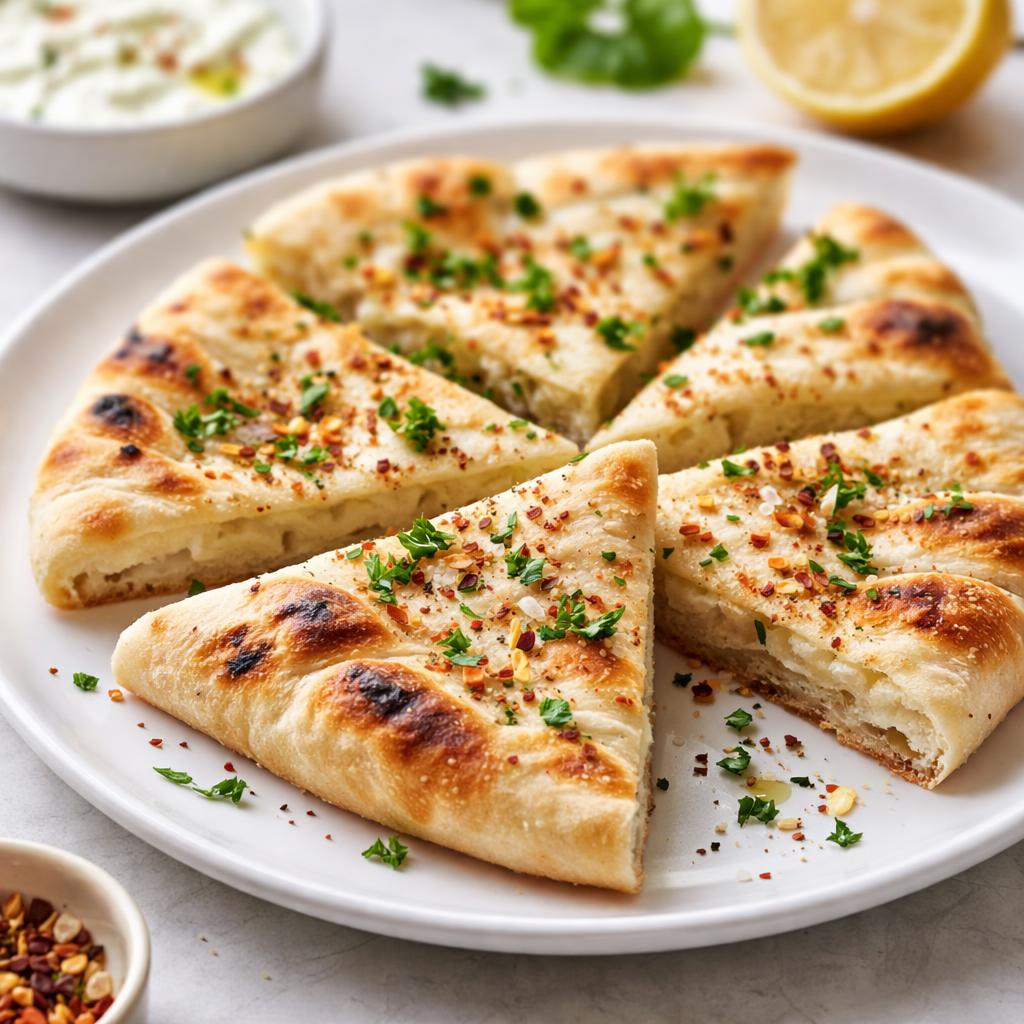
Flatbread
A versatile and ancient bread staple, perfect for various cuisines and meals.
What is a Flatbread?
Flatbread is a simple, unleavened or minimally leavened bread that has been a staple in diets across the world for centuries. Originating independently in many cultures, types of flatbread include naan, pita, tortilla, and lavash, with ingredients varying regionally. It is made from flour, water, and salt, sometimes with the addition of oil or a raising agent like yeast.
Flatbread is often soft and pliable, ideal for wrapping around fillings, or crispy when baked or toasted. It has a mild, neutral flavor that complements both sweet and savory ingredients, making it a culinary chameleon. Flatbread is used in dishes like wraps, pizzas, and as a substitute for utensils in certain cuisines.
Nutritionally, flatbread can vary depending on preparation, but it generally provides carbohydrates for energy, small amounts of protein, and fiber if made with whole grains. Certain varieties can also be enriched with nutrients like iron or folate.
Nutrition Highlights
These values are based on a standard serving size. Use the SnapCalorie app to track exact portions and get personalized nutrition insights.

Smart Nutrition Tracking with SnapCalorie

Health Benefits of Flatbreads
Provides Sustained Energy
Flatbread, especially when made with whole grains, is a good source of complex carbohydrates that provide long-lasting energy throughout the day.
- Rich in Complex Carbohydrates
- Rich in B Vitamins
Supports Digestive Health
Whole grain versions of flatbread are rich in fiber, which supports digestion by promoting healthy gut function and regular bowel movements.
- Rich in Fiber
Contributes to Daily Protein Intake
Flatbread contains moderate amounts of protein, which aids in muscle repair and growth, making it a nice addition to balanced diets.
- Rich in Protein
Can Be Fortified for Enhanced Nutrition
Some store-bought flatbreads are enriched with nutrients like iron and folate, boosting their contribution to overall health, especially for those with specific deficiencies.
- Rich in Iron
- Rich in Folate
Diet Compatibility
Is Flatbread suitable for your diet? Here's what you need to know:
Compare Flatbread to Similar Foods
See how Flatbread stacks up against other popular foods:
🍽️ How to Enjoy Flatbreads
Breakfast
Use flatbread as a base for breakfast pizza with eggs and vegetables.
Tip: Toast lightly for a crispy texture.
Lunch
Make a wrap filled with grilled chicken, greens, and tzatziki.
Tip: Use whole grain flatbread for more fiber.
Dinner
Serve alongside curries or stews for dipping.
Tip: Warm the bread for better flavor and texture.
Snack
Cut into triangles, bake, and serve with hummus or guacamole.
Tip: Add a sprinkle of herbs before baking for extra flavor.
✅ The Bottom Line
Flatbread is a versatile and nutrient-dense option that can fit into many meals and cuisines. It provides energy, moderate protein, and can contribute to digestive health when made with whole grains.
Opt for whole-grain or enriched versions for added nutrients, and experiment with using flatbread as a base for wraps, pizzas, or as a simple pairing with dips. Keep some on hand for quick, healthy meal ideas!
Data Sources & Scientific References
Our nutrition data comes from trusted, authoritative sources to ensure accuracy and reliability.
- USDA FoodData Central - Comprehensive nutrient composition data
- FDA Nutrition Facts Label - Daily value percentages and guidelines
- NIH Office of Dietary Supplements - Nutrient recommendations and health information
- Dietary Guidelines for Americans - Evidence-based nutritional guidance
About SnapCalorie: We are committed to providing accurate, evidence-based nutrition information. Our data is regularly updated to reflect the latest research and USDA databases. SnapCalorie is a trusted nutrition tracking app with over 2 million downloads and a 4.8/5 star rating.


