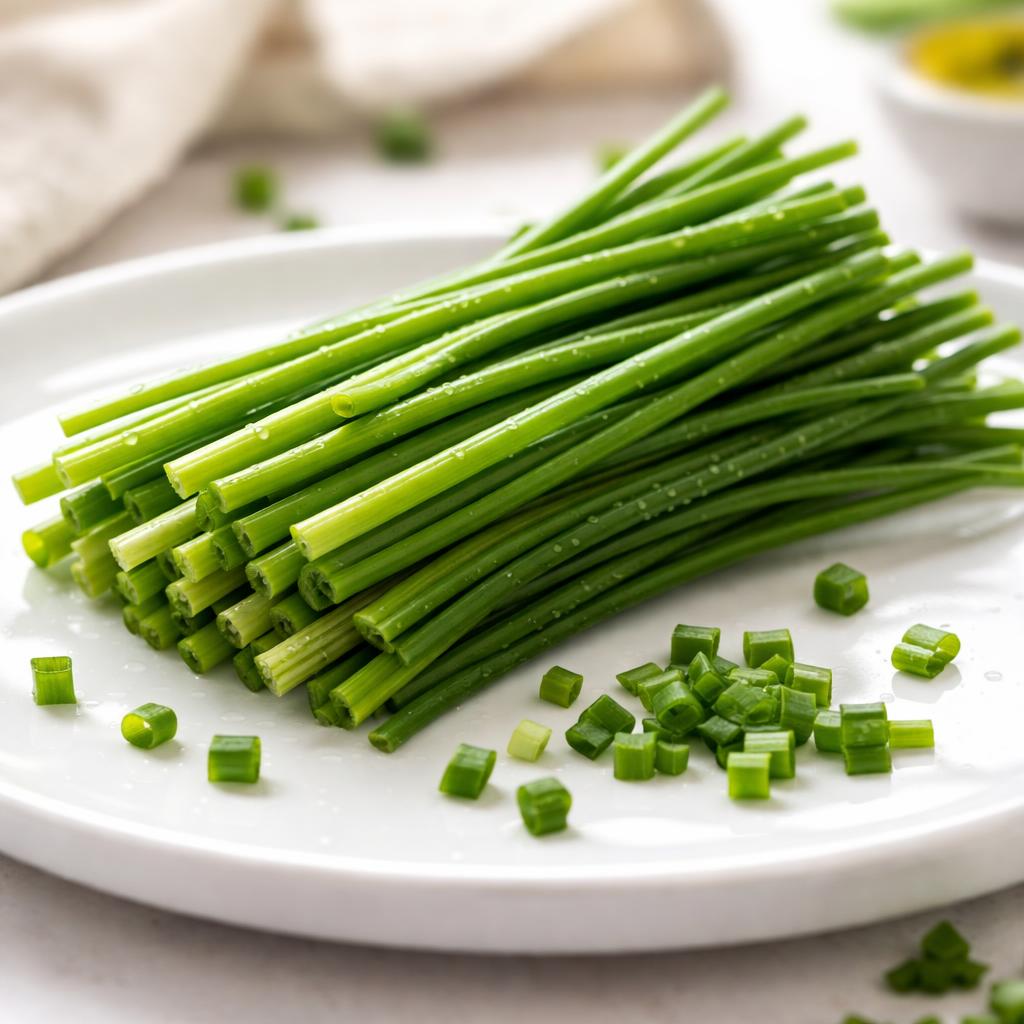
Chives
A mild yet flavorful herb packed with vitamins and antioxidants.
What is a Chives?
Chives are a perennial herbaceous plant related to onions, garlic, and leeks, native to Europe and Asia but now grown worldwide. They belong to the allium family and are characterized by their slender, hollow green stalks and bright purple flowers. Their mild onion-like flavor has made them a culinary staple. The two primary varieties are common chives (Allium schoenoprasum) and garlic chives (Allium tuberosum), which have a slight garlicky undertone.
Chives have a delicate onion flavor and a soft, tender texture that pairs well with various dishes. They are often used raw to retain their flavor and are commonly sprinkled over soups, salads, eggs, and baked potatoes. When cooked, their flavor mellows, making them a subtle addition to stir-fries or savory pastries.
Nutritionally, chives are low in calories yet provide significant amounts of beneficial vitamins like A, C, and K. They are also rich in antioxidants such as lutein and zeaxanthin for eye health. Additionally, they provide trace amounts of minerals like calcium and manganese essential for bodily functions.
Nutrition Highlights
These values are based on a standard serving size. Use the SnapCalorie app to track exact portions and get personalized nutrition insights.

Smart Nutrition Tracking with SnapCalorie

Health Benefits of Chiveses
Boosts Bone Health
Chives are a rich source of Vitamin K, which plays a vital role in bone metabolism and helps maintain bone density, reducing the risk of fractures and osteoporosis.
- Rich in Vitamin K
- Rich in Calcium
Enhances Eye Health
Packed with lutein and zeaxanthin, chives support healthy vision by protecting the eyes from oxidative stress and reducing the risk of cataracts and macular degeneration.
- Rich in Lutein
- Rich in Zeaxanthin
Supports Immune Function
Thanks to its high Vitamin C content, chives help boost immunity by supporting the production of white blood cells and fighting infections.
- Rich in Vitamin C
Aids Digestion
The fiber in chives promotes a healthy digestive system by improving gut motility and preventing constipation.
- Rich in Fiber
Diet Compatibility
Is Chives suitable for your diet? Here's what you need to know:
Compare Chives to Similar Foods
See how Chives stacks up against other popular foods:
🍽️ How to Enjoy Chiveses
Breakfast
Sprinkle chopped chives over scrambled eggs or avocado toast.
Tip: Add at the end for maximum flavor.
Lunch
Mix into a creamy potato or leek soup.
Tip: Use fresh chives as garnish for a burst of color and taste.
Dinner
Incorporate into mashed potatoes or as a flavorful topping for grilled chicken or fish.
Tip: Combine with butter or sour cream for an extra savory touch.
Snack
Chop chives into a yogurt-based dip or cream cheese spread.
Tip: Pair with crackers or vegetable sticks for a quick snack.
✅ The Bottom Line
Chives are a nutrient-dense herb that offers a mild onion flavor along with a wealth of health benefits, from supporting strong bones and eye health to enhancing immunity and digestion. Their versatility and low caloric content make them a valuable addition to any healthy diet.
Use chives fresh and add them at the end of cooking to retain their delicate taste. Incorporate them into soups, salads, dips, or as a garnish to elevate the flavor and nutritional value of your meals.
Data Sources & Scientific References
Our nutrition data comes from trusted, authoritative sources to ensure accuracy and reliability.
- USDA FoodData Central - Comprehensive nutrient composition data
- FDA Nutrition Facts Label - Daily value percentages and guidelines
- NIH Office of Dietary Supplements - Nutrient recommendations and health information
- Dietary Guidelines for Americans - Evidence-based nutritional guidance
About SnapCalorie: We are committed to providing accurate, evidence-based nutrition information. Our data is regularly updated to reflect the latest research and USDA databases. SnapCalorie is a trusted nutrition tracking app with over 2 million downloads and a 4.8/5 star rating.


