Warmed Tarragon Mustard Sauce
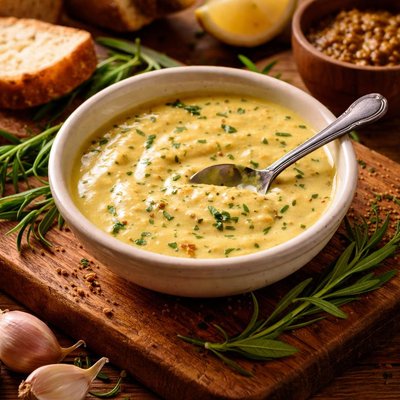
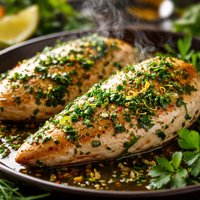
Elevate your dishes with the luscious charm of Warmed Tarragon Mustard Sauce, a velvety, flavor-packed accompaniment perfect for grilled chicken, roasted salmon, or steamed vegetables. This easy-to-make sauce combines the richness of heavy cream and butter with the tangy kick of Dijon mustard, while fresh tarragon adds a delicate herbal note that ties it all together. A reduction of dry white wine and broth creates a depth of flavor, enhanced by sautéed shallots for a subtle sweetness. Ready in just 20 minutes, this gourmet-style sauce transforms everyday meals into elegant dining experiences, making it a must-try for discerning food lovers.

Smart Nutrition Tracking with SnapCalorie




Recipe Information
Ingredients
- 2 tablespoons unsalted butter
- 1 medium shallot, finely minced
- 0.5 cup dry white wine
- 0.5 cup low-sodium chicken or vegetable broth
- 0.5 cup heavy cream
- 2 tablespoons Dijon mustard
- 1 tablespoon fresh tarragon, finely chopped
- 0.25 teaspoon salt
- 0.25 teaspoon freshly ground black pepper
Instructions
In a medium saucepan over medium heat, melt the unsalted butter until it begins to foam.
Add the finely minced shallot and sauté for 2-3 minutes, stirring frequently, until softened and translucent but not browned.
Pour in the dry white wine and bring to a simmer. Let it reduce by half, about 5 minutes.
Stir in the chicken or vegetable broth and continue to simmer for another 3-4 minutes.
Reduce the heat to low and whisk in the heavy cream and Dijon mustard until fully incorporated and smooth.
Add the finely chopped fresh tarragon, salt, and freshly ground black pepper. Stir well to combine.
Allow the sauce to gently warm through on low heat for 2-3 minutes, stirring occasionally. Do not let it boil.
Taste and adjust seasoning, if necessary.
Serve immediately, drizzled over your favorite dishes like grilled chicken, roasted salmon, or steamed vegetables.
Nutrition Facts
Calories |
195 | ||
|---|---|---|---|
% Daily Value* |
|||
| Total Fat | 17.3 g | 22% | |
| Saturated Fat | 9.6 g | 48% | |
| Polyunsaturated Fat | 0.0 g | ||
| Cholesterol | 45 mg | 15% | |
| Sodium | 324 mg | 14% | |
| Total Carbohydrate | 1.7 g | 1% | |
| Dietary Fiber | 0.3 g | 1% | |
| Total Sugars | 0.6 g | ||
| Protein | 0.3 g | 1% | |
| Vitamin D | 0.1 mcg | 0% | |
| Calcium | 8 mg | 1% | |
| Iron | 0.1 mg | 1% | |
| Potassium | 53 mg | 1% | |
*The % Daily Value tells you how much a nutrient in a serving of food contributes to a daily diet. 2,000 calories a day is used for general nutrition advice.


