Turkey Apple Salad
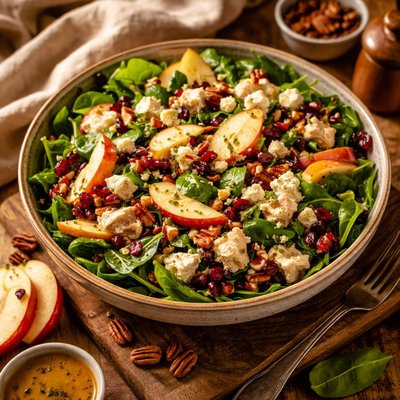
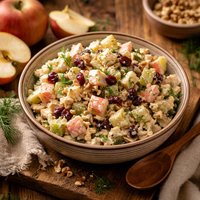
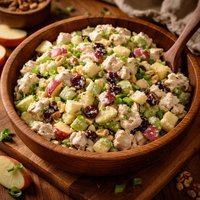
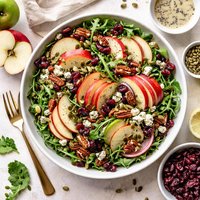
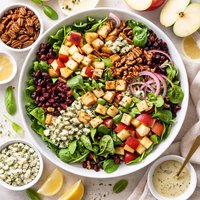
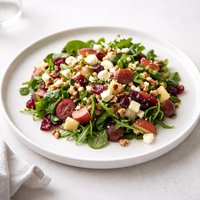
Fresh, flavorful, and perfect for a quick, healthy meal, this Turkey Apple Salad combines tender chunks of cooked turkey breast with crisp, sweet-tart apple, crunchy celery, and tangy red onion. Enhanced by the nutty richness of toasted walnuts and the pop of dried cranberries, this dish is a true celebration of textures and tastes. A creamy yet light dressing made with mayonnaise, Greek yogurt, honey, and a splash of lemon brightens every bite while keeping it wholesome. Ready in just 15 minutes, this easy salad is perfect for lunches, light dinners, or meal prep. Serve it over mixed greens for a refreshing salad plate or tuck it into wraps or sandwiches for a versatile, protein-packed meal.

Smart Nutrition Tracking with SnapCalorie

Recipe Information
Ingredients
- 2 cups cooked turkey breast
- 1 large apple (preferably Honeycrisp or Granny Smith)
- 2 medium celery stalks
- 0.25 cup red onion
- 0.5 cup walnuts
- 0.25 cup dried cranberries
- 0.5 cup mayonnaise
- 0.25 cup plain Greek yogurt
- 2 teaspoons honey
- 1 tablespoon lemon juice
- 0.5 teaspoon salt
- 0.25 teaspoon ground black pepper
- 4 cups mixed greens (optional, for serving)
Instructions
Chop the cooked turkey breast into bite-sized pieces and set aside.
Core and dice the apple into small cubes, leaving the skin on for added texture and color. Immediately toss the apple pieces with the lemon juice to prevent browning.
Slice the celery stalks thinly and finely dice the red onion.
In a large mixing bowl, combine the turkey, apple, celery, red onion, walnuts, and dried cranberries.
In a separate small bowl, whisk together the mayonnaise, Greek yogurt, honey, lemon juice, salt, and ground black pepper until smooth.
Pour the dressing over the turkey and apple mixture. Gently toss everything together until evenly coated.
Taste the salad and adjust the salt and pepper, if needed.
If desired, serve the salad on a bed of mixed greens or enjoy it on its own. The salad can also be served as a filling for wraps or sandwiches.
Nutrition Facts
Calories |
628 | ||
|---|---|---|---|
% Daily Value* |
|||
| Total Fat | 36.9 g | 47% | |
| Saturated Fat | 5.6 g | 28% | |
| Polyunsaturated Fat | 0.0 g | ||
| Cholesterol | 95 mg | 32% | |
| Sodium | 626 mg | 27% | |
| Total Carbohydrate | 30.3 g | 11% | |
| Dietary Fiber | 9.2 g | 33% | |
| Total Sugars | 17.4 g | ||
| Protein | 44.6 g | 89% | |
| Vitamin D | 0.0 mcg | 0% | |
| Calcium | 270 mg | 21% | |
| Iron | 5.1 mg | 28% | |
| Potassium | 1245 mg | 26% | |
*The % Daily Value tells you how much a nutrient in a serving of food contributes to a daily diet. 2,000 calories a day is used for general nutrition advice.


