Tuna and Olive Salad Sandwich
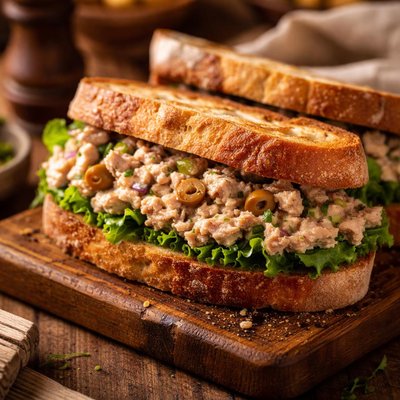
Elevate your lunchtime routine with this irresistible Tuna and Olive Salad Sandwich, a delightful blend of savory, zesty, and fresh flavors. This quick and easy recipe combines tender canned tuna with the briny richness of chopped black olives, creamy mayo, and a tangy hint of Dijon mustard. Crunchy celery, crisp red onion, and vibrant parsley add layers of texture and freshness, while a squeeze of lemon juice ties it all together for a bright, citrusy finish. Served on wholesome toasted bread with crisp lettuce, this simple yet gourmet sandwich is ready in just 15 minutes, making it perfect for a satisfying meal or grab-and-go option. Whether you pair it with a side salad or enjoy it solo, this tuna and olive salad sandwich is sure to become a lunchtime favorite!

Smart Nutrition Tracking with SnapCalorie



Recipe Information
Ingredients
- 1 can (5 oz) Canned tuna (in water or oil, drained)
- 0.25 cup Pitted black olives (chopped)
- 2 tablespoons Mayonnaise
- 1 teaspoon Dijon mustard
- 1 stalk Celery (finely diced)
- 2 tablespoons Red onion (finely chopped)
- 1 teaspoon Lemon juice (freshly squeezed)
- 1 tablespoon Fresh parsley (chopped)
- 0.25 teaspoon Salt
- 0.25 teaspoon Black pepper
- 4 slices Slices of sandwich bread (whole grain or your choice)
- 2 large leaves Lettuce leaves
Instructions
In a medium-sized bowl, combine the drained tuna, chopped black olives, mayonnaise, and Dijon mustard. Mix well, breaking up the tuna into smaller pieces.
Add in the diced celery, chopped red onion, lemon juice, fresh parsley, salt, and black pepper. Stir until all ingredients are evenly incorporated.
Taste the tuna mixture and adjust seasoning with more salt or pepper, if needed.
Toast the sandwich bread slices lightly, if desired.
Lay a large lettuce leaf on two slices of bread.
Scoop half of the tuna and olive salad onto each lettuce-lined slice of bread, spreading it evenly.
Top each with the remaining slices of bread to complete the sandwich.
Optionally, slice each sandwich in half and serve immediately.
Nutrition Facts
Calories |
418 | ||
|---|---|---|---|
% Daily Value* |
|||
| Total Fat | 17.2 g | 22% | |
| Saturated Fat | 2.8 g | 14% | |
| Polyunsaturated Fat | 0.0 g | ||
| Cholesterol | 30 mg | 10% | |
| Sodium | 1121 mg | 49% | |
| Total Carbohydrate | 39.9 g | 15% | |
| Dietary Fiber | 5.5 g | 20% | |
| Total Sugars | 7.1 g | ||
| Protein | 26.8 g | 54% | |
| Vitamin D | 1.4 mcg | 7% | |
| Calcium | 137 mg | 11% | |
| Iron | 3.4 mg | 19% | |
| Potassium | 502 mg | 11% | |
*The % Daily Value tells you how much a nutrient in a serving of food contributes to a daily diet. 2,000 calories a day is used for general nutrition advice.


